UPVC Window Lock Repair: What to Check
Updated: 2 days ago
A UPVC window that will not lock properly usually gives you a bit of warning before it fails completely. The handle starts to feel stiff, the key turns only part way, or the sash needs an awkward shove before the lock catches. That is usually the point when upvc window lock repair makes more sense than forcing it and ending up with a bigger job.
Window lock faults are common on older UPVC windows, but they are not always caused by the lock itself. That is where people often get caught out. A jammed handle can be a failed gearbox, but it can also be poor alignment, a worn espagnolette strip, a swollen frame, failed keeps, or simple wear from years of daily use. The trick is working out whether the problem is local to the handle or part of a wider fault in the window.
When upvc window lock repair is usually needed
Most customers call when the window is shut and the key will not turn, or when the handle spins without properly locking the sash. Those are obvious signs, but there are earlier ones worth noticing. If the handle feels heavier than usual, if locking points do not engage cleanly, or if you have to pull the window into position before turning the key, something is starting to wear or shift.
UPVC windows rely on a few parts working together. The handle operates the internal locking strip, the strip throws the locking points, and the keeps on the frame receive them. If one part is worn or out of line, the whole thing can feel like a lock problem even when the cylinder and key are perfectly fine.
That matters because the right repair depends on the actual fault. Replacing a handle on a misaligned window may make no difference at all. On the other hand, a straightforward mechanism replacement can often save changing the full window.
Common causes of UPVC window lock problems
Wear and tear is the big one. Window handles and internal mechanisms do a lot of work over the years, especially in family homes, rental properties and offices where windows are opened regularly. Springs weaken, moving parts wear down, and internal gearboxes eventually fail.
Alignment problems are just as common. UPVC frames can shift slightly over time, particularly on older installations or windows exposed to strong sun and weather. Even a small movement can stop the mushroom cams or locking points lining up with the keeps properly. The result is a handle that feels tight, a key that is hard to turn, or a lock that only catches on part of the frame.
Poor maintenance also plays a part. Dirt, old grease and general grime build up in the mechanism and around the keeps. People then put more force through the handle, which speeds up wear. Sometimes the repair is fairly simple. Sometimes that extra strain has already damaged the gearbox or strip.
Then there is the awkward category where the window itself is the issue. Hinges can drop, sashes can move, and double glazing units can put pressure on the frame if the window has settled badly. In those cases, replacing the lock alone is only half a fix.
What you can check before calling someone out
If the window is still opening and closing, there are a few sensible checks you can make without taking anything apart. Start with the obvious. Try the handle with the window open, then again with it shut. If it works freely when open but becomes stiff when closed, the problem is often alignment rather than the lock barrel.
Look at whether the sash is sitting square in the frame. If one corner seems tight or the handle side needs pulling in, the locking points may not be meeting the keeps cleanly. Also check for visible looseness in the handle itself. A floppy handle can point to worn fixings or a failed internal spindle connection.
If you have the key, test whether the key turns smoothly in the locked and unlocked positions. A key issue feels different from a mechanical issue. A worn key or sticky cylinder tends to affect the turn itself. A failed mechanism usually shows up when you try to move the handle.
What you should not do is force it. One firm turn is fine. Repeated heavy pressure is not. That is how a stiff window becomes a snapped handle, a broken gearbox, or a shut window that cannot be opened without more involved work.
When it is a repair and when it is a replacement
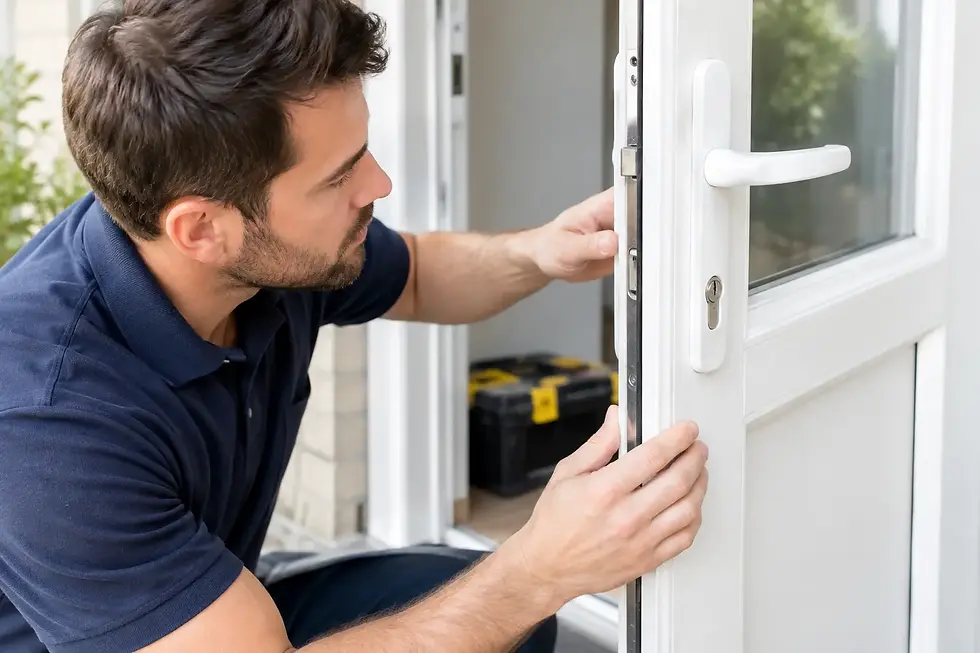
A proper upvc window lock repair often means replacing a failed part inside the existing window rather than changing the full unit. That might be the handle, gearbox, espag mechanism or keeps. If the frame and sash are sound, this is usually the most sensible route.
Replacement becomes more likely when several parts are worn together, when the window has significant movement, or when parts are obsolete and no longer match modern sizes. There are also cases where the lock fault is tied up with hinge failure or frame distortion. At that point, a repair may still be possible, but it depends on whether the window can be brought back into proper alignment and made secure again.
This is where experience matters. Two windows can show the same symptom and need entirely different work. One stiff handle may be a ten-minute adjustment. Another may involve opening a jammed sash, identifying an older mechanism pattern and replacing multiple parts on site.
Why jammed shut windows need a careful approach
A shut window that will not unlock is one of the more frustrating jobs because the mechanism is hidden while the sash is closed. People often assume the answer is brute force, but that is the quickest way to damage the frame, glass bead or sash.
A locksmith or repair specialist will usually work by identifying the mechanism type, then using non-destructive methods where possible to release the lock. Once open, the failed parts can be removed, measured and replaced. The aim is to get the window working and secure again without turning a lock problem into a glazing or carpentry problem as well.
For landlords and small businesses, this matters for another reason. A ground-floor window that will not lock is a security issue, not just an inconvenience. Fast attendance and the ability to sort it in one visit can make the difference between a manageable repair and a property left vulnerable overnight.
Choosing the right person for UPVC window lock repair
Not every locksmith deals confidently with UPVC window mechanisms, and not every window fitter deals with lock faults. The best person for the job is someone used to both the security side and the practical mechanics of UPVC doors and windows.
You want a tradesman who can identify the fault properly, carry common parts, and tell you plainly whether the repair is worthwhile. That includes being honest when a simple adjustment will do and equally honest when the mechanism has had it. There is no benefit in fitting a new handle onto a failing strip just to postpone the real job.
For properties in Clapham and nearby postcodes, that local knowledge can help as well. Older flats, converted houses and rental stock often have a mix of window ages and hardware types, so it helps to use someone who sees these setups regularly and comes prepared.
Preventing the same problem happening again
Once the window is repaired, a bit of maintenance goes a long way. Keep the frame and moving parts clean, avoid slamming the handle when the sash is not fully aligned, and deal with stiffness early rather than waiting for complete failure.
If a window starts dragging or needing extra pressure, get it checked before the lock breaks. Small alignment corrections are usually cheaper and simpler than dealing with a seized mechanism later. The same goes for loose handles and keys that are starting to stick.
UPVC windows are built to last, but they are still moving parts exposed to weather, daily use and gradual wear. Most lock faults do not come out of nowhere. They build up, then fail at the worst possible moment.
A good repair is not just about getting the key to turn again. It is about making sure the window closes properly, locks cleanly and gives you proper security without needing a wrestle every time you use it. If your window is already showing the signs, it is usually better to sort it now than wait until it is stuck shut or left insecure.
Comments