Bifold Door Repairs Clapham: Common Fixes
Updated: 2 days ago
A bifold door usually gives you fair warning before it packs up properly. It starts with a catch, a scrape on the threshold, a handle that feels stiff, or a lock that suddenly needs a shove to engage. When people call about bifold door repairs in Clapham, that is often the stage they are at - the door still works, but only just, and every day it feels a bit worse.
That matters because bifold doors are not just about convenience. They are a large access point, a security point, and on many homes and small commercial premises they are one of the most used doors in the property. If the alignment is off or the locking points are not engaging properly, you can end up with a door that is hard to secure, hard to open, or damaged further by continued use.
What usually goes wrong with bifold doors
Most bifold door faults are mechanical rather than mysterious. The door leaf drops slightly over time, rollers wear, hinges move, keeps shift, or the lock mechanism starts to bind. Sometimes it is caused by age and daily use. Sometimes it follows a failed adjustment, poor installation, weather movement, or someone forcing the handle when the door is not sitting where it should.
The important thing is that one fault often creates another. A door that has dropped may start by scraping the frame. Leave it long enough and the handle becomes harder to lift. Keep forcing the handle and the gearbox or internal locking mechanism can fail as well. What could have been a straightforward adjustment then turns into a repair with replacement parts.
That is why a proper on-site inspection matters. With bifolds, the visible symptom is not always the root problem.
Bifold door repairs in Clapham - the faults we see most
The most common complaint is a door that will not lock smoothly. In plain terms, the hooks, bolts or rollers are not lining up with the keeps in the frame. You lift the handle and it feels tight, gritty or stuck halfway. Sometimes the key turns but the mechanism does not fully throw. Sometimes the key will not turn at all because the door is under pressure.
Another regular issue is misalignment. Bifold doors have multiple moving parts, and when one panel drops slightly it affects the whole set. You may notice uneven gaps, a panel catching the track, or the lead door needing to be pushed or lifted to close. This can happen gradually, so many people adapt to it without realising how much strain they are putting on the hardware.
We also see failed rollers and worn pivot components. If the door is heavy to slide, jerky in movement or making grinding noises, the running gear may be worn or clogged. Dirt in the track can cause problems, but so can damaged wheels, bent guides or parts that are simply past their best.
Then there is handle and lock failure. If a bifold handle has become loose, floppy or difficult to operate, it can point to wear inside the mechanism rather than just the handle itself. Replacing the visible part alone does not always solve it. On many systems, the gearbox and multi-point strip need checking together.
Why bifold doors should not be forced
It is tempting to give the door a hard tug and hope for the best, especially if you are trying to lock up in a hurry. That is usually when a smaller fault becomes a bigger repair.
Forcing a stiff bifold door can snap a key, strip the handle spindle, damage the gearbox or pull the keeps further out of line. If the door is aluminium or UPVC, repeated force can also stress fixings and distort how the sash sits. Once that happens, repair work can become more involved.
There is also the security side of it. A door that appears shut but is not fully engaged on all points is not properly secure. On some systems, one part of the lock may catch while another does not. From outside, it can look fine. In reality, it is vulnerable.
Can bifold doors be repaired, or do they need replacing?
In many cases, repair is the sensible option. A lot of bifold door problems come down to adjustment, replacement of worn hardware, lock mechanism repair, track work, or realignment. If the main door panels and frame are still sound, there is often no need to replace the whole set.
That said, it depends on the condition of the system and the availability of parts. Older bifolds can be more awkward if the original manufacturer no longer supplies certain components. Damage from neglect or forced entry can also change the job. A locksmith or door repair specialist needs to assess whether the fault is isolated to the lock and running gear, or whether the frame, hinges or panels have also been compromised.
For property owners, that distinction matters. Full replacement is expensive and disruptive. A skilled repair carried out properly can restore smooth operation and security without the cost of starting again.
What a proper repair visit should involve
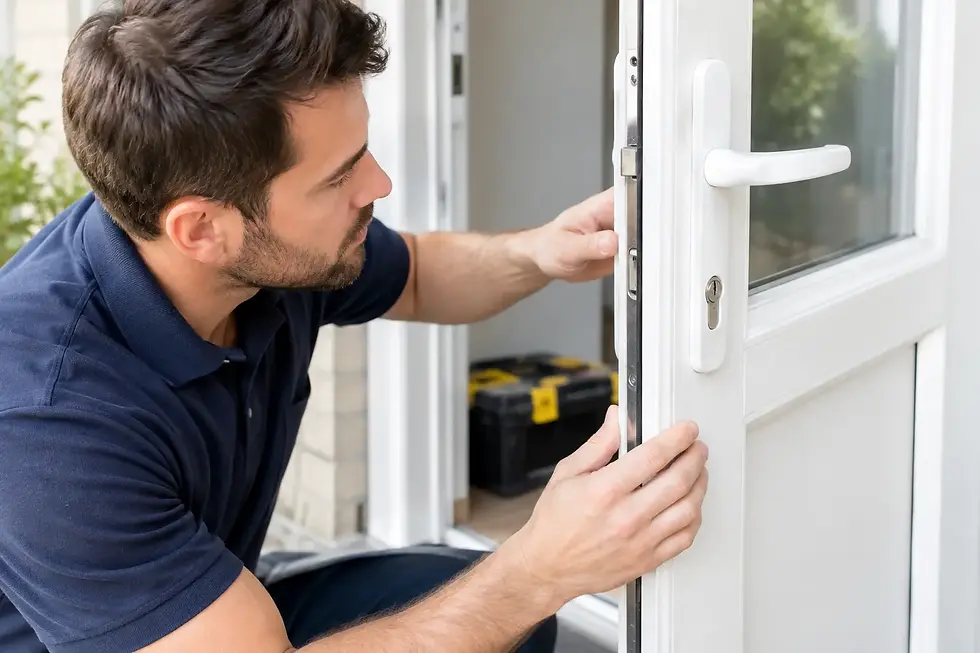
A decent bifold repair is not just a quick spray of lubricant and a hopeful adjustment. The door should be checked for alignment, operation through the full opening and closing cycle, condition of rollers and pivots, lock engagement, handle function, keeps, tracks and any signs of wear to the surrounding frame.
From there, the fix should match the fault. That may mean realigning the leaves, adjusting hinges, replacing a failed lock case, fitting a new handle set, renewing the running gear, or correcting the keeps so the locking points engage cleanly. Sometimes it is one issue. Sometimes it is two or three linked faults that need sorting together.
For local homeowners and businesses, speed matters as well. If a bifold door will not lock at all, it is not a job to put off until next week. A fast-response local tradesman with a stocked vehicle can often sort common parts and adjustments in one visit, which saves time and avoids the usual back-and-forth.
When to call for bifold door repairs in Clapham
There are a few signs that tell you not to leave it. If the handle is getting harder to lift, if the door needs force to close, if the key will not turn cleanly, or if the panels are scraping, the mechanism is already under strain. If the door has dropped noticeably, come off its smooth running line, or stopped locking securely, it needs attention sooner rather than later.
The same goes after an attempted break-in or accidental damage. Even if the glass is intact, the lock strip, keeps or frame alignment may have been knocked out. On bifolds, small shifts make a big difference to operation.
In Clapham, where many properties rely on rear bifolds for garden access or shopfront use, a faulty door is more than an annoyance. It affects security, day-to-day access and peace of mind.
A local repair matters when the door will not secure
There is a practical difference between speaking to a local family-run locksmith and going through a distant call centre that treats every door fault the same way. Bifold systems are a bit specialised. They need someone who understands locking mechanisms, alignment, hardware compatibility and on-site problem solving, not just basic lock changes.
That is where local experience helps. A tradesman used to working across Clapham, Clapham South and the surrounding postcodes will have seen the common door setups in the area, from residential extensions to ground-floor commercial units. More importantly, they know that when a bifold will not lock, the customer does not want a lecture. They want the door fixed properly and as quickly as possible.
Clapham Locksmiths handles this kind of repair with that in mind - straightforward advice, practical fault-finding and the aim of getting the door secure on the first visit wherever possible.
A word on maintenance
Not every bifold problem is preventable, but a bit of care helps. Keep the track free of grit and debris. Do not ignore stiffness in the handle. If the door starts catching, get it checked before the lock is damaged as well. And avoid forcing the key or handle just to get through another week.
The best time to repair a bifold door is usually when it first starts showing signs of trouble, not when it has failed completely on a wet evening and the property will not lock.
If your bifold door is sticking, dropping, jamming or refusing to lock, the main thing is not to keep fighting with it. Most faults are fixable, but they are easier, quicker and cheaper to sort when the damage has not spread through the rest of the mechanism.
Comments