
uPVC Versus Composite Door Security Explained
A front door can look solid, shut properly and still have a weak point that a burglar will spot quickly. When comparing uPVC versus composite door security, the material matters, but the lock cylinder, multi-point mechanism, hinges, frame and fitting matter just as much. A well-maintained uPVC door with the right hardware can be very secure. A poorly fitted composite door with an old lock can be less secure than it looks.
uPVC versus composite door security: the short answer
Composite doors are usually the stronger option in terms of the door slab itself. They are thicker, heavier and made from several materials, often including a solid or high-density core beneath a weather-resistant outer skin. That can make them harder to force, bend or damage than a standard uPVC panelled door.
But burglars do not normally spend time trying to smash through the middle of a decent external door. They look for a quicker weakness: a vulnerable euro cylinder, a badly aligned multi-point lock, loose hinges, a weak keep in the frame or a gap around the door. Those points can apply to either type of door.
For most homes, the better question is not simply, “Which door is stronger?” It is, “Is the complete door set secure and working as it should?”
What makes a uPVC door secure?
A modern uPVC door can provide good everyday security, particularly when it has a reinforced frame, a sound multi-point locking system and quality hardware. When the handle is lifted and the key turned, the mechanism should throw several locking points into the frame. Depending on the system, these may be hooks, rollers, mushrooms, bolts or deadbolts.
The main weakness we see on older uPVC doors is often the euro cylinder. Basic cylinders can be vulnerable to snapping, drilling or picking. A snapped cylinder may allow access to the locking mechanism behind it, so the door itself can remain intact while the lock has failed.
A good anti-snap cylinder is one of the most worthwhile upgrades for a uPVC door. Look for a cylinder with a TS007 3-star rating, or pair a 1-star cylinder with 2-star security handles. The right choice depends on the door and handle setup, but the aim is the same: make forced attack on the cylinder much harder.
The condition of the mechanism is equally important. If a door needs pulling, lifting or shoulder pressure before it locks, do not ignore it. Continued use can strain the gearbox or prevent the hooks and bolts from engaging properly. A locksmith can often adjust the door, replace a worn gearbox or repair the multi-point lock before it becomes a lockout or a security problem.
Older uPVC doors need closer attention
Older installations may have thinner panels, simpler locking points and tired hinges. That does not automatically mean replacement is needed. In many cases, a lock upgrade, hinge adjustment, reinforcement of the keeps and a proper service can make a meaningful difference at a far lower cost than fitting a new door.
If the handle spins, the key becomes stiff, the door catches on the frame or it will only lock from one side, arrange a repair promptly. These are not just inconveniences. They can be early signs that the door is not locking fully.
Why composite doors have a security advantage
A properly made composite door tends to feel more substantial because it is. It is designed as a thicker, heavier external door, and its construction generally offers better resistance to kicking, levering and impact than a typical uPVC door panel.
Many new composite doors are supplied with high-specification multi-point locks, security handles and reinforced frames as standard. If the whole set has been tested to PAS 24 standards, that provides useful reassurance that the door, frame, locks and hardware have been assessed together rather than as separate parts.
That said, “composite” is not one fixed build quality. Door cores vary. Some use timber, some foam, some engineered materials, and the frame specification can differ between installers. A premium composite slab fitted into a weak or poorly prepared frame will not perform as it should.
The extra weight also brings a practical trade-off. Composite doors can drop slightly over time if hinges need adjustment, particularly where the door is used heavily. Once it goes out of alignment, the locking points may not enter the keeps cleanly. The door might still appear shut, but it may not be fully secured. Regular adjustment is a small job compared with replacing a damaged mechanism.
The lock is often more important than the door material
Whether you have uPVC or composite, the cylinder is usually the first item worth checking. If it sticks out beyond the handle, is a basic old-style cylinder or has no obvious security rating, it may be time for an upgrade.
A secure front door should also have a properly functioning multi-point lock. Lift the handle fully, turn the key and then check that the door cannot be pushed open at the top, middle or bottom. A loose handle, partial engagement or a key that turns without locking the door needs attention.
Do not overlook the frame side either. The metal keeps that receive the hooks and bolts must be firmly fixed and properly aligned. On timber frames, screws may loosen over time. On uPVC frames, movement or poor installation can cause the keeps to sit out of position. A strong lock is only useful if it locks into something secure.
For a quick, practical check, look at these five areas:
the cylinder sits flush with, or only slightly proud of, the handle
the handle lifts smoothly without forcing it
all locking points engage when the key is turned
hinges are secure and the door has no obvious sagging
the frame and keeps show no cracks, loose screws or movement
Installation and maintenance can change the result
The security difference between a well-fitted uPVC door and a badly fitted composite door can be greater than people expect. Gaps around the frame, weak fixings, poor alignment and unsuitable glazing all create opportunities for forced entry.
If you are buying a replacement door, ask what lock cylinder, handles and multi-point system are included. Ask whether the door set meets PAS 24, and whether the frame and installation are part of that specification. It is sensible to get this confirmed before work starts rather than assuming every new door has the same level of security.
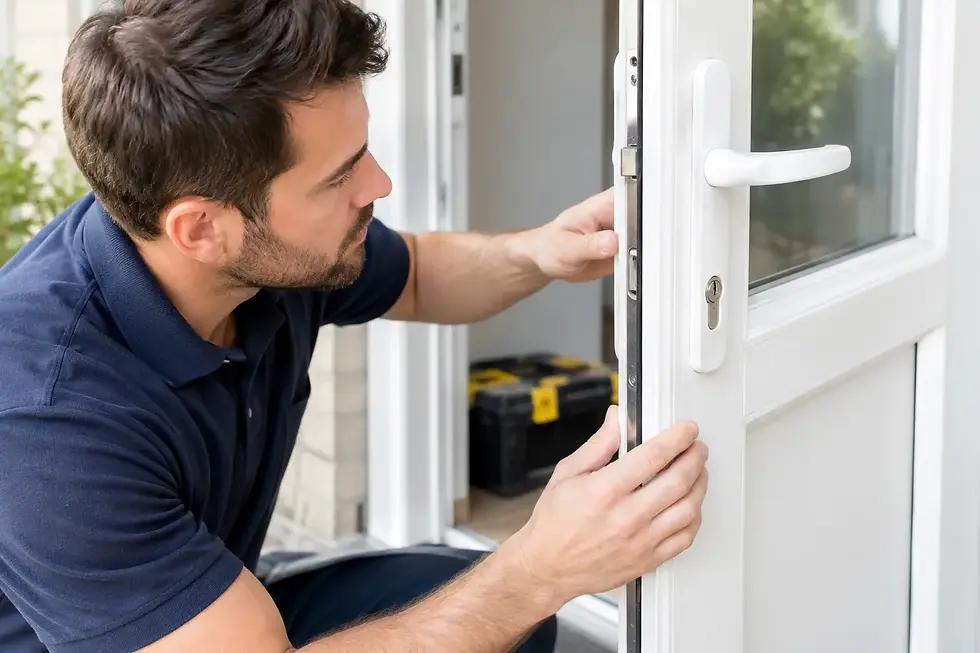
For existing doors, a service is often a sensible first step. A locksmith can assess the cylinder, locking points, keeps, hinges, handles and frame condition, then explain what needs repairing and what is worth upgrading. There is no benefit in replacing a complete door if a correctly fitted anti-snap lock and a mechanism repair will solve the real issue.
Which door should you choose?
Choose a composite door if you are replacing an external front door and want a heavier, generally stronger door slab with good potential for high-security hardware. It is often the better long-term choice where appearance, insulation and resistance to force are all priorities.
Choose or keep a uPVC door if it is in sound condition, fits properly and can be fitted with a quality cylinder and secure hardware. For flats, rental properties, side entrances and many family homes, a well-specified uPVC door can provide strong protection without the cost of a full composite installation.
The deciding factor is often the condition of what you already have. A door that is difficult to lock, has a loose frame or shows signs of forced damage should be dealt with quickly, whichever material it is made from. After a burglary or attempted break-in, the priority is to secure the property, repair the damage and identify how access was attempted so the same weakness is not left behind.
If your uPVC or composite door is sticking, not locking properly or has an outdated cylinder, getting it checked now is far easier than dealing with a failed lock at night. For homeowners and landlords around Clapham, a proper on-site assessment can often turn a worrying door problem into a straightforward repair or upgrade.
Comments