
When Does an Office Lock Upgrade Make Sense?
A proper office lock upgrade is rarely about fitting the most expensive lock on the shelf. It is about fixing the weak point that could leave your staff, stock, equipment or paperwork exposed. For a small office, shop, clinic or managed property, that often means looking at the whole entrance: the lock, cylinder, door, frame, hinges and the way keys are controlled.
If a lock is stiff, keys have gone missing, staff numbers have changed or there has been an attempted break-in, it is worth acting before a minor issue becomes an urgent callout. The right work should make the premises safer and easier to manage, without selling you a system you do not need.
Signs your office locks need attention
A lock does not have to be completely broken before it needs replacing. A key that sticks, a handle that droops, a cylinder that turns loosely or a door that needs pushing hard to lock are all signs that something is wearing out or out of line. Leaving it can lead to staff being locked out on a busy morning, or worse, a door that cannot be secured at the end of the day.
Key control is another common reason for an upgrade. If former staff, contractors or previous tenants may still have keys, changing the cylinder is usually sensible. It is a straightforward way to regain control of access without replacing a sound door and full locking mechanism.
After a burglary or attempted burglary, do not just replace the visibly damaged part. A forced door can suffer damage around the keep, strike plate, frame, hinges and multipoint mechanism. Fitting a new lock into a weakened frame may look like a repair, but it does not always provide the security you are paying for.
Start with the door, not just the lock
The lock is only as useful as the door around it. A solid commercial door with a poor frame fixing, loose hinge screws or a weak keep can still be vulnerable. Equally, an expensive cylinder will not solve a UPVC door that has dropped out of alignment and is no longer allowing its hooks and bolts to engage correctly.
This is why an on-site inspection matters. The type of door changes the best approach. Timber doors, aluminium shopfront doors, composite doors, UPVC doors and bifold systems all have different locking arrangements and common failure points. A tradesman should check how the door closes before recommending replacement parts.
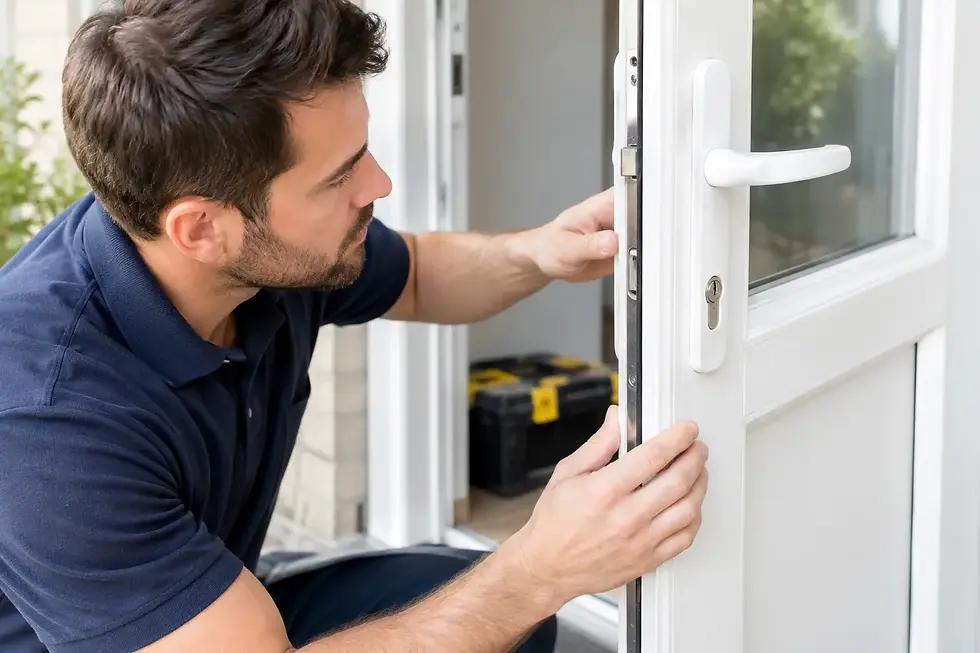
For example, a multipoint UPVC lock may feel faulty when the real issue is that the door has moved on its hinges. Adjusting the door, repairing worn keeps and replacing a damaged gearbox can be more effective than changing the cylinder alone. On a timber office door, reinforcing the frame and fitting the right strike plate may offer a bigger improvement than a like-for-like lock swap.
Choosing the right office lock upgrade
There is no single best lock for every business. The right choice depends on what is behind the door, who needs access and how often the door is used.
A small office with a handful of trusted staff may be well served by quality mechanical locks and a controlled key system. This keeps things simple, works during a power cut and is usually cost-effective. The important part is knowing how many keys exist and having a clear process when someone leaves.
Where several staff members, cleaners, delivery drivers or contractors need different levels of access, electronic access control may be worth considering. Fobs, cards or keypad codes can be removed or changed without replacing a lock cylinder. It can make staff changes easier, but it also brings installation, maintenance and battery or power considerations. A basic system that is well installed and understood is better than a complicated one nobody manages properly.
For external doors, the cylinder should be appropriate for the door and security requirement. Anti-snap and anti-drill features can be valuable on suitable euro cylinder doors, particularly where the cylinder is exposed. On doors where insurance requirements apply, it is sensible to check the policy wording before work begins. Insurers may specify particular standards or lock types, and this can vary by policy and door construction.
Restricted keys can solve a quiet security problem
Ordinary keys can be copied easily, often without anyone telling the person responsible for the premises. Restricted key systems make unauthorised duplication harder and give a business more control over who receives keys.
They are not necessary for every office. If there are only two keyholders and the property is low-risk, a good standard cylinder may be enough. But for landlords, shared offices, surgeries, stock rooms and businesses with regular staff turnover, restricted keys can remove a recurring worry.
Do not forget internal doors and storage
The front entrance gets most of the attention, but internal access often matters just as much. Confidential files, IT equipment, medicines, tools, cash and high-value stock should not rely on a flimsy internal latch simply because the building has an external lock.
A practical office security plan separates areas according to risk. Staff may need general access, while only managers need access to a stock cupboard, server room or records office. That does not always require a costly electronic system. Sometimes a suitable internal sashlock, digital door lock or controlled key arrangement is enough.
Safes also need looking after. If a safe key is missing, the lock is failing or the code is known by people who should no longer have it, deal with it promptly. Forcing a safe or drilling it without the right knowledge can create far more expense than a professional opening and repair.
Avoid upgrades that create new problems
Security work should not make a workplace harder to use or less safe in an emergency. Fire doors and final exit doors are a clear example. Any lock arrangement must allow people to leave safely and comply with the building's fire safety needs. Do not add bolts, chains or keypad locks to an escape route without proper advice.
It also pays to avoid mixing unsuitable parts. A lock may be the right size but still be wrong for the door thickness, handle type or multipoint mechanism. Poorly fitted hardware can cause excessive strain, damage the door and fail early. This is especially common where a quick fix has been attempted after a key snaps or a handle breaks.
Cheap cylinders can be tempting when several doors need attention. Yet the saving disappears if they wear quickly, offer little resistance to attack or need replacing again after a short time. The sensible middle ground is a suitable quality lock, fitted correctly, with the door adjusted so it locks smoothly.
A practical way to plan the work
Before booking an office lock upgrade, make a note of every entrance, who uses it and whether there are keys or fobs unaccounted for. Include side doors, rear exits, storage rooms, shutters, windows and any door that staff regularly prop open because it is awkward to use.
Then decide what needs doing now and what can be planned. A damaged lock, compromised door or missing key after a staff departure may need immediate action. Replacing several aging locks, improving key control or upgrading a shared building can usually be scheduled to minimise disruption.
For businesses in Clapham and nearby SW4, SW8, SW9, SW11 and SW12 areas, a local locksmith can assess the lock alongside the condition of the door, frame and mechanism. That matters because the best result is often a combination of repair, adjustment and targeted replacement, completed in one visit where possible.
Keep the upgrade working after the job is done
Once the work is complete, keep a simple record of who holds each key, fob or code. Collect access items promptly when employment ends, and change codes if they have been shared too widely. Ask staff to report a stiff lock or dropping handle early rather than forcing it until it fails.
A secure office should still be straightforward to open in the morning and lock at night. If the door is difficult to operate, people will find workarounds, and that is where good security starts to unravel. The best upgrade is the one that gives you control, stands up to daily use and lets everyone get on with the working day without worrying about the door behind them.

Comments