
Best Fire Door Locks for Homes and Businesses
A fire door can only do its job when every fitted part works with it. That includes the lock. The best fire door locks are not simply the strongest locks on the shelf - they are locks and handles that have been tested for the particular door, fitted correctly, and chosen with safe escape in mind.
This matters in a communal block, a rented flat, a shop, an office or a house with an internal fire door between the garage and living space. A good lock should help protect the property without stopping somebody from getting out quickly if there is a fire.
What makes a lock suitable for a fire door?
A fire door is a tested assembly. The leaf, frame, hinges, closer, glazing, seals, handles, latch and lock all affect its performance. Replacing a lock with a random security lock can mean altering the door, cutting an oversized hole, or fitting hardware that has not been assessed for fire-door use.
Look for hardware that is certified or tested for use on fire doors, ideally with evidence that it suits the door’s fire rating and construction. A fire-door lock will usually be described as suitable for a specified period of fire resistance, such as 30 or 60 minutes. The evidence matters more than a label that merely says “fire rated”.
The lock also needs to work with the existing door furniture. Its backset, case size, spindle position, cylinder arrangement and keep all need to line up properly. If the latch does not engage fully, the door may not remain shut in a fire. If the lock body or keep has been forced into place, the door or frame can be weakened.
For most fire doors, a self-closing device is just as vital as the lock. A wedged-open fire door and a perfectly rated lock offer very little protection.
Best fire door locks depend on the exit route
There is no single best choice for every property. The right answer depends first on who uses the door and whether it forms part of an escape route.
Internal flat entrance doors
A flat entrance door in a communal building often needs a combination of fire resistance, security and controlled access. A mortice sashlock or deadlock with a properly rated latch may be suitable, provided it is part of a compatible tested arrangement. Many doors use a cylinder-operated lock from the outside and a thumbturn or handle release from inside.
The key point is simple: a resident should not need to search for a key to leave if the door is on their escape route. Thumbturn cylinders can be useful for that reason, but they are not suitable in every setting. If there is nearby glazing or a letter plate that could allow somebody to reach the thumbturn, the security arrangement needs proper thought.
Landlords and managing agents should also avoid changing a flat-door lock without checking the building’s fire-door specification. A cheap replacement may appear to fit but fail to match the original tested door set.
Shared corridors and communal exits
Doors leading from a corridor to a communal escape route need particular care. A lock that requires a key from the escape side can create a serious risk. Depending on the building and occupancy, the door may need a simple single-action escape mechanism, emergency exit hardware or panic hardware.
For a small workplace where trained staff use the exit, emergency exit hardware is often appropriate. For public buildings, shops, venues or places where visitors may be unfamiliar with the route, panic bars are generally the safer choice. These are designed to release quickly under pressure from a crowd.
The distinction is not cosmetic. A stylish handle with a strong deadlock may be very secure, but it is the wrong answer if people cannot get out immediately.
Plant rooms, service cupboards and restricted areas
A locked fire door to a plant room or electrical cupboard may need more controlled access. In these cases, a fire-rated mortice lock with restricted keys can make sense, particularly where several contractors or staff members need access.
Here, security often carries more weight than quick public escape, but the door must still comply with the building’s fire strategy. Never assume a lock is acceptable just because the room is not normally occupied.
Home fire doors
In a house, internal fire doors are commonly found between an integral garage and the home, or on protected stair routes in larger properties. A simple fire-rated latch or sashlock may be all that is needed. Avoid fitting a heavy, high-security lock to a lightweight internal door unless the door and frame are designed for it.
A lock that is awkward to operate is also a poor choice for a family home. In an emergency, everyone in the house needs to be able to use it without hesitation.
Security and fire safety must work together
People sometimes assume a fire-rated lock is automatically a high-security lock. It is not. Fire performance and burglary resistance are separate issues. A property may need both, especially on a flat entrance door or rear commercial exit.
For security, consider the cylinder, the lock case, the handles and the door itself. A good cylinder can resist common attack methods, but it needs compatible security handles and a correctly fitted lock. On timber doors, the strength of the frame, strike plate and fixing screws can be just as relevant as the lock brand.
For UPVC and composite fire doors, the locking arrangement is often more specialised. Multi-point mechanisms, keeps and cylinders must be selected carefully. Changing only one part of a failed system can lead to poor alignment, a door that will not close under its closer, or a mechanism that jams when it is most needed.
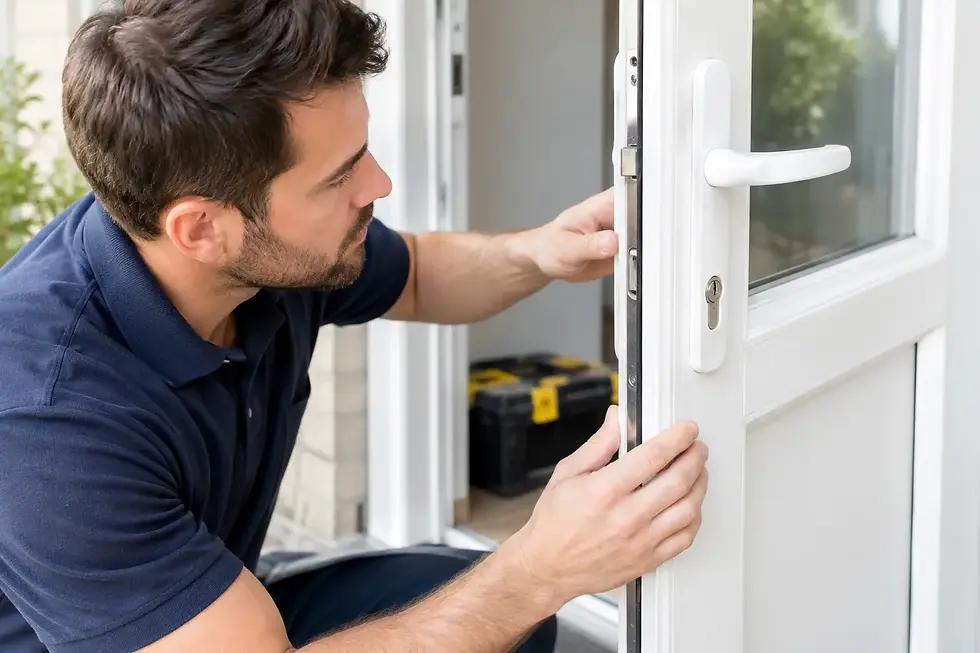
This is why a fire-door lock job should not be treated like a standard lock swap. The fitter needs to check how the door closes, whether the latch engages, whether the intumescent seals are intact and whether the gap around the door remains sensible after the work.
Common mistakes when replacing fire door locks
The most common problem is fitting a lock because its dimensions are close enough. A few millimetres can matter. Cutting a larger mortice pocket, moving the keep repeatedly or packing out loose hardware can affect both security and fire performance.
Another mistake is retaining the old handles after fitting a new lock. Handles, escutcheons and cylinder guards can form part of the tested hardware arrangement. They also need to operate freely without preventing the latch from returning.
Keys are another area where practical planning helps. A key-operated lock may suit an external entrance, but it is rarely right on the inside of an escape door. In a commercial property, make sure staff know which doors must stay unlocked during opening hours and which must never be wedged open.
Finally, do not ignore a door that slams, sticks or needs lifting to lock. Those signs often point to hinge, frame, closer or alignment trouble rather than a lock fault alone. Replacing the lock without correcting the underlying issue usually means another callout later.
When to call a locksmith or fire-door specialist
Call for advice before changing hardware if the door has a fire-door label, serves a shared hallway, is part of a business escape route, or has a closer and smoke seals. The same applies after a break-in, when a door has been forced, drilled or badly damaged around the lock.
A competent locksmith should assess the whole working arrangement rather than selling the first lock that fits. At Clapham Locksmiths, that means checking the lock, door, frame, keeps, hinges and closer where needed, then explaining the practical options clearly. Sometimes the answer is a replacement lock. Sometimes the safer repair is realigning the door, renewing damaged hardware or repairing the frame first.
For landlords and business owners, keep a record of the hardware fitted and any certification supplied. It makes future repairs simpler and helps avoid incompatible parts being installed later by somebody who has not seen the original setup.
A properly selected fire-door lock should disappear into daily life: secure when it needs to be, easy to operate, and never the reason a door fails to close or somebody struggles to get out. If there is any doubt about the existing lock, get it checked before a small fault turns into a safety problem.
Comments