
Best Locks for Flat Doors That Actually Work
A lock can be high quality and still be the wrong choice for a flat door. The best locks for flat doors need to suit the door itself, the communal building, fire safety requirements and, in many cases, the terms of your lease. A solid timber entrance door needs a different approach from a UPVC door with a multipoint mechanism, and fitting an extra lock without checking first can create more problems than it solves.
For most flat owners and landlords, the aim is straightforward: make the entrance door properly secure, keep it easy to use every day and avoid compromising the door or the building's safety arrangements. Here is what makes a practical difference.
Start with the door, not the lock
Before choosing a lock, establish what kind of door you have and how it is fitted. Many flats have timber entrance doors, but newer blocks often have composite or UPVC doors. Some are fire doors, particularly where they open onto an internal communal hallway. That matters because the door, frame, hinges, closer and locks all work as one fire-resisting assembly.
A flat entrance door that is marked as a fire door should not be drilled, trimmed or altered casually. Fitting the wrong lock case, a badly sized letterbox, or extra hardware that stops the door closing fully can reduce its fire performance. The door should close onto the latch without being forced, and any closer should still operate as intended.
There is also the frame to consider. A strong deadlock in a weak, split or poorly fixed frame is not much protection. We often find that a loose keep plate, worn screws or cracked timber is the real weak point. Improving the frame fixings or fitting a suitable security strike can be every bit as worthwhile as upgrading the cylinder.
Best locks for flat doors with a timber entrance door
A timber flat door will commonly use a combination of a mortice lock and a rim nightlatch. This can be a sensible arrangement when the locks are correctly fitted and the door is in good condition.
Five-lever mortice deadlocks
For a timber entrance door, a five-lever mortice deadlock conforming to British Standard BS 3621 is often a strong choice. It is fitted within the door, throws a solid bolt into the frame and is operated by a key from both sides. This type of lock is widely recognised by insurers for external doors, although you should always check the wording of your own policy rather than assume.
The trade-off is convenience. A deadlock needs a key to leave from the inside, which is not ideal if people regularly misplace keys or if the property needs a simple emergency exit arrangement. On a flat door opening to a shared internal corridor, the fire strategy for the block and any lease conditions need checking before fitting or changing one.
A mortice sashlock can be a better option where the door needs a handle-operated latch as well as a deadbolt. It gives one tidy locking point rather than separate latch and deadlock furniture, but it still needs to be the correct size and standard for the door.
Rim nightlatches with deadlocking features
A rim nightlatch sits on the inside face of the door, with a cylinder on the outside. It is familiar, quick to use and automatically latches when the door closes. For many flats, this is useful because residents do not have to lock the door manually every time they leave.
Basic nightlatches are not all equal. Look for a quality model with a deadlocking function so the latch cannot simply be slipped back from outside. A cylinder guard, where suitable, can offer additional protection against attack on the exposed cylinder.
A nightlatch is often best used alongside a properly fitted mortice deadlock, rather than as the only security on a main entrance door. The combination gives day-to-day convenience and a stronger locking option when the flat is empty or you are away.
Best locks for flat doors made from UPVC or composite
UPVC and composite doors usually rely on a multipoint locking mechanism. When the handle is lifted, hooks, rollers, bolts or mushroom cams engage at several points along the edge of the door. The key then locks the mechanism through a euro cylinder.
In this setup, the cylinder is usually the part worth upgrading first. A standard cylinder may be vulnerable to snapping, drilling or picking depending on its age and quality. An anti-snap euro cylinder tested to TS 007 3-star standard is a sensible upgrade for a flat entrance door. Another accepted arrangement is a 1-star cylinder used with 2-star security door furniture, provided the components are compatible and fitted correctly.
The cylinder must be the right length. If it projects too far beyond the handle, it gives an attacker more to grip. If it sits too far inside, it can be awkward to operate and may not work properly with the escutcheon. This is a small detail that has a big effect on security.
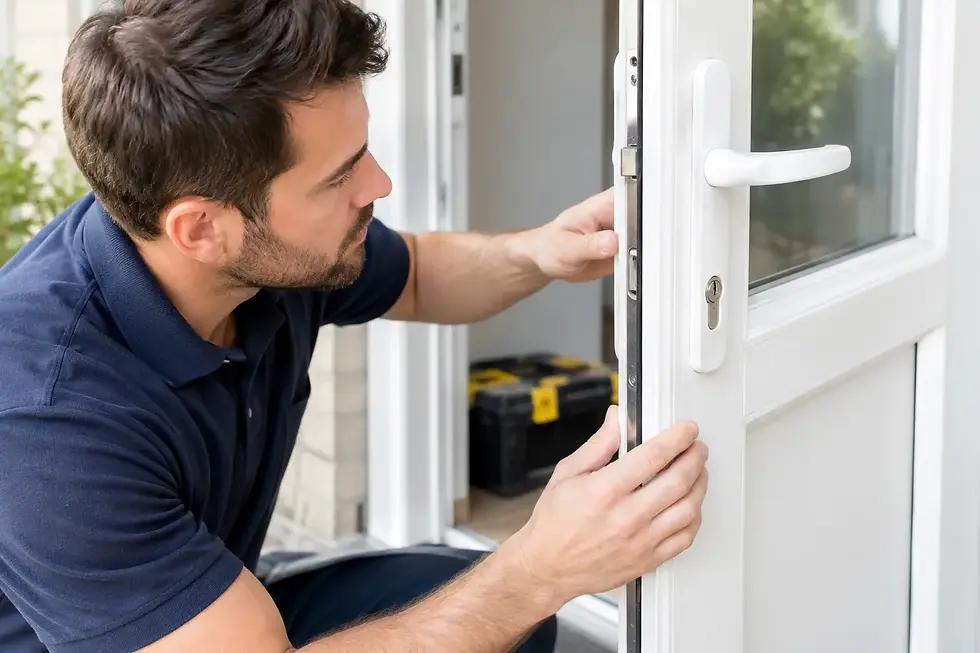
Do not assume a new cylinder will fix every UPVC door problem. If the handle is floppy, the key turns but the door will not open, or you have to lift and push the door hard to lock it, the multipoint mechanism may be worn or out of alignment. Continuing to force it can turn a repair into a complete mechanism failure. A locksmith who deals with UPVC doors can assess the keeps, hinges, gearbox and mechanism before replacing parts unnecessarily.
Think about the building as well as your front door
A flat benefits from two lines of security: the communal entrance and the individual flat door. But the security of the main block entrance does not make a weak flat door acceptable. Once somebody is inside a communal hallway, they may be out of sight and have more time to target individual doors.
At the same time, residents should not alter communal doors or shared access systems without permission. These doors may be controlled by the managing agent, freeholder or residents' association, and changes can affect fire escape, access control and other residents' keys or fobs.
Leasehold flats can have restrictions on changing the appearance of the entrance door, fitting a different external cylinder, installing a viewer or adding a chain. Ask before work starts if you are unsure. A good lock upgrade should not leave you in a dispute with the managing agent or with a door that no longer meets the block's requirements.
Do not overlook the simple security details
The lock gets most of the attention, but burglary repair work shows that doors often fail at the surrounding components. A good installation should include a close look at the following areas:
The keep and strike plate should be secured with long, appropriate screws into sound timber or a secure frame reinforcement.
Hinges need to be tight, correctly aligned and protected against lift-off where the door opens outwards.
The gap around the door should be even enough for the lock and latch to engage fully.
Letterboxes and glazing near the lock should not allow someone to reach in and release the lock from inside.
A door viewer can be a useful addition for a flat, particularly where there is no video entry system. It lets you check who is outside without opening the door. Door chains are less reliable as a security measure, but can provide a brief conversation barrier when fitted properly. Neither is a substitute for a sound lock and frame.
When smart locks make sense
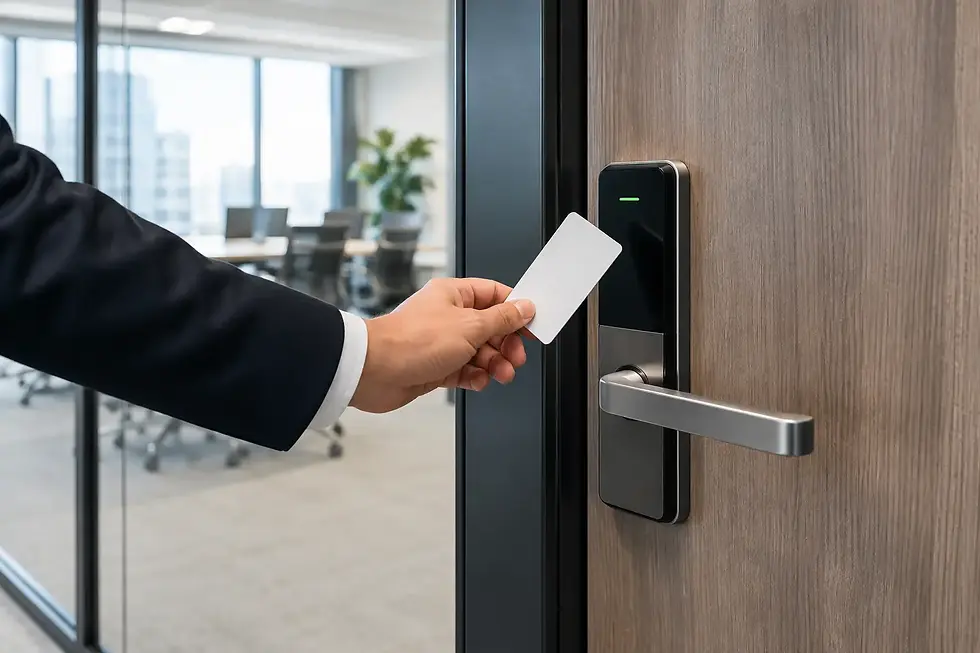
Smart locks can be useful for landlords, short-let operators and households where keys are regularly lost. The ability to issue temporary codes, remove access without collecting keys and see basic entry records can be convenient. But smart does not automatically mean more secure.
For a flat, check that the smart lock works with the existing door and does not interfere with a multipoint mechanism, fire door hardware or the need to exit easily from inside. Battery failure, app access and physical key override should all be considered. A mechanical lock from a recognised manufacturer is often the simpler and more dependable choice where there is no real need for remote access.
Choose fitting quality over a bargain lock
Even the right lock can be undermined by poor fitting. A mortice lock cut too deeply weakens the door. A cylinder installed at the wrong length is exposed. A keep that is not aligned with the bolt can make the lock difficult to use and encourage people to leave the door unsecured.
If your key is catching, the lock is stiff, the cylinder is loose, or the door has been damaged after a break-in, deal with it promptly. These are usually repairable problems, but they rarely improve with time. For homes in Clapham and the surrounding SW postcodes, Clapham Locksmiths can assess the whole door, not just swap the visible lock, and carry out the repair or upgrade in one visit where possible.
The right choice is the lock that suits your door, your building and how you actually live. Get those three things right, and your flat door will be easier to secure every time you leave.
Comments