
How to Choose Anti Snap Locks Properly
A lot of people only start asking how to choose anti snap locks after a break-in nearby, a failed lock, or a late-night callout. That is usually when they realise not all euro cylinder locks are built to the same standard. Some look fine from the outside but offer very little resistance if someone tries to snap, drill or pick them.
If your door has a euro cylinder, choosing the right replacement matters. It is one of the simplest upgrades you can make to improve security without changing the whole door. The trick is knowing what actually makes a lock more secure, and what is just packaging.
How to choose anti snap locks without wasting money
The first thing to know is that “anti snap” is not a magic label on its own. Plenty of locks are sold as high security, but the real difference comes down to testing, build quality and whether the lock suits your actual door.
A proper anti snap cylinder is designed so that if force is applied, the outer sacrificial section breaks away in a controlled manner while the important part of the lock stays secure inside the door. On a weak cylinder, snapping the front gives quick access to the locking mechanism. On a better one, it does not.
That said, anti snap protection should not be the only thing you look at. A decent lock should also resist drilling, bumping and picking. Most burglars want a fast, quiet entry point. If your cylinder slows that down or makes it impractical, they are more likely to move on.
Start with the right standard
If you are comparing cylinders, check for recognised testing rather than relying on sales wording. In most cases, the standard worth looking for is TS007. A 3-star cylinder is generally the strongest single rating for a euro lock. You may also see a 1-star cylinder used alongside 2-star security door furniture to give the same overall level.
For many homes, a TS007 3-star anti snap euro cylinder is the straightforward choice. It keeps things simple and avoids depending on handles or escutcheons to make up the rating. If your current door furniture is old, loose or basic, that matters.
You may also come across Sold Secure ratings. These can be useful as an extra sign that the product has been independently tested. If a lock has both a solid TS007 rating and a good reputation from a known manufacturer, that is usually a safer bet than a cheaper cylinder with vague claims.
The lock must fit the door properly
This is where people often go wrong. Even a good anti snap lock can be made weaker if it is the wrong size and sticks out too far from the handle. A cylinder that protrudes beyond the door furniture gives an intruder more to grip and attack.
Ideally, the cylinder should sit flush or very close to flush with the handle on both sides. If it is proud by several millimetres, it is worth correcting. That small detail makes a real difference.
Measuring a euro cylinder is simple in principle but easy to get wrong if you rush it. You measure from the centre screw hole to each end of the cylinder. That gives you the internal and external dimensions, such as 35/45 or 40/50. Doors are not always symmetrical, especially on composite or UPVC setups, so do not assume both sides are equal.
If your door has been adjusted over time, has thicker handles fitted, or has had previous repair work, it is worth checking carefully before ordering anything.
Think about the type of door you have
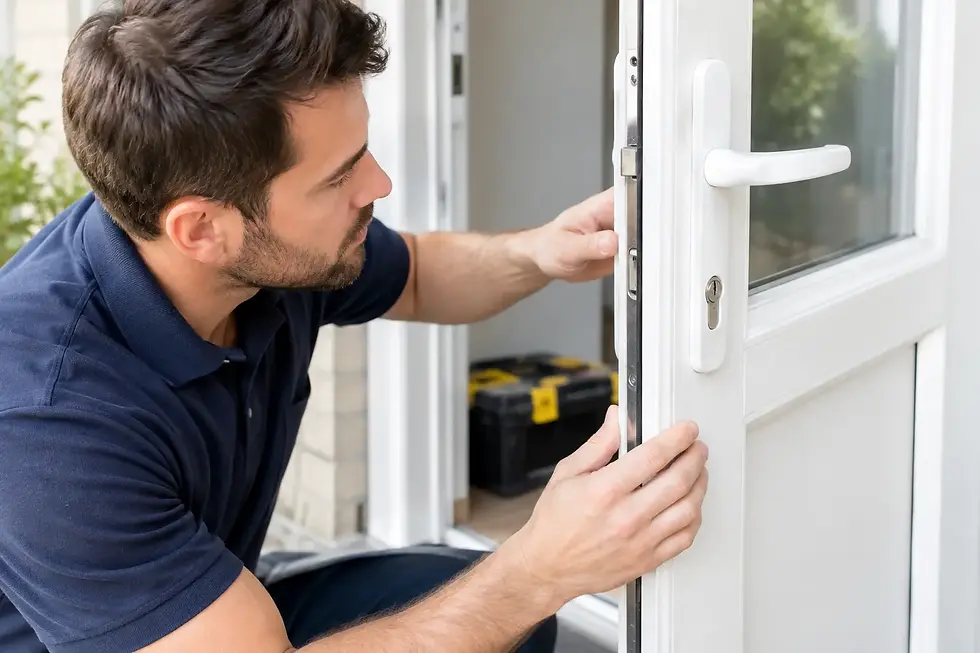
The right anti snap lock depends partly on the door itself. A UPVC front door with a multipoint locking strip has different needs from a timber door with a night latch and deadlock.
With UPVC and composite doors, the euro cylinder is usually the main weak point if the rest of the mechanism is working as it should. In that case, upgrading the cylinder makes good sense. But if the door is dropped, the keeps are misaligned, or the multipoint mechanism is stiff, replacing the cylinder alone may not solve the bigger issue. You can end up with a good lock on a poorly closing door.
On timber doors, anti snap matters if you have a euro cylinder fitted, but the overall setup still counts. The quality of the sashlock, the strength of the frame, and the condition of the handles or escutcheon all play a part. Security is rarely about one part on its own.
Features that are actually worth paying for
When you are comparing anti snap locks, there are a few extras that justify the price.
A hardened steel bar or reinforced core helps with drill resistance. Anti-pick pins and anti-bump design add another layer. A patented key system can also be useful, particularly for landlords or businesses, because it makes unauthorised key copying more difficult.
Keyed alike options are worth considering if you want one key for front and back doors. That is convenient, but only if both cylinders are suitable for the doors they are fitted to. Do not force a matching setup if one opening needs a different type or size.
Thumbturn cylinders can be a good option for convenience and fire safety, especially where you want quick exit without hunting for keys. But the inside turn should still be paired with sensible door security and, where relevant, glazing considerations. If someone can smash nearby glass and reach the turn, that changes the risk.
Cheap anti snap locks can cost more later
Price matters, especially if you are replacing several cylinders on a rental property or shopfront. But there is a difference between good value and false economy.
Very cheap cylinders often feel rough in use, wear faster, and may not have the level of testing claimed on the box. We see it regularly on callouts - the lock turns badly, the key snags, or the cylinder has already started to fail. Sometimes the customer paid twice by the time the proper lock went in.
A better quality cylinder should operate smoothly, come from a known brand, and have clear certification. It is not about buying the most expensive lock on the shelf. It is about avoiding the bottom end where standards are inconsistent.
How to choose anti snap locks for landlords and shared properties
If you manage a rental property, speed and practicality usually matter as much as the spec sheet. You want something secure, reliable and easy to replace if keys go missing between tenancies.
In that situation, a tested anti snap cylinder from a recognised manufacturer is usually the sensible middle ground. If key control is important, look at restricted key systems. If maintenance access is a factor, keyed alike cylinders can simplify things.
For shared entrances or small commercial premises, consider wear as well as security. A lock that is opened dozens of times a day needs to cope with regular use. This is where cheap cylinders tend to show their weakness quickly.
When the lock is not the whole problem
A stronger cylinder is a good upgrade, but it will not fix every security issue around the door. If the handle is loose, the frame is split, the keeps are poorly fixed, or the multipoint mechanism is failing, those problems should be dealt with as well.
After attempted break-ins, we often find damage around the cylinder area, but also movement in the door, weakness in the frame, or poor alignment that puts strain on the lock. In those cases, replacing the cylinder is only part of the repair. Doing the full job properly gives you a better result than swapping one part and hoping for the best.
That is especially true on older UPVC doors and bifold systems, where lock trouble is sometimes blamed on the cylinder when the real fault sits deeper in the mechanism.
A simple way to make the right choice
If you want the practical version, choose a properly sized euro cylinder with a TS007 3-star rating, anti drill and anti pick features, and a good fit that does not protrude from the handle. Make sure it suits the door you have, not just the one on the box picture.
If you are unsure, it is usually better to get the lock checked than order blind. A quick look at the existing setup can tell you whether you only need a cylinder swap or whether the handles, alignment, mechanism or frame need attention too. That saves hassle, repeat costs and the usual headache of trying to sort it once the door has already become unreliable.
A good anti snap lock should do two things - make forced entry much harder, and work properly every day without fuss. If it manages both, you have chosen well.
Comments