How to Replace Euro Cylinder Locks
A euro cylinder usually takes longer to measure than it does to change. That is where most people come unstuck. If you are looking up how to replace euro cylinder hardware on a front door, back door or office entrance, the job itself is often straightforward, but only if you buy the right size and type first.
These cylinders are common on uPVC doors, composite doors and some aluminium door systems. They sit through the centre of the lock mechanism and are held in place by a single retaining screw on the edge of the door. Once that screw is out and the cam is lined up properly, the cylinder slides free. The catch is that euro cylinders are not all the same length, and a poor fit can leave your door less secure than before.
What a euro cylinder actually does
The euro cylinder is the part you put the key into. It works with the multipoint locking mechanism inside the door. Turning the key moves a cam in the middle of the cylinder, which then engages the lock case.
If the cylinder is worn, damaged, snapped, hard to turn or simply too basic for the level of security you want, replacing it can make sense. It is also a common move after moving into a new property, after a tenancy change, or if keys have gone missing.
How to replace euro cylinder the right way
Before you start, open the door. That matters. If the new cylinder is wrong or the old one is stiff coming out, you do not want to be stuck on the wrong side of a shut door.
You will usually need only a screwdriver, your key, and the replacement cylinder. Some doors also benefit from a little patience, especially older uPVC doors where alignment is not perfect.
Step 1 - Find and remove the fixing screw
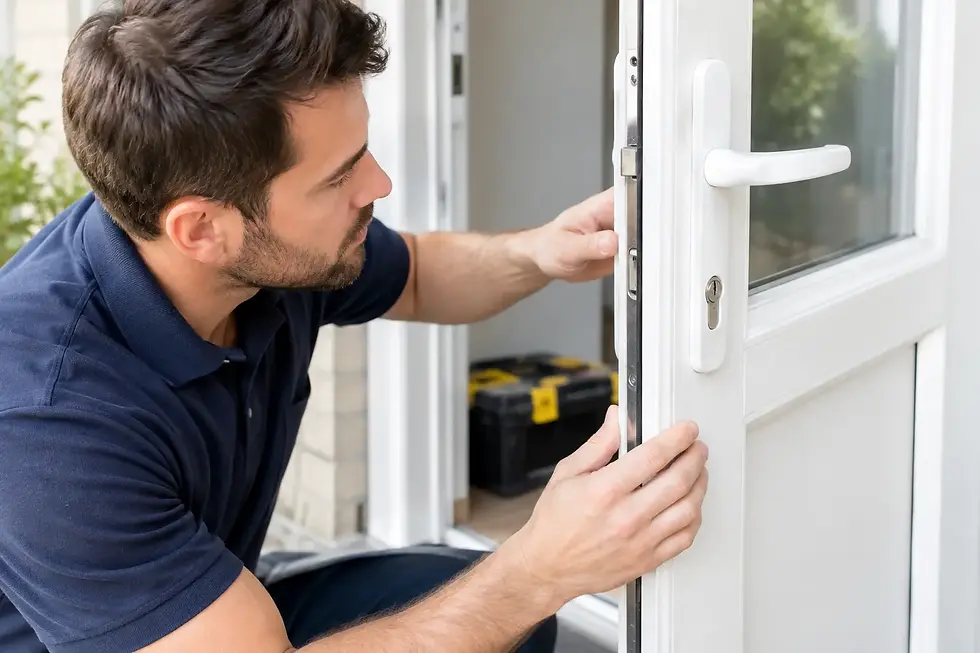
Look at the edge of the door, around the height of the keyhole. You should see a long screw that lines up with the centre of the cylinder. Remove that fully and keep it safe.
If the screw is tight or slightly rounded, do not force it blindly. A stripped fixing screw turns a simple lock change into a proper repair job.
Step 2 - Put the key in and turn it slightly
Insert the key into the cylinder and turn it a little left or right. You are trying to line up the cam so it sits flush enough for the cylinder to come out of the door.
This is the part that catches people out. If the key is turned too far, the cam still blocks removal. Too little, and nothing moves. Usually a small wiggle while gently pulling does the trick.
Step 3 - Slide the cylinder out
With the screw removed and the cam aligned, the cylinder should pull free. Sometimes it comes out easily. Sometimes it needs a bit of steady pressure while turning the key slightly.
If it does not move, stop and check whether the door handle needs lifting or whether the key position needs adjusting. On some multipoint doors, a bit of handle movement helps release tension on the lock.
Step 4 - Measure the old cylinder properly
This is the part worth getting right. Measure from the centre of the fixing hole to each end of the cylinder. That gives you the internal and external size, such as 40/50 or 45/45.
Do not just measure the full length and guess. Euro cylinders are often offset, which means one side is longer than the other. Fit the wrong size and the key may sit too deep on one side or stick out too far on the other.
As a rule, you want the cylinder to sit flush with the handle or project only very slightly. If it stands proud too far, it can be easier to grip and attack.
Step 5 - Fit the new cylinder
Slide the new cylinder into place with the key inserted. Turn the key slightly if needed so the cam lines up. Once it sits properly, refit the fixing screw through the edge of the door.
Tighten the screw firmly, but do not overdo it. Then test the key on both sides with the door still open.
Step 6 - Test before shutting the door
Lock and unlock it several times. Lift the handle if your door uses a lift-to-lock multipoint system. Make sure the key turns smoothly and the boltwork engages properly.
Only when you are happy should you shut the door and test it again. That one habit avoids a lot of emergency call-outs.
Choosing the right replacement cylinder
Not every euro cylinder offers the same level of security. If you are replacing like for like on an internal office door, a standard cylinder may be enough. If it is your main entrance door, it is worth thinking beyond basic size.
Look at whether you want anti-snap, anti-pick and anti-drill protection. In many cases, especially on street-facing doors or rented properties, upgrading is sensible. A cheap basic cylinder may fit, but that does not make it a good choice.
You also need to decide whether you need a key-and-key cylinder, a thumbturn on the inside, or a cylinder that works with existing keyed-alike arrangements. Thumbturns are convenient, but on some doors and some premises the better option depends on security, escape routes and who uses the building.
Common mistakes when replacing a euro cylinder
The biggest mistake is buying the wrong size. The second is assuming all stiffness is caused by the cylinder itself. Sometimes the real issue is a dropped door, a worn handle set, or a failing multipoint mechanism inside the door.
That matters because replacing the cylinder will not cure a misaligned lock case. If your key works better when lifting the handle, pushing the door, or pulling it towards you, the problem may be elsewhere.
Another common mistake is fitting a cylinder that sticks out too far from the handle. That can weaken the door security rather than improve it. And if the retaining screw is not seated properly, the cylinder may shift and cause awkward key movement.
When not to do it yourself
If the key has snapped inside, the door is shut and locked, or the old cylinder will not come out cleanly, the job can stop being a simple swap. The same goes for doors with damaged gearboxes, bent keeps, failed handles or uPVC doors that are already out of alignment.
There is also a difference between replacing a working cylinder and diagnosing a fault. If you are not certain the cylinder is the problem, changing it may only waste time and money.
That is often what we see on call-outs around Clapham - someone has fitted a new cylinder correctly enough, but the door still will not lock because the mechanism or alignment is failing. In that case, a locksmith can usually sort the actual issue in one visit, especially if the van is stocked for lock and door repairs rather than just cylinder changes.
A quick word on security standards
If security is the reason for the change, it is worth choosing a cylinder built for modern attack methods rather than simply the cheapest one that fits. Lock snapping has been a known weakness on many older euro cylinders, particularly on uPVC and composite doors.
A better quality anti-snap cylinder costs more, but the trade-off is simple - a small extra spend now can mean a much stronger front door later. For landlords and small business owners, that can be a sensible upgrade even if the old lock still works.
How long should it take?
If the old cylinder comes out without a fight and you already have the correct replacement, the actual fitting can take ten minutes. If you are measuring from scratch, checking security options and testing the door properly afterwards, allow longer.
If the cylinder is seized, the screw is damaged, or the door has alignment trouble, it can turn into a different job entirely. That is the point where getting a locksmith in is usually the cheaper option than forcing parts and creating more damage.
Final thought
Replacing a euro cylinder is one of the simpler lock jobs, but simple does not mean careless. Measure it properly, test it with the door open, and do not ignore signs that the lock problem is really a door or mechanism problem. A lock that works cleanly should feel boring - no sticking, no forcing, no second guessing every time you come home.
Comments