
Best Locks for Front Doors in the UK
A front door lock usually only gets attention when it jams, snaps, or leaves you standing outside with your keys on the hall table. But if you are trying to choose the best locks for front doors before there is a problem, that is the right time to do it. A good lock setup should suit the door you already have, hold up to daily use, and make forced entry far harder without turning day-to-day locking into a chore.
What makes the best locks for front doors?
There is no single lock that suits every property. The best choice depends on the door material, how the door closes into the frame, whether the existing mechanism is in good order, and what level of security you actually need.
A solid lock on a weak door frame is only half a job. The same goes for fitting a high-security cylinder to a worn multipoint mechanism that is already stiff and misaligned. We see this quite often on UPVC and composite doors - people replace one visible part and expect the whole system to improve. Sometimes it does. Sometimes the real fault is elsewhere.
In practical terms, the best front door locks do three things well. They resist common attack methods such as snapping, drilling and bumping, they work smoothly every day, and they are fitted properly to a door and frame that can support them.
The main lock types and where they work best
Euro cylinder locks
Euro cylinders are common on UPVC, composite and some aluminium doors. They sit inside a multipoint locking system and are one of the most frequently upgraded parts because the cylinder itself is often the weak point.
A standard cheap euro cylinder can be vulnerable to snapping. That matters because cylinder snapping is quick, quiet and well known. A proper anti-snap cylinder is usually the first thing we recommend where this style of lock is fitted. Look for cylinders tested to recognised British or TS standards, with anti-drill and anti-pick features as well.
That said, a better cylinder will not cure a failing gearbox, warped door, or badly aligned keeps. If the key is hard to turn or the handle has to be lifted awkwardly, the lock may need more than a cylinder swap.
Mortice sashlocks and deadlocks
For timber front doors, a good mortice lock is still one of the best options. A 5-lever mortice deadlock is widely trusted for a reason. It sits deep within the door, offers strong resistance when fitted well, and suits many traditional wooden doors better than newer lock types.
If the door is your main entrance, a mortice sashlock can make sense where you want both a latch and deadlock in one case. If you already have a night latch, a separate mortice deadlock often gives a stronger second line of security.
The trade-off is convenience. Mortice locks are dependable, but they are less forgiving if the door or frame shifts over time. Timber moves with age and weather, and that can affect how smoothly the bolt throws.
Night latches
Night latches are common on older timber doors and flats. Used on their own, they are usually not the best answer for front door security. Used alongside a proper mortice deadlock, they can still be useful.
Their main strength is convenience. You can close the door behind you and know it has latched shut. Their weakness is that lower-grade models can be forced more easily than people realise, especially if there is no door reinforcement and no second lock.
A high-quality night latch with a deadlocking function is better than a basic one, but we would still treat it as part of a wider setup rather than the whole solution.
Multipoint locking systems
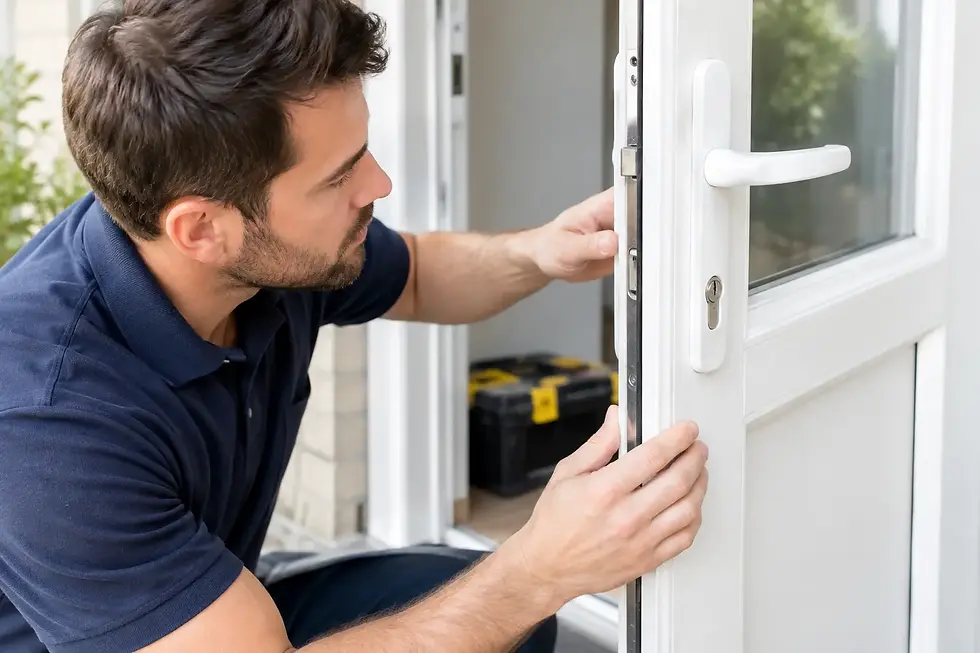
Multipoint locks are fitted to many UPVC and composite front doors. Instead of one single bolt, they lock the door into the frame at several points. On paper, that sounds ideal, and often it is. But the full system is only as strong as its weakest part.
If the mechanism is worn, the hooks or rollers are not engaging properly, or the cylinder is poor quality, the door may not be as secure as it looks. Multipoint systems also need the door to be well aligned. A dropped door can put strain on the lock and lead to failures that people mistake for a key problem.
A well-fitted multipoint lock with a quality anti-snap cylinder is one of the best locks for front doors made from UPVC or composite materials. The catch is that it needs proper upkeep and accurate fitting.
Best lock choices by door type
Timber front doors
For solid timber doors, a British Standard 5-lever mortice deadlock remains a strong choice. Add a quality night latch if you want easier everyday use, especially in a busy household where people come and go regularly.
If the timber door is old, it is worth checking the frame, hinges and strike area before upgrading the lock. There is no point fitting a better deadlock if the frame is splitting or the keep is barely holding.
UPVC front doors
For UPVC doors, the cylinder upgrade is usually the biggest improvement. A proper anti-snap euro cylinder can make a real difference, especially on doors still fitted with older standard cylinders.
But UPVC doors also bring mechanical issues. If the handle is floppy, the key sticks, or the door only locks when pulled hard, get the mechanism checked. A security upgrade and a repair often need to go together.
Composite front doors
Composite doors often have a stronger feel than UPVC and are usually fitted with multipoint systems as well. They can be very secure, but again the cylinder matters. A cheap cylinder in a decent composite door is an unnecessary weak spot.
Composite doors can also go out of alignment over time, particularly if heavily used. If the lock is becoming stiff, fix it early. People often keep forcing a key until something breaks.
Standards matter more than branding alone
People often ask for the best brand, but in practice the standard and specification matter just as much. A recognised British Standard or TS-rated product gives you a better benchmark than a name alone.
For timber doors, insurance-approved mortice locks are usually a sensible route. For euro cylinders, anti-snap protection should be high on the list, along with anti-drill and anti-bump features. Not every home needs the most expensive high-security cylinder on the market, but very cheap hardware is usually a false economy.
A lock is expected to work thousands of times, in all weather, with no fuss. Saving a few pounds on the wrong product often leads to call-outs later.
Security is not just the lock
If you want the best result, look at the whole front door setup. The lock, cylinder, handles, hinges, frame, keeps and door condition all matter. A weak frame can fail before the lock does. Loose handles can affect how the mechanism works. Poor fitting can make a good product feel like a bad one.
This is especially relevant after a break-in or attempted burglary. In those cases, replacing the obvious damaged lock is not always enough. The frame may need repair, the keeps may need strengthening, and the alignment may need correcting to stop future issues.
For landlords, it is also worth thinking about wear rather than just security. A lock in a rented property may see heavier use, more hurried key turning, and more tenant changeovers. Reliability matters as much as resistance to attack.
When to upgrade instead of repair
If a lock is simply worn but still a decent standard, repair may be enough. If it is outdated, low grade, or known to be vulnerable, replacement is the better call.
A few warning signs usually point towards an upgrade. The key is hard to turn, the cylinder protrudes too far from the handle, the lock has no visible anti-snap protection, or the door only secures properly with a bit of lifting, pushing or luck. Those are not details to ignore.
In Clapham and surrounding postcodes, we often find householders have lived with a temperamental front door for months before it fails completely. By that stage, what could have been a straightforward upgrade turns into an emergency lockout or a broken mechanism.
So what are the best locks for front doors?
If you want the short answer, it is this. For timber doors, a quality British Standard 5-lever mortice deadlock is still hard to beat. For UPVC and composite doors, a sound multipoint mechanism paired with a proper anti-snap euro cylinder is usually the best route. For flats with older timber doors, a good night latch plus a proper mortice deadlock often gives a sensible balance of convenience and security.
The right answer depends on the door in front of you, not just the product in a box. If the lock is stiff, the door is misaligned, or the frame is tired, sorting the whole setup will always serve you better than chasing the most expensive lock on the shelf.
A front door should close properly, lock properly, and leave you with one less thing to worry about when you head out or turn in for the night.
Comments