
Door Frame Repair After Break In
The first thing most people notice after a forced entry is the lock. The second is the mess around it - split timber, a loose keep, cracked jamb, screws pulled clean out, and a door that no longer shuts the way it should. Door frame repair after break in damage is not just about tidying up the woodwork. It is about making the entrance secure again, making the lock work as it should, and checking whether the weak point was the frame, the fixing, the door, or all three.
A lot of break-in damage looks worse than it is, but some of it is more serious than people realise. A door may still close, yet the frame can be fractured behind the strike area. The latch may catch, but only just. If the frame has been spread, twisted, or crushed, fitting a new lock on its own will not solve much. The repair has to deal with the structure around the lock, not just the hardware.
What gets damaged in a forced entry
In most burglaries involving a front or rear entrance, the force goes into the lock side of the frame. That usually means the strike plate area, the rebate, the jamb, or the section where the keeps are fixed. On a timber frame, this often shows up as splitting along the grain. On a composite or UPVC setup, the damage can include broken keeps, stripped fixings, crushed reinforcement points, or distortion that stops the multipoint lock lining up.
The door itself matters too. If the frame has failed because short screws were holding the keep into weak timber, the repair may be quite straightforward. If the door edge is split, the hinges are pulled, or the whole lining has shifted in the opening, the job becomes more involved. That is why proper post-burglary work starts with inspection rather than guesswork.
Door frame repair after break in - what can be repaired?
Quite a lot, depending on the material and the extent of the damage. A clean split in a timber frame around the lock area can often be repaired and reinforced without replacing the full frame. That may involve removing loose material, rebuilding the damaged section, fitting longer fixings into sound timber, and adding reinforcement that spreads the load better than before.
If the damage is localised, this is usually the most sensible route. It is quicker, less disruptive, and often more cost-effective than changing the entire frame. For landlords and small businesses in particular, keeping the repair targeted can make a lot of sense if the rest of the doorway is still sound.
Where the frame is badly shattered, rotten, detached from the wall, or distorted through a wider section, replacement becomes the better option. There is no point patching a frame that has lost its strength over a large area. A neat-looking repair is not the same as a secure one. If the repaired section cannot hold the keeps and resist another attack, it has not done the job.
Why lock replacement alone is often not enough
People are understandably keen to get a new lock fitted quickly after a burglary. That is sensible, but the lock is only one part of the problem. A British Standard cylinder or sashlock will not perform properly if the keep is fixed into split timber or a bent frame. The lock can only be as secure as what surrounds it.
This is where rushed repairs go wrong. Someone fits a new cylinder, the key turns, the door shuts, and on the surface it seems sorted. Then the latch sits poorly, the deadbolt does not throw cleanly, and the frame remains weak around the fixing points. That can lead to poor security, ongoing alignment issues, and more damage with everyday use.
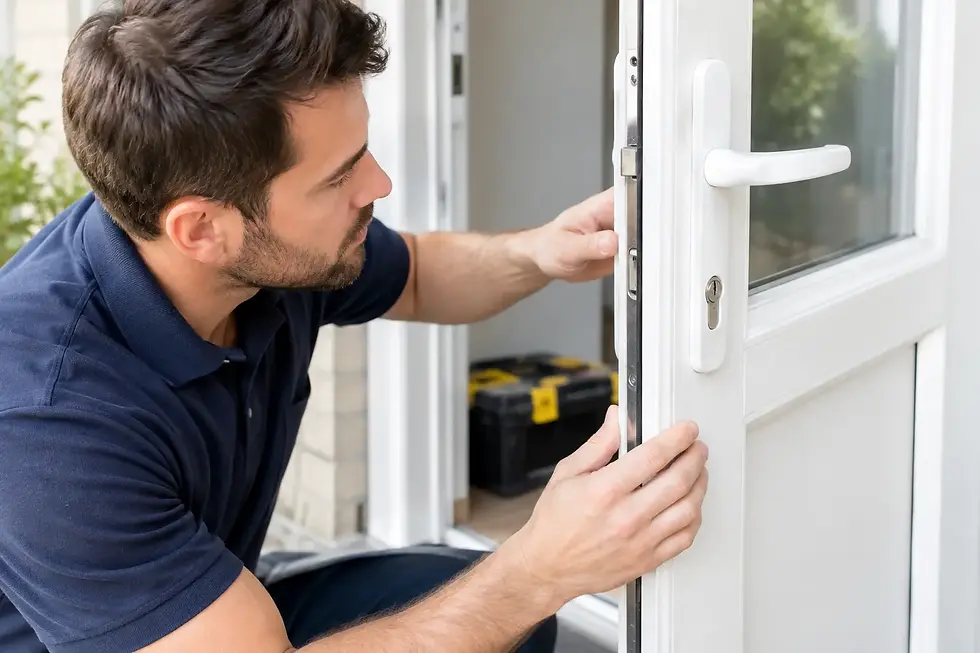
A proper repair looks at the whole closing side of the door. That includes the lock, keeps, strike plates, fixings, reinforcement, alignment, and the condition of the door leaf itself.
Timber, UPVC and composite frames need different repairs
Timber is usually the most forgiving material after forced entry. If there is enough solid wood left, a tradesman can often rebuild and strengthen the damaged area. Longer screws, security strike plates, reinforcement, and careful carpentry can make a big difference. In many cases, the repaired section ends up stronger than it was before.
UPVC and composite doors are a bit different. The visible damage may look minor, but the locking points must line up properly for the multipoint system to engage. If the frame has bowed or the keeps have torn out, the repair needs to restore alignment, not just replace a broken part. Sometimes the frame can be adjusted and reinforced. Sometimes a section needs replacing. It depends on the profile, the internal reinforcement, and how badly the mechanism has been knocked out of line.
That is why there is no one-size-fits-all answer to door frame repair after break in damage. The right fix depends on the door type, the age of the installation, the quality of the original fitting, and how the intruder got through in the first place.
When replacement is the better call
Nobody wants to hear that a full frame replacement may be needed, but occasionally it is the honest answer. If the jamb has split deeply from top to bottom, if the lining has pulled away from the masonry, or if previous poor repairs have left the structure weak, trying to save it can be false economy.
The same goes for doors with repeated damage. If a frame has already been packed, filled, re-screwed and plated several times, each new repair has less sound material to work with. At that stage, replacement often gives a cleaner result, better security, and fewer return problems.
There is also the matter of appearance. On a main entrance, especially in a well-kept home or customer-facing premises, a heavily patched frame may function but still look rough. Some customers are happy to prioritise speed and security first, then revisit cosmetics later. Others want both sorted in one go. Both approaches are valid.
Reinforcement matters as much as repair
A break-in repair should not simply put the doorway back to how it was the day before if that setup failed too easily. The better approach is to repair the damage and improve the weak point. That may mean deeper fixings into solid structure, reinforced strike plates, upgraded keeps, better hinge screws, or a lock upgrade if the original hardware was substandard.
This is especially relevant on older timber doors and some rental properties, where the original screws around the keep are surprisingly short. An intruder does not always beat a high-security lock. Very often they beat soft timber and poor fixing.
Good reinforcement does not have to make the door look industrial. Done properly, it is often discreet. The real benefit is that the force of any future attack is spread across a stronger section instead of being concentrated at one weak point.
What to do straight after the break-in
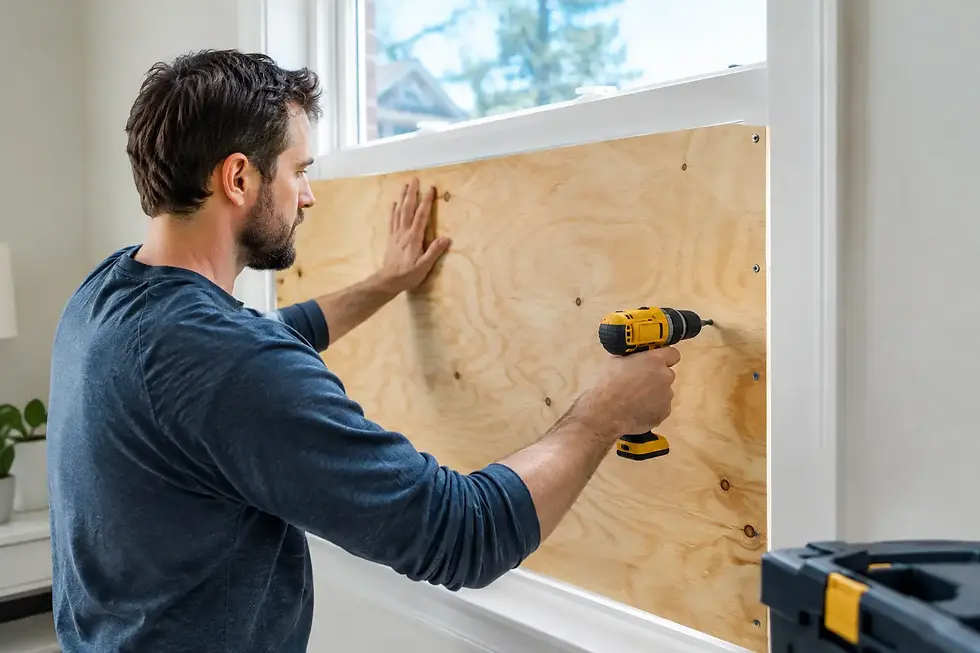
If the property has just been burgled, the priority is making it safe. If the door will not lock, if the frame is open, or if the lock has been snapped or jammed, temporary boarding or emergency securing may be needed before the final repair is carried out. On some jobs, the frame can be repaired and the lock replaced in one visit. On others, especially where parts are damaged across the door, frame and mechanism, the safe option is to secure first and complete the full repair once everything needed is on site.
Take photographs before work starts if you need them for insurance. Do not keep using a damaged door if it is dragging, catching, or only half-locking. That can worsen the split, damage the lock further, and leave the property vulnerable.
For local homeowners and businesses in Clapham, fast attendance matters after this sort of damage. It is not just about convenience. It is about getting the entrance secured before the next night, the next closing time, or the next period when the property will be empty.
Choosing the right repairer
Post-burglary repairs sit in the gap between locksmith work and carpentry. That is where many jobs become awkward. A locksmith who only swaps cylinders may not want to deal with a split frame. A carpenter may rebuild the timber nicely but not set up the lock and keeps correctly. The best result usually comes from someone who handles both sides of the job - securing the door, repairing the frame, fitting or upgrading the lock, and checking that the whole lot closes and locks properly.
That practical mix is what makes a difference on site. It saves time, avoids repeat visits, and means the repair is judged by one standard only: does the door work properly and is it secure?
If you need door frame repair after break in damage, the best next step is not to guess whether it needs a filler, a new lock, or a new frame. Get it assessed properly, get it secured properly, and make sure the repair deals with the reason it failed, not just the visible damage.
Comments