
UPVC Door Lock Repair: Fix or Replace?
A UPVC door that suddenly will not lock properly has a way of ruining your day fast. Most people first notice it when the key feels stiff, the handle lifts but nothing catches, or the door only locks if you pull it hard towards you. That is usually when UPVC door lock repair becomes urgent, because what starts as an awkward lock can turn into a full lockout or a door that will not secure at all.
The tricky part is that the fault is not always where people think it is. Many assume the cylinder is the problem because that is the bit the key goes into. Sometimes it is. But on UPVC doors, the issue often sits deeper in the multipoint mechanism, the alignment of the door, the handles, or the keeps on the frame. If you replace the wrong part, you spend money and still have the same problem.
What usually goes wrong with a UPVC door lock
Most UPVC doors rely on a multipoint locking strip running up the edge of the door. When you lift the handle, hooks, rollers or deadbolts engage into the frame. When everything is lined up well, the action feels smooth and secure. When one part wears, shifts or breaks, the whole system starts to complain.
A common fault is door misalignment. UPVC doors move over time with regular use, weather changes and general wear on hinges. The lock may still be mechanically sound, but the hooks or rollers no longer line up neatly with the keeps in the frame. That is when you get the familiar problem of having to lift the handle hard or shoulder the door before the key will turn.
The gearbox is another regular culprit. This is the central part of the mechanism, usually sitting behind the handles. If the handle feels floppy, jams halfway, or spins without operating the lock properly, the gearbox may be worn or broken. On older doors, the full strip mechanism can also fail. Internal springs snap, moving parts seize, and the lock simply stops engaging the way it should.
Then there is the euro cylinder. If the key is difficult to insert, hard to turn, or only works from one side, the cylinder may be worn or damaged. That is a more straightforward repair in many cases, but it still needs checking properly because a bad mechanism can make a good cylinder feel faulty.
UPVC door lock repair or full replacement?
This is the question most customers ask, and the honest answer is that it depends on the fault, the age of the door, and the condition of the whole locking system.
If the issue is alignment, adjustment may be all that is needed. A door that has dropped slightly can often be realigned so the lock works smoothly again. If a handle set has failed, replacing the handles may sort it. If the euro cylinder is worn, that can usually be changed without replacing the full mechanism.
Where repair becomes less practical is when the internal multipoint strip has failed, especially on older or discontinued systems. Some mechanisms can be repaired with replacement gearboxes or centre cases. Others are too worn, too damaged, or simply not worth patching up because another part is likely to fail soon after. In those cases, replacement is the proper fix.
There is also the security side. If the lock is old and basic, a repair may restore function without improving security. For some homeowners and landlords, that is enough. For others, especially after a break-in attempt or repeated faults, it makes more sense to replace key parts with more secure and reliable ones at the same time.
Signs you need a UPVC door lock repair soon
Small warning signs matter with these doors. People often live with them for months until the lock finally gives up on a wet evening or just as they are heading out.
If the handle is getting harder to lift, the key only turns with pressure on the door, the lock sticks in certain weather, or you hear grinding from inside the mechanism, it is worth getting it looked at before it becomes an emergency. A door that does not latch properly or springs open slightly after closing should also not be ignored. That can point to alignment problems putting strain on the lock every single day.
If the key has snapped, the handle has gone loose, or the door is shut and will not open, that moves from maintenance into urgent repair territory. At that point, the job is not just about replacing parts. It is about opening the door with as little damage as possible and making it secure again on the same visit if the right parts are available.
Why DIY repairs often go wrong
There is plenty of advice online showing people how to swap a cylinder or adjust hinges. Some of that is useful in simple cases. The trouble starts when the real fault has not been identified properly.
A stiff key does not always mean a bad cylinder. A dropped door does not always need a hinge tweak. Forcing the handle, over-tightening fixings, or fitting the wrong size replacement part can make a manageable job worse. We see plenty of doors where someone has changed the cylinder, replaced the handles and sprayed oil into the lock, only to find the mechanism still fails because the gearbox was the issue all along.
There is also the matter of access. If the door is jammed shut, opening it cleanly takes experience. Some failed multipoint locks can trap the door closed in a way that is not solved by removing a couple of screws. You need to know how the mechanism works, how the particular door is built, and how to gain entry without turning a lock problem into a carpentry job.
How a proper locksmith approaches the repair
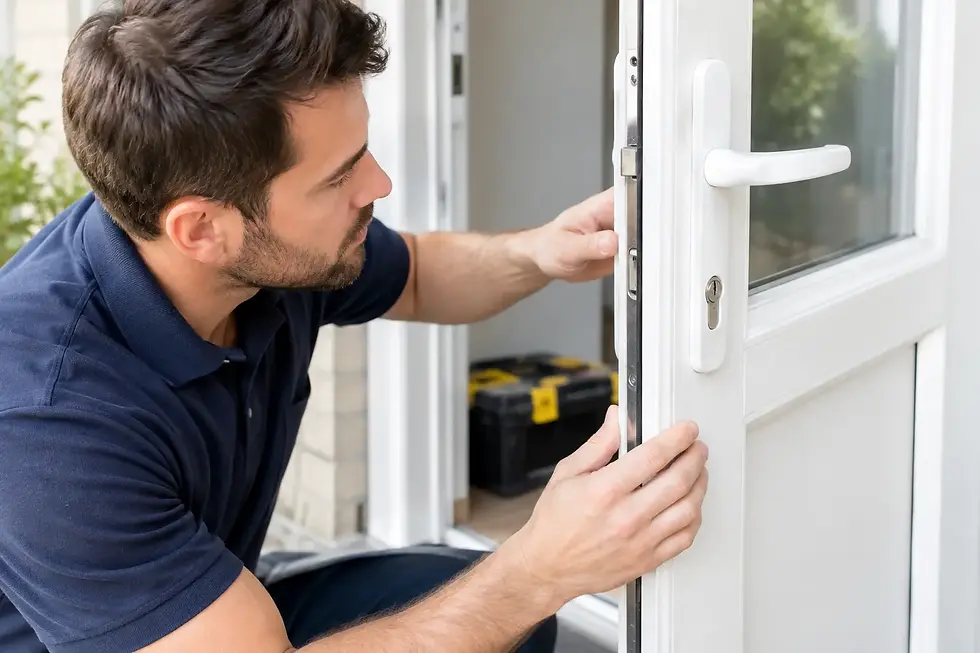
A good UPVC repair starts with diagnosis, not guesswork. The first step is checking whether the fault is with the cylinder, the handles, the gearbox, the full strip, the hinges, or the frame alignment. That matters because the fix should deal with the cause, not just the symptom.
On site, the door is usually tested open and closed. That helps show whether the mechanism itself is failing or whether the lock only binds under pressure when the door meets the frame. Measurements and backset details may be needed if replacement parts are required, because UPVC systems vary more than many people expect.
If the part can be repaired or replaced there and then, that is usually the best outcome. For homes and small businesses, speed matters. You want the door secure again without waiting days for a second appointment if it can be avoided. That is why experienced locksmiths tend to carry a wide range of cylinders, gearboxes, handles and common mechanism parts.
In Clapham and the surrounding postcodes, that sort of practical one-visit approach is often what customers need most. They are not after a long technical explanation. They want to know what has failed, what it will take to fix it, and whether the door will be secure by the time the job is done.
When replacement is the better long-term choice
Not every repair is worth forcing through. If the mechanism is heavily worn, the door has recurring alignment issues, or parts are obsolete, replacing the failed components properly may save money and stress in the long run.
This is especially true for landlords and business owners. A temporary fix on a frequently used entrance can lead to another callout soon after, often at a worse time. If a mechanism has reached the end of its life, it is usually better to deal with it properly rather than nurse it along.
That does not mean replacing everything by default. Honest advice matters here. Sometimes a small adjustment and a new cylinder is enough. Sometimes the sensible answer is a new multipoint lock and upgraded cylinder. The right job is the one that restores smooth operation, secure locking and reasonable reliability, not the one with the longest invoice.
Choosing the right help for UPVC door lock repair
UPVC doors are specialist work. General handymen may be fine for basic jobs, but jammed multipoint locks, failed gearboxes and alignment faults need someone who deals with these systems regularly.
Look for a locksmith who can handle both the lock and the door itself. That matters because some faults sit between the two. A lock may need replacing, but if the keeps are badly lined up or the door has dropped, the new part will still be under strain. Proper repair means sorting the whole problem.
Clapham Locksmiths deals with this kind of work day in, day out, which is often the difference between a quick proper repair and a lot of trial and error. For customers, the main thing is simple: you want someone who turns up, identifies the fault, explains it plainly and gets the door secure again without fuss.
If your UPVC door is already sticking, catching or refusing to lock cleanly, it is worth acting before it fails completely. A lock rarely picks a convenient moment to give up.
Comments