Bifold Door Lock Repair: Common Fixes
Updated: 2 days ago
A bifold door that will not lock properly is never a small annoyance for long. One stiff handle, one misaligned leaf, or one failed gearbox can leave the whole opening insecure, difficult to use, or completely stuck. That is why bifold door lock repair usually needs looking at properly, not forced, ignored, or patched up with a temporary fix.
Bifold doors have more going on than a standard back door. You are dealing with multiple panels, hinges, rollers, keeps, a traffic door, often a multi-point locking strip, and hardware that all has to line up at the same time. When one part drops out of alignment, the lock can start dragging, the handle can go loose or tight, or the key may stop turning altogether.
What usually goes wrong with bifold door lock repair
Most lock faults on bifold doors are not just about the cylinder. In many cases, the problem starts elsewhere and shows up at the lock. A door that has dropped slightly can put pressure on the hooks or bolts. That extra strain then makes the handle hard to lift and the key hard to turn. People often assume the lock itself has failed, when the real cause is alignment.
Another common issue is wear inside the gearbox or centre case. If the handle spins, feels loose, jams halfway, or no longer throws the locking points cleanly, the internal mechanism may be worn or broken. On bifold systems, this can happen after years of regular use, but it can also happen sooner if the door has been sticking and the handle has been forced.
Rollers and hinges also matter more than many people realise. If the panels are not moving smoothly on the track, the traffic door may not sit square in the frame. Once that happens, the lock keeps and the locking points stop meeting cleanly. You may still be able to shut the door, but locking it becomes a wrestle.
Then there is the cylinder itself. A worn euro cylinder can cause a key to stick, snap, or refuse to turn. That is often the simplest part of the job to replace, but it still needs checking in context. Fitting a new cylinder to a badly aligned door does not solve much.
Signs you need bifold door lock repair rather than a quick adjustment
Some faults can be sorted with a careful adjustment. Some cannot. The trick is knowing the difference before more damage is done.
If the handle has become harder to lift over time, that often points to alignment or compression issues. If the handle suddenly stops operating the lock mechanism properly, the gearbox may have failed. If the key turns but the door does not fully secure, there may be a fault with the multi-point strip or the keeps. If the key will not go in smoothly, or only works from one side, the cylinder may be worn, damaged, or under pressure from a misaligned lock case.
The bigger warning sign is when the door only locks if you pull it, push it, lift it, or lean your weight against it. That tells you parts are no longer lining up as they should. It might still work today, but it is the sort of fault that tends to become an emergency at the worst moment.
A bifold door that is stuck locked or stuck shut needs particular care. Forcing the handle or trying to lever the panels can turn a repairable lock fault into damage to the door sash, frame, glazing, or shoot bolts. In that situation, a proper opening and repair is usually the cheaper route in the end.
Why bifold doors develop lock problems
Wear and tear is the obvious answer, but it is rarely the only one. Bifold doors are exposed to regular movement, weather changes, and the natural settling of a property. Over time, heat, cold, expansion, contraction, and general use can all affect how the doors sit in the frame.
Poor servicing is another factor. Many bifold systems are left untouched until they fail. Tracks gather dirt, rollers wear, hinges loosen slightly, and the lock starts working under strain. A small issue becomes a bigger one because it is easier to ignore than a front door that stops latching.
Previous repairs can also create trouble. We often see doors where the wrong parts have been fitted, keeps have been adjusted without solving the cause, or handles and cylinders have been changed while the underlying mechanism was left failing. That can buy a bit of time, but not much.
There is also the simple fact that bifold door hardware is not universal. Different makes and older systems can use very specific gearboxes, handles, cylinders, shoot bolts, and locking strips. A repair done properly means identifying the right fault and the right parts, not guessing.
What can be repaired and what may need replacing
A lot depends on the exact fault. If the issue is minor misalignment, an adjustment to hinges, keeps, rollers, or the door position may restore smooth locking. If the cylinder is worn or damaged, replacing that part is often straightforward.
If the gearbox has failed, that part can often be replaced without changing the full door. The same goes for some handles, keeps, and sections of the locking mechanism. Where parts are obsolete, damaged beyond repair, or the system has multiple faults, a broader hardware replacement may be the sensible option.
That is where experience matters. A good repair is not just getting the key to turn once before leaving. It is making sure the door closes cleanly, locks without force, aligns correctly across the panels, and secures properly after repeated use.
For landlords and business owners, this matters even more. A door that sort of locks is not much comfort if tenants, staff, or customers cannot use it reliably. A proper repair avoids repeat call-outs and the hassle of the same issue returning a week later.
Can you do a bifold door lock repair yourself?
Sometimes, but carefully. If the fault is obvious dirt in the track or loose visible fixings on hardware, a basic check may help. Cleaning the track, checking for debris, and making sure nothing is physically obstructing the traffic door are sensible first steps.
Beyond that, caution is wise. Bifold systems are more involved than standard doors, and over-adjusting hinges or keeps can make the problem worse. Forcing a stiff handle is one of the quickest ways to turn a misalignment problem into a failed gearbox. Spraying random lubricant into every part is another common mistake. Some products attract dirt, some are not suitable for lock components, and none of them fix broken internals.
If the key is not turning, the handle is jamming, the door has dropped, or the lock has stopped engaging properly, it is usually better to have it assessed before parts are damaged further. That is especially true if the door is your main rear access, opens onto a garden, or leaves the property insecure.
What a proper repair visit should involve
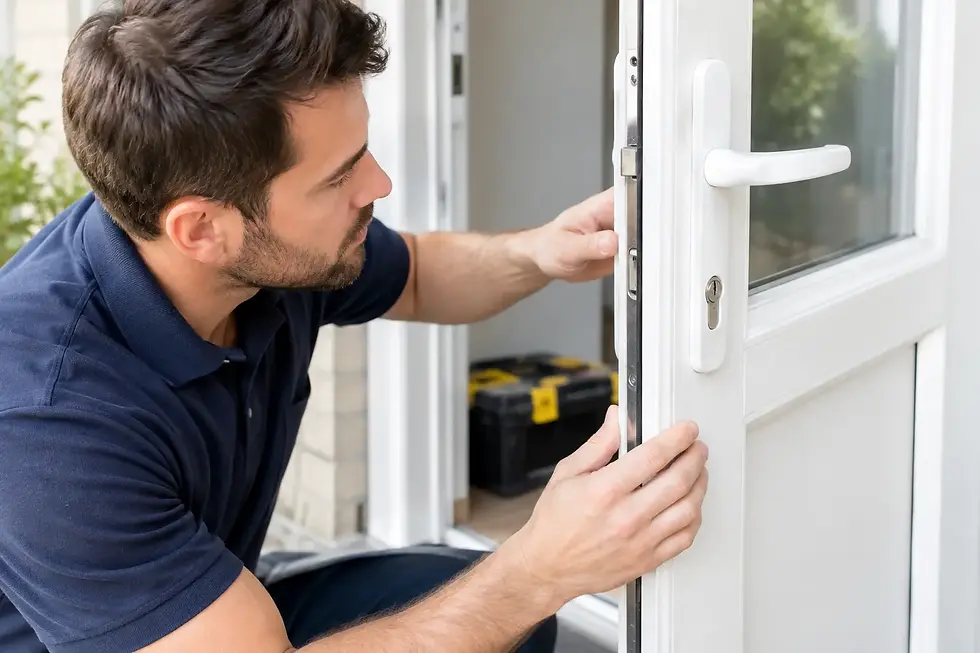
A decent bifold door lock repair starts with diagnosis. That means checking whether the fault sits in the cylinder, handle, gearbox, multi-point strip, alignment, hinges, rollers, or a mix of those. It should not be a case of replacing one part and hoping.
The door then needs testing open and closed. A mechanism may appear to work with the door open but fail under pressure once shut. That difference tells you a lot about whether the issue is internal failure or alignment.
Where possible, the repair should be completed on site with the correct parts and adjustments made at the same time. For homes and small businesses in and around Clapham, that practical one-visit approach matters. Nobody wants a patio door left half-secure while parts are chased down if the problem could have been resolved there and then with a stocked van and the right trade knowledge.
It is also worth checking the wider security of the door once repaired. If the cylinder is old, if there has been attempted forced entry, or if the hardware has visible wear, there may be a case for upgrading vulnerable components while the system is being worked on. That does not mean replacing everything. It means being honest about what is sound, what is worn, and what is likely to fail next.
When to call for help straight away
If the bifold door will not lock at all, will not open, has trapped someone out, or leaves the property insecure, it is time to get it seen quickly. The same applies if the key has snapped, the handle has gone slack, or the locking points are no longer engaging.
Urgent attention is also sensible after any attempted break-in. Even if the door still opens and closes, lock cases, keeps, handles, and alignment can all be affected by force. A door that looks mostly fine may not be secure.
At that stage, speed matters, but so does capability. Bifold systems need someone who understands doors as well as locks. That mix of locksmith work and practical door repair is what gets the problem sorted properly rather than just temporarily covered.
A bifold door should close cleanly, lock without a fight, and leave you confident the property is secure. If yours is sticking, dropping, jamming, or only locking when it feels like it, do not wait for it to fail fully. Getting it repaired early is usually simpler, cheaper, and a lot less stressful.
Comments