
How to Board Damaged Windows After a Break-In
A smashed window leaves more than broken glass to deal with. It leaves your home, flat or business exposed to rain, cold, theft and further damage. Knowing how to board damaged windows properly can make the property secure while you arrange glazing or a permanent repair. The aim is not to create a perfect finish. It is to cover the opening safely, keep people out and prevent anyone getting hurt.
Make the area safe before boarding anything
Do not start measuring or lifting a board while loose glass is still falling from the frame. Keep children, pets, customers and anyone not helping well back from the area. Put on thick gloves, sturdy footwear and eye protection. If the window has been damaged during a break-in, avoid touching handles, frames or items nearby more than necessary until you have decided whether to report it to the police or your insurer.
Pick up larger pieces of glass carefully and place them in a rigid container, not a thin bin bag. A brush and dustpan will deal with fragments on the sill and floor, but check the surrounding area as glass can travel further than expected. If the glass is high up, cracked but still in place, or part of a large shopfront pane, do not try to pull it out yourself. It can fail without warning.
If there is a risk of rain before the opening can be secured, place a temporary sheet of heavy-duty plastic over the inside first. This catches dust and helps limit water entering the room while you work. It is only a short-term measure, though. Plastic alone is easy to tear and offers no real security.
What you need to board a damaged window
For most domestic windows, exterior-grade plywood is the sensible choice. It is stronger than chipboard, copes better with damp conditions and is difficult to force or cut quickly. A sheet around 12mm thick is usually suitable for a small to medium opening. Larger openings, ground-floor windows and commercial premises may need thicker board, additional timber bracing or a professional emergency boarding service.
You will normally need a tape measure, pencil, saw, drill, suitable screws, washers and a screwdriver or drill driver. Use screws long enough to hold securely in sound timber, masonry or the solid part of the window surround, without blindly driving into unknown cables, pipework or the window mechanism.
Avoid using nails where possible. They can split old timber, damage UPVC frames and are harder to remove safely when the replacement glass is fitted. Never screw directly into the glazed section of a UPVC frame, a trickle vent, or locking hardware. This can turn a broken pane into a much larger window repair.
Measure the opening, not just the broken pane
Measure the full area that needs covering from the outside of the frame or the solid surrounding wall. Add at least 75mm on every side where there is a sound surface for the board to overlap. That overlap is what gives the board strength. A panel cut to the exact size of the missing glass may simply be pushed through the opening.
For example, if the visible gap measures 800mm by 1,000mm, cut the board roughly 950mm by 1,150mm, provided the extra width lands on firm frame or wall material. Check where the hinges, handles and opening sash sit before cutting. On a casement window, the safest fixing point may be the outer frame or wall reveal rather than the moving section.
For a window that opens inward, boarding from the outside is usually best. It keeps the board out of the room and makes access harder. If you cannot safely work outside, fitting the board internally is still better than leaving the opening exposed, but it is less secure because the remaining glass or frame can be attacked from outdoors.
How to board damaged windows step by step
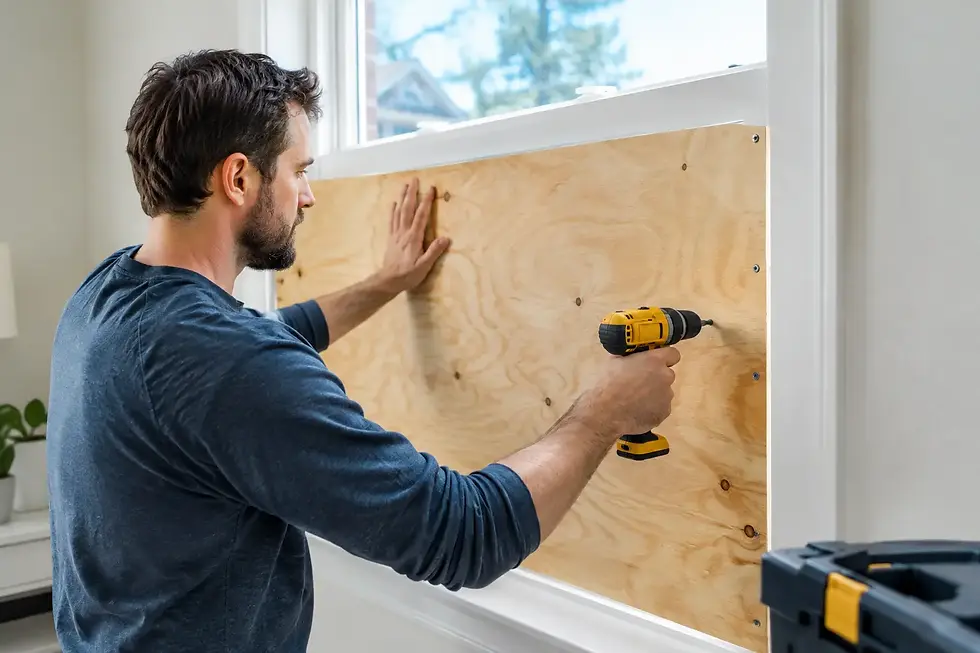
Start by holding the cut plywood over the opening and checking that it sits flat. It should cover every broken section without pressing hard against sharp glass. If it rocks or leaves a substantial gap, trim it or use timber packing where appropriate. Do not force a warped board into place.
Pre-drill the plywood to reduce splitting. Position fixings around the edges, generally about 50mm to 75mm in from the board edge. For a standard-sized opening, use several fixings around all sides rather than relying on one screw in each corner. Washers help spread the load and stop screw heads pulling through damp or softer plywood.
Fix into a solid, non-moving part of the surround. With traditional timber windows, that may be the outer frame if it is sound. With a masonry opening, use suitable plugs and screws in the brickwork or render-free solid wall. With UPVC windows, take particular care: fixing in the wrong place can damage the reinforced profile, drainage channels or locking system.
Once the board is secure, test it with firm hand pressure. It should not flex heavily, lift at the corners or rattle in the wind. Look for exposed sharp edges, loose glass trapped behind the board and gaps that allow a hand or tool through. A few minutes spent checking now can prevent a second callout later that night.
Do not make these common mistakes
The quickest-looking solution is often the weakest. Taping cardboard, hardboard or a thin internal sheet over a smashed pane might stop draughts for an hour, but it will not secure the property. Likewise, a board held in place with a couple of screws can be removed in seconds.
Be especially careful with these situations:
Double-glazed units: The outer pane may be shattered while the inner pane looks intact. The unit is still compromised and may collapse when disturbed.
UPVC windows: Do not assume every visible section is safe to screw into. Drainage slots and internal mechanisms are easily damaged.
Sash or bay windows: The frame may be rotten or weakened, meaning the board needs fixing into the surrounding structure instead.
Commercial glass: Large panes, aluminium frames and shopfronts need a stronger, properly planned boarding method, particularly where public access is involved.
It is also worth thinking about escape routes. Do not permanently board over the only practical emergency exit from a bedroom, office or communal area. If that window is required as a fire escape, speak to a professional promptly about a safer temporary arrangement and a fast replacement.
When a professional is the safer option
Boarding a small, ground-floor opening can be manageable if you have the right materials and a solid place to fix the panel. It is not always a sensible DIY job. Call for help if the broken window is upstairs, above a conservatory, on a door, part of a shopfront, in a communal building or attached to damaged frames and locks.
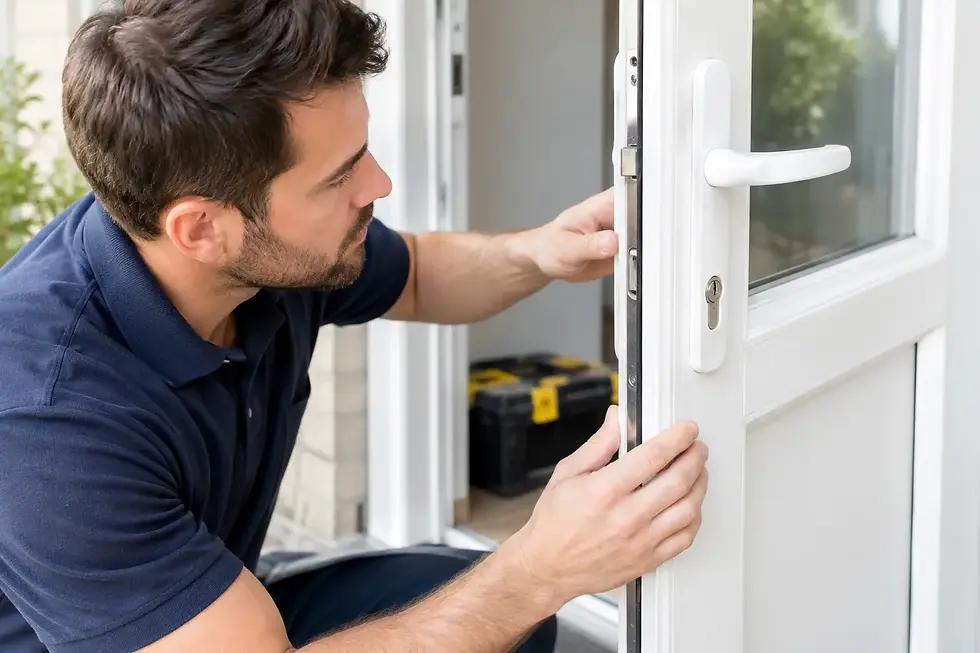
After a burglary, the window may not be the only problem. A bent handle, damaged espagnolette lock, broken hinges or split timber can leave the replacement glazing vulnerable too. Repairing the glass without addressing the failed locking point does not properly secure the property.
For properties in Clapham and nearby areas, Clapham Locksmiths can secure damaged windows and assess associated lock, frame and UPVC window problems in the same visit. A properly stocked vehicle matters in this situation: it can mean the opening is boarded, the immediate security issue is dealt with and you are not left waiting overnight with a vulnerable property.
Keep the boarding temporary and arrange the right repair
A plywood board is an emergency barrier, not a permanent window repair. Moisture can build up, rooms lose natural light and a boarded window can draw attention if it remains in place for weeks. Take a clear photo of the damage and the temporary work for your insurer before the glazing is replaced, keeping any crime reference number with it if one was issued.
When arranging a repair, ask for the cause of the damage to be checked as well as the pane itself. Accidental impact is one thing. Failed hinges, a poorly aligned UPVC sash, decayed timber, loose beading or a forced lock may explain why the glass broke or why the frame did not protect the window.
A secure board buys you breathing space. Use that time to get the glass, frame and locking points put right, so the window is not merely closed again but properly safe.
Comments