
How to Stop Lock Snapping at Your Property
A standard-looking front door can have a weak point hidden in plain sight: the cylinder lock. Knowing how to stop lock snapping means checking whether your current cylinder is properly protected, correctly fitted and supported by the rest of the door hardware. It is one of the most worthwhile security improvements for UPVC, composite and some aluminium doors.
Lock snapping is a forced-entry method that targets the exposed part of a euro profile cylinder. Once the cylinder has been damaged, the mechanism may be manipulated to open the door. Older or basic cylinders are more vulnerable, particularly where they stick out too far from the handle or door surface.
The good news is that this is usually a straightforward problem to put right. A suitable anti-snap lock upgrade can make a real difference without replacing a perfectly sound door.
What is lock snapping?
Many modern external doors use a euro cylinder - the small removable part of the lock that your key goes into. You will commonly find one on UPVC doors, composite doors, patio doors and some shopfront doors.
A conventional cylinder has a designed weak point. Anti-snap cylinders are made to react differently under force. Their sacrificial section is intended to break in a controlled way while keeping the protected internal part of the lock working and the door secured. That extra protection can buy valuable time and make forced entry far more difficult.
Not every euro cylinder is the same, even when two locks look identical from outside. The quality of the cylinder, its security rating, its size and the way it has been fitted all matter.
How to stop lock snapping with the right lock
The main answer is to replace an older standard cylinder with a properly rated anti-snap cylinder. Look for a cylinder that meets recognised British security standards, rather than choosing solely on price or appearance.
For most homes, a TS007 3-star rated euro cylinder is a strong choice. It is tested for resistance to common forms of attack, including snapping, drilling and picking. Another acceptable route can be a 1-star cylinder used with a compatible 2-star security handle, giving the required combined level of protection. Which option suits your door depends on the handle, lock case and door design.
For a rented flat, a landlord may want a practical replacement that improves security while keeping key management simple. For a family home, you may prefer a high-security cylinder with restricted keys, so copies cannot be cut without authorisation. For a small business, key control can be just as useful as physical strength, especially where former staff or contractors may have held keys.
A locksmith can identify the cylinder type and measure it accurately before fitting. This avoids a common mistake: buying a good lock in the wrong size.
Choose the correct cylinder length
A cylinder should sit close to flush with the handle or door furniture. If it projects noticeably, it is more exposed and can be easier to attack. As a general guide, a cylinder should not protrude by more than around 3mm.
This is why a lock cannot be chosen by guessing. UPVC and composite doors often have different measurements on each side because of handles, panels or reinforcement within the door. A cylinder that is too short may not work properly; one that is too long may compromise the protection you have paid for.
If your handles have been changed, the door has been adjusted or new decorative hardware has been fitted, it is worth checking the cylinder again. A lock that was once correctly sized may no longer sit properly.
Check the handles as well as the cylinder
The cylinder is only part of the job. Door handles help protect it, especially on UPVC and composite doors. A good security handle covers more of the cylinder and is designed to resist pulling, twisting and drilling.
If you have an older handle that feels loose, has visible damage or leaves too much of the cylinder exposed, replacing both the handle and cylinder is often the sensible option. It is not always necessary, but it can give a better all-round result than fitting a high-security cylinder behind weak or poorly fitting furniture.
This is particularly relevant on doors that have been forced before. After a burglary attempt, damage is not always limited to the cylinder. The handle, multipoint locking strip, keeps, frame and door alignment should all be checked before calling the job finished.
Make sure the door locks properly
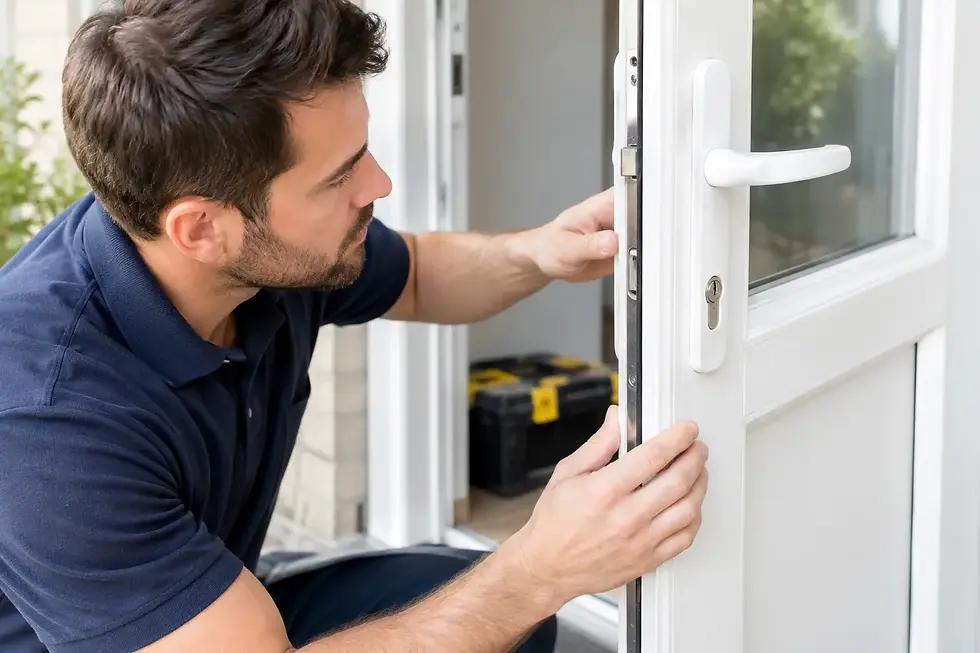
A new cylinder cannot compensate for a badly adjusted door. If you need to lift, shove or pull the door hard before the handle turns, the multipoint locking system may be out of alignment. That puts strain on the gearbox and locking points, and it can leave you with a failed lock at exactly the wrong time.
Warning signs include a stiff handle, a key that only turns when you push the door into place, locking points that scrape, or a door that has dropped on its hinges. UPVC doors are especially prone to movement over time, although composite and timber doors can also swell, shift or warp.
Have the door adjusted and the locking mechanism checked at the same time as a cylinder upgrade. A properly working multipoint lock spreads security across the frame through hooks, rollers, bolts or mushrooms. The cylinder secures the mechanism, but the whole door needs to engage as intended.
Do not overlook the frame and keeps
The strongest lock is limited by the material around it. On a timber door, weak or short screws in the keep can be a problem. On UPVC and composite doors, loose keeps, worn fixings or damage around the frame can affect how securely the locking points engage.
For doors that open outwards, hinges and hinge-side security deserve attention too. For French doors and bifold doors, the meeting edge and secondary leaf need to be checked, not just the main handle side. These are details that are easily missed when someone focuses only on the keyhole.
If you are improving security after an attempted break-in, ask for the door, frame, handles and locking points to be assessed together. It is often possible to repair and reinforce the existing setup rather than replacing more than is needed.
Everyday habits that support better door security
An anti-snap cylinder is a major improvement, but day-to-day use still matters. Lift the handle fully and turn the key whenever you leave the property, rather than simply pulling the door shut. On multipoint doors, this engages the additional locking points.
Do not leave keys in the inside of a lock where they can be reached through a nearby letterbox, window or glazed panel. If that layout is a concern, a letterbox guard or other appropriate internal protection may help. Keep spare keys under proper control too. A key hidden outside is not a security plan.
For landlords, consider changing or rekeying locks between tenancies, especially if there is no clear record of how many copies are in circulation. For businesses, keep a simple key register and collect keys promptly when staff leave.
When to call a locksmith
Call a locksmith if your cylinder is basic or unbranded, sticks out from the handle, has been damaged, or is fitted to a door that does not lock smoothly. You should also arrange an inspection after any attempted break-in, even if the door still appears to work. Internal damage can be easy to miss and may lead to a lock failure later.
A local locksmith should be able to assess the existing cylinder, measure and fit the right replacement, adjust a misaligned UPVC door and deal with related handle, gearbox or frame repairs in one visit. For properties in Clapham and the surrounding SW postcodes, that can save the hassle of arranging separate tradespeople for a lock problem and a door problem.
Security upgrades do not have to mean replacing every lock in the house at once. Start with the external door that is most exposed or most frequently used, make sure it locks cleanly, and choose protection that is correctly fitted rather than simply expensive. A well-sized anti-snap cylinder and a properly adjusted door are practical steps that make your property a harder target.
Comments