
Same Day Key Cutting in Clapham for Spare Keys
A spare key is rarely urgent until the moment it is. Your tenant is arriving, the cleaner is due, a child has misplaced their set, or the only working key has started sticking in the lock. Same day key cutting Clapham customers use is about getting a usable key sorted quickly, without guessing whether it will actually work when you get home.
For many standard household and business keys, a properly cut duplicate can be made the same day. The important word is properly. A key that turns only after several attempts, catches in the cylinder or feels rough is not a bargain. It is a future lockout waiting to happen.
When Same Day Key Cutting in Clapham Makes Sense
The most straightforward request is a spare key from a working original. If the original enters the lock smoothly and turns without force, it can usually be copied accurately. This is useful for households with several occupants, landlords preparing a change of tenancy, and small businesses that need an extra set for a trusted member of staff.
The job becomes more urgent when there is only one key left. Keys wear over time, especially on a busy front door or communal entrance. The ridges can become rounded and the blade can bend slightly. A copy made from a badly worn key may copy its faults as well as its shape, so it is worth having it checked before relying on it as your only replacement.
There are also situations where cutting another key is not the right answer. If keys have been lost with anything that identifies the address, if a former tenant has not returned a set, or if there has been a break-in, changing or rekeying the lock may be the safer option. A local locksmith should explain that clearly rather than simply cutting keys and sending you on your way.
What Can Be Cut the Same Day?
Most everyday cylinder, mortice and rim-cylinder keys can be cut quickly when there is a suitable blank available. These are the common keys used on front doors, back doors, internal doors, garages and many shop shutters.
Some keys need more care. Dimple keys, security keys and restricted-profile keys may require a particular blank, authorisation card or manufacturer supply route. The same applies to some keys marked “do not duplicate”. That marking does not always mean a key cannot be copied, but it can mean the correct process involves checking authority or ordering a protected blank.
Car keys are a separate matter. A modern vehicle key may need electronic programming as well as cutting, while a remote fob may require replacement parts. It is best not to assume that every key-cutting service can deal with vehicle keys on the spot.
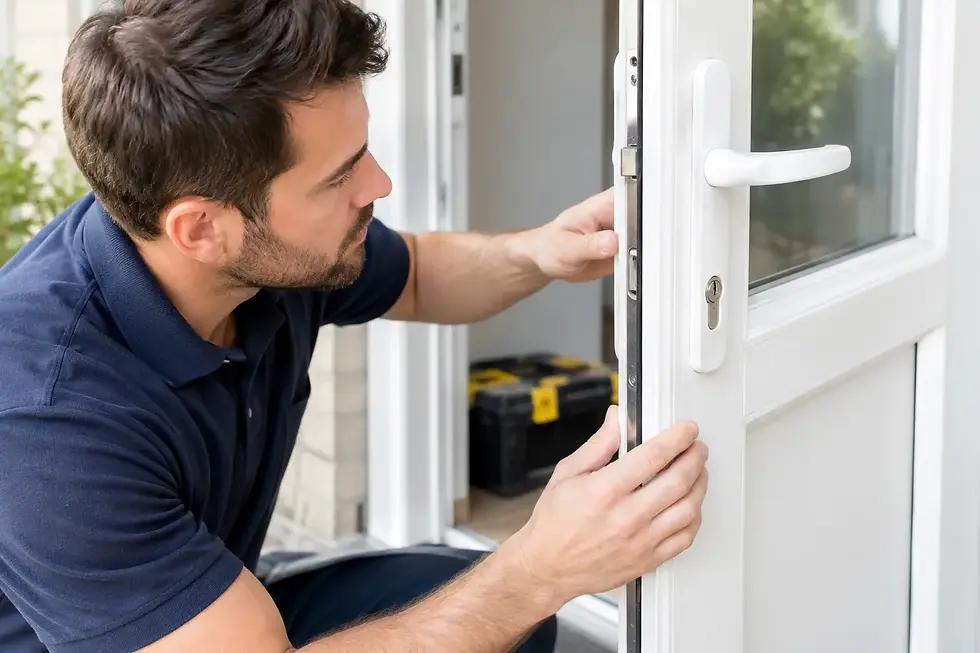
For door systems, the lock itself matters as much as the key. UPVC multipoint locks, composite doors and bifold doors can develop faults that make a perfectly good key feel like the problem. If the handle has become loose, the key will not turn when the door is shut, or the door needs lifting to lock, forcing a new key into it will not fix the mechanism. It can make the repair more expensive.
Bring the Original Key If You Can
A working original gives the best chance of an accurate duplicate. Before it is cut, look at the blade closely. Deep scratches, cracks around the bow, a twisted profile or worn teeth are signs that it may not be a reliable master for copying.
If the key is snapped, missing or trapped in the lock, key cutting alone may not be possible. The lock might need to be opened, repaired or replaced first. In an emergency, the practical aim is to restore safe access with as little disruption to the door as possible, then make sure you have enough working keys before the locksmith leaves.
For landlords and business owners, it helps to keep one clearly labelled management key in a secure place. Do not leave it under a mat, in a meter box or in an obvious key safe. A secure key cabinet or controlled handover arrangement is far safer, particularly where several people need access.
Why a Cheap Copy Can Cause Trouble
Key cutting is precise work. The blank must match the original, and the cuts need to be clean and positioned correctly. If the key is cut poorly, burrs on the edge can catch inside the lock. If it is cut too shallow or too deep, the pins inside the cylinder may not line up as they should.
A copy can also fail because the original was already worn out. This is why a good locksmith will ask whether the original works smoothly and, where possible, test the new key before calling the job finished. The small amount of time spent checking can save a late-night callout later.
Avoid using excessive force if a new key does not work immediately. Pull it out and inspect it. A key that will not turn may be a cutting issue, but it could also be a door alignment problem or a failing cylinder. Repeatedly forcing it can snap the key or damage the lock pins.
Spare Keys, Security and Who Should Have One
There is a balance between convenience and control. A family home may need several sets, while a rental property may need keys for the landlord, tenant and managing agent. A shop may require a responsible opening and closing keyholder. More keys mean less risk of someone being locked out, but they also mean more copies to track.
A sensible approach is to know exactly how many sets exist and who holds them. When a tenancy changes, a staff member leaves, or a set cannot be accounted for, review the lock rather than hoping the missing key never appears. On a standard euro cylinder, changing the cylinder can often be a straightforward way to restore control without replacing the full door furniture.
If you are upgrading security, key cutting should be part of the conversation. A higher-security anti-snap cylinder, for example, may provide better protection and come with controlled keys that are harder to duplicate without permission. That is not necessary for every door, but it can be a worthwhile option for vulnerable entrances or premises with valuable stock.
Same-Day Help for More Than a Missing Key
Sometimes the call starts as “I need another key” and ends with a different repair. A front door that will not lock, a UPVC handle that spins, a jammed bifold mechanism or a damaged frame needs a tradesperson who can look at the whole problem, not just the key blade.
Clapham Locksmiths can assess the lock, door and surrounding hardware on site, then explain the sensible options. Fully stocked vehicles matter here. If a replacement cylinder, gearbox, handle or security fitting is needed, dealing with it in one visit is far better than leaving a property unsecured while waiting for parts.
That practical approach is particularly useful after a lockout or attempted burglary. Once access has been regained, the priority is not merely getting the door shut. It is making sure it locks properly, closes cleanly and gives you confidence when you leave the property.
Before You Arrange Key Cutting
Have the original key ready if you have it, and be clear about how many copies you need. Mention any wording or code stamped on the key, and say if it is for a communal entrance, security cylinder, safe or unusual door. This helps establish whether a standard same-day copy is realistic or whether the key needs specialist handling.
If the key is not the real problem, say what the lock is doing. Details such as “the key turns only with the handle lifted” or “it works from inside but not outside” can point to a door or mechanism fault straight away.
A spare key should make life easier, not give you another thing to worry about. Keep one with someone you trust or in a genuinely secure location, and deal with a stiff lock before it turns into a locked-out evening.
Comments