Broken Key Extraction Service: What Happens Next
A key can snap without much warning. One moment the door is stiff but working, and the next you are holding the key bow while the working end is stuck inside the lock. If you need a broken key extraction service, the main thing is not to make a frustrating problem into a more expensive lock repair by forcing it.
A snapped key does not automatically mean the lock needs replacing. In many cases, a locksmith can remove the broken piece cleanly, check why it happened and cut or provide a replacement key. The right fix depends on where the key has broken, the type of cylinder or mortice lock involved, and whether the lock was already worn or faulty.
Why keys snap in locks
Keys usually break for a reason. Older keys can weaken after years of use, especially if they have been bent, copied several times or used to pull a heavy door into position. A key can also shear because the lock is dry, worn or damaged internally.
Door alignment is another common cause. If you have to lift, push, pull or shoulder the door before the key will turn, the lock may be taking pressure it should not be taking. This is particularly common with UPVC doors, composite doors and bifold doors where the locking mechanism and keeps need to line up correctly.
Cold weather, swelling timber and a door frame that has moved slightly can all make a lock feel stiff. Continuing to turn the key harder is tempting, particularly when you are rushing out, but it puts strain on the narrowest part of the key. A broken key is often the first obvious sign that the lock or door needs attention.
Broken key extraction service: what a locksmith does
A proper broken key extraction service is more than putting a hook into the keyway and hoping for the best. The locksmith first checks whether any part of the key is visible, whether the lock is in the locked or unlocked position, and whether the cylinder or mechanism is under pressure.
Where possible, the broken section is removed using specialist extraction tools designed for the lock. The aim is to take the fragment out without drilling, damaging the pins or marking the door furniture. Once it is out, the lock can be tested with a suitable key to see whether it still operates smoothly.
If the lock has failed, is badly worn or has been damaged by repeated forcing, replacement may be the sensible option. That should be explained clearly before work goes ahead. Sometimes a new cylinder is all that is needed. In other cases, particularly with a failed multipoint mechanism, the repair involves the door mechanism, handles, alignment or keeps as well as the cylinder.
A stocked locksmith's vehicle matters here. It means there is a better chance of sorting the extraction, repair and replacement in one visit rather than leaving a property unsecured while parts are sourced.
What to do before help arrives
Stop turning the remaining piece of key if any is sticking out. Do not use pliers to twist it, as this can push the broken part further into the lock or snap it again closer to the face of the cylinder.
It is also best to avoid superglue. Glue can run into the lock pins and turn a straightforward extraction into a replacement job. The same goes for improvised tools such as paper clips, hair grips and small screwdrivers. They can block access to the broken key and damage the inside of the lock.
If the door is closed and you are locked out, check whether there is another safe, authorised way into the property. Do not force a window or damage a door panel. For tenants, tell the landlord or managing agent what has happened, particularly if the lock has been difficult for some time. For a business, keep staff away from the entrance if the broken key has left the premises insecure.
If the key snapped while the door was open, avoid shutting it until the lock has been checked. You may be able to leave the door closed but unlocked temporarily, but only if the property can be safely supervised. A door that will not lock properly should be treated as a security issue, not left until later in the week.
Can the lock be saved?
Often, yes. If the key has simply worn out or caught under pressure, and the lock still turns freely after the fragment is removed, there may be no need to replace anything. A new key cut from an original key can be enough.
However, it is worth looking beyond the broken key. If the lock felt rough, the key had to be wiggled to work, or the handle had to be lifted with unusual force, the underlying fault should be repaired. Reusing a problem lock with a fresh key can lead to the same call-out a few days later.
On a euro cylinder, a locksmith will check the cylinder action, keyway and door alignment. On a mortice lock, they may need to assess the lever mechanism, bolt and strike plate. On UPVC and composite doors, the gearbox and multipoint locking strip may need checking. Each type of lock has a different failure point, so a one-size-fits-all answer is rarely honest.
UPVC doors and broken keys
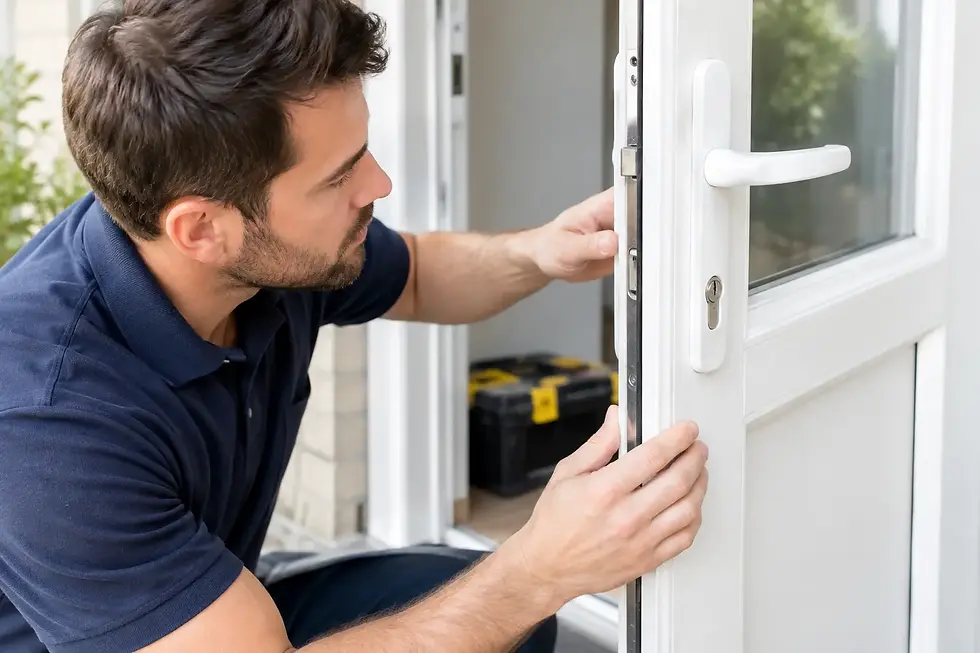
A broken key in a UPVC door needs particular care. These doors normally use a multipoint locking system, meaning several hooks, rollers or bolts engage along the edge of the door. If the door has dropped or the mechanism is failing, pressure can build up around the cylinder.
Forcing the key can break the key, but it can also leave the mechanism partly engaged. The door may then be difficult to open even after the key is removed. A locksmith should release the pressure, inspect the cylinder and test the handle and locking points before deciding whether an adjustment or mechanism repair is needed.
The same principle applies to bifold doors. Their locks and alignment need to work together. If the key is becoming hard to turn, do not wait for it to snap on a Friday evening or when you are trying to secure the property before a trip away.
When it is an urgent call-out
A snapped key is urgent when you cannot secure the building, cannot get in, or cannot get out safely. It also needs quick attention after a burglary attempt, if the key has broken in a communal entrance, or if a shop cannot lock up at closing time.
For homes and flats around Clapham, a local locksmith can normally assess the situation quickly and arrive with the tools and common replacement parts needed for the job. Clapham Locksmiths deals with lockouts, broken keys, faulty cylinders and damaged door mechanisms, so the visit can cover the cause as well as the immediate extraction.
If there is no immediate security risk and you have another entrance, you may choose to book a convenient time. Even then, do not ignore a stiff lock. The longer a failing lock is used, the greater the chance of a key breaking at the worst possible moment.
Avoiding another broken key
Keep keys on a light keyring where possible and do not use them as a handle to pull a door shut. If a door sticks, deal with the sticking rather than forcing the key to overcome it. A lock should turn with controlled, reasonable pressure.
Use a good-quality original key when having copies cut. Poorly cut copies can work intermittently, wear the lock and put extra stress on the key. If a copied key feels tight from the start, stop using it and have it checked.
Most importantly, act when the first signs appear. A key that catches, a handle that needs lifting harder than before, or a door that needs a shove to lock is asking for a repair. Getting it sorted early is usually quicker, cleaner and less disruptive than dealing with half a key stuck in the door when you need to be somewhere.
Comments