
How to Repair Door Alignment Without Forcing It
A door that suddenly needs a shoulder to close is not just irritating. It can damage the lock, wear out the hinges and, in some cases, leave your home or business less secure. Knowing how to repair door alignment starts with identifying where the door is catching. The fix may be as simple as tightening a hinge, but forcing a misaligned door shut can turn a small adjustment into a failed lock or split frame.
Most alignment problems give a warning first: a scrape at the top corner, a latch that only catches when you lift the handle, or a draught appearing around one edge. Deal with it early and the repair is usually quicker, cleaner and less expensive.
Find out what has moved before adjusting anything
Stand on the closing side of the door and look at the gap between the door and frame. On a well-aligned door, the gap should be fairly even from top to bottom. Check it with the door open and closed, as a loose hinge can allow it to drop only when its full weight is hanging.
Then close the door gently. Do not turn the key or force the handle at this stage. Watch where it catches:
Catching at the top on the latch side often means the door has dropped on its hinges.
Catching at the bottom can point to a swollen timber door, a shifted threshold or a frame issue.
Rubbing along the hinge side may mean loose screws, worn hinges or a frame that has moved.
A latch sitting above, below or beside the strike plate usually means the door or frame is out of line.
A thin strip of paper can help. Close it between the door and frame in several places. Where it pulls free easily, the gap is wider. Where it tears or jams, that is where the pressure is building.
Start with the hinges
For a standard timber front or internal door, check every hinge screw first. Use a screwdriver that properly fits the screw head. Loose screws are common, particularly at the top hinge, which carries a large part of the door's weight.
Tighten each screw while the door is supported. If a screw turns but will not bite, the timber behind it may be worn out. A longer screw can sometimes reach solid timber in the frame, but take care near wiring and only use a suitable screw for the hinge and frame. On an older frame with badly enlarged holes, the hinge may need to be removed and the timber repaired before refitting.
If the door has dropped, tightening the top hinge is often enough to improve it. It is not always the final answer. A heavy solid-core door, for example, may have worn hinge knuckles or a distorted frame as well as loose screws. Repeatedly tightening screws will not correct a hinge that has reached the end of its working life.
Check for hinge wear
With the door open, carefully lift the handle or bottom edge very slightly. Noticeable vertical movement can indicate worn hinges or loose fixings. Do not put your fingers beneath a heavy door.
Replacing hinges is a sensible repair when they are worn, bent or corroded. The replacement must be the right size, load rating and position. Moving a hinge even a few millimetres can create a new problem at the lock side, so this is a job worth getting right rather than guessing.
Adjust the latch and strike plate only after the door fits the frame
Many people go straight to the strike plate - the metal plate in the frame that receives the latch or bolt. That can work if the door itself is sitting square and the lock is simply missing the opening slightly. If the door is sagging, though, moving the strike plate only masks the real problem.
To see where the latch is meeting, put a small amount of chalk or washable marker on the latch face, then close the door gently. The mark left on the strike plate will show whether it is hitting too high, too low or to one side.
If the misalignment is minor, loosen the strike plate screws and reposition it a fraction. You may need to carefully enlarge the opening in the frame. Make small changes, test the latch, then test the key and handle. The door should latch without being lifted, pushed hard or pulled sharply.
For a multipoint locking door, do not file the keeps or force the handle to compensate for a poorly aligned door. The hooks, rollers and bolts must enter their keeps correctly. If they do not, the gearbox and cylinder can be placed under unnecessary strain.
How to repair door alignment on UPVC doors
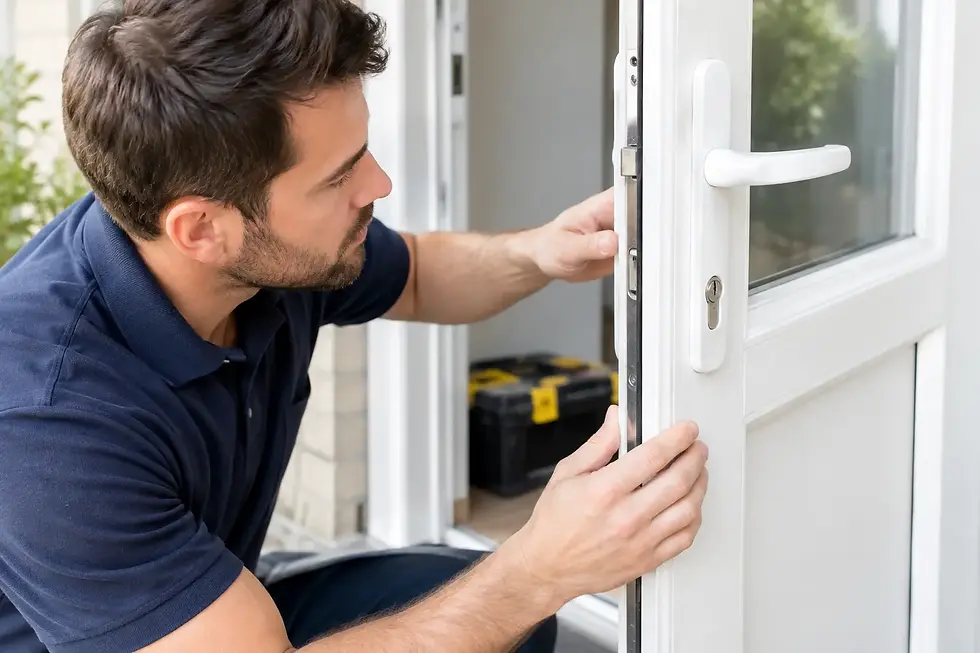
UPVC doors work differently from timber doors. Their alignment is commonly adjusted at the hinges, and some systems allow adjustment for height, side-to-side position and compression against the seals. The exact adjustment points vary by hinge type.
Before touching any adjustment screw, inspect the door carefully. If it is difficult to lift the handle, the locking points are scraping the keeps, or the door has to be pushed or pulled to lock, stop forcing it. These are typical signs that the door needs realignment.
Use the correct screwdriver or Allen key and make tiny adjustments - often no more than a quarter turn at a time. Support the door if you are altering height. Test the door after every adjustment, checking that it closes smoothly, the handle lifts without effort and the key turns freely.
There is a trade-off here. Adjusting compression can reduce draughts, but over-tightening the door against its seals can make it stiff to close and cause premature wear. A good adjustment gives an even seal without needing pressure on the handle.
If the door panel has dropped within the frame, hinge adjustment may not solve it. UPVC doors are often packed or glazed to hold the panel square. Correcting this involves removing glazing beads and re-packing the panel properly. It is easy to crack a sealed unit, damage a bead or create a worse alignment issue, so this is generally best left to a specialist.
Look beyond the door when the problem keeps returning
A door can be perfectly sound while the frame around it is moving. Seasonal moisture can make a timber door swell, particularly after wet weather or if the property has poor ventilation. A front door that binds only during damp spells may need time to dry, improved weather protection or careful planing in the correct area.
Do not plane a door just because it sticks once. Remove too much timber and you create uneven gaps, draughts and a poorer fit in colder weather. First confirm that the hinges are tight and the frame is secure.
Cracks around the frame, movement in surrounding masonry, a loose threshold or signs of water damage all need attention. For rental properties and commercial premises, also consider whether repeated heavy use, slamming or a failing door closer is pulling the door out of line.
Fire doors deserve particular care. Do not alter hinges, seals, closers, locks or the door leaf without understanding the door's fire-rating requirements. In a block of flats or shared commercial building, changes may also affect the building's compliance and safety arrangements.
When not to force a lock
If a key has become stiff at the same time as the door has moved, the lock may not be faulty at all. It may simply be under pressure from a misaligned latch, bolt or multipoint mechanism. Forcing the key can snap it in the cylinder or damage internal lock components.
Try relieving pressure by gently pushing or pulling the door in the direction that helps the key turn. If that works, arrange an alignment repair rather than continuing to use the door that way. If the key will not turn, the handle will not lift, the cylinder feels loose, or the door will not secure properly, stop and get help promptly.
A local locksmith with door repair experience can diagnose the hinges, frame, lock and keeps together. That matters because a replacement lock will not stay reliable if the door is still dragging against it. Clapham Locksmiths can assess timber, UPVC and multipoint door problems on site, with the aim of fixing the cause rather than fitting parts that are not needed.
A door should close with a firm, normal push and lock without a fight. If yours needs lifting, kicking or repeated attempts, treat that as a repair job now - before a minor alignment issue becomes the day you cannot lock the property at all.
Comments