How to Fix a Snapped Key Without Damaging the Lock
A key usually snaps at the worst possible moment: when you are late for work, standing outside in the rain, or trying to lock up a shop. If you are wondering how to fix a snapped key, the first thing to know is that the key itself is not normally worth repairing. The priority is getting the broken piece out without damaging the lock, then cutting a proper replacement.
Forcing the job can turn a straightforward key extraction into a failed lock, a damaged door mechanism, or an unnecessary lock replacement. Take a breath, stop turning the key, and assess what is actually stuck.
How to fix a snapped key safely
Start by checking whether any of the broken key is visible outside the keyhole. If the end is proud of the lock by even a few millimetres, you may be able to remove it carefully. If it has snapped flush with the face of the lock, home remedies are much less likely to work.
Do not put another key into the lock. It will push the broken section farther in. Avoid screwdrivers, pins, knives and bent wire as well. They can damage the pins inside a cylinder or leave another item jammed in the keyway.
If the key broke while you were turning it, keep the lock in the same position. A key is easiest to remove when the cylinder is in its normal upright position. Trying to turn it after it has snapped can trap the blade against the internal parts of the lock.
If part of the key is sticking out
Use narrow-nose pliers or tweezers only if you can get a firm grip on the exposed metal. Pull straight out with gentle, steady pressure. Do not twist, rock or yank it. If the piece does not move easily, stop before the jaws slip and push it deeper.
A small amount of proper lock lubricant may help if the key was already stiff before it broke. Use a dry PTFE lock lubricant sparingly rather than household oil. Oil can attract dust and make a tired lock worse over time. Give the lock a moment, then try the gentle pull again.
If the key has snapped flush inside the lock
This is the point where calling a locksmith is usually the sensible option. A professional broken-key extractor is thin enough to slide alongside the key blade and hook it out without disturbing the lock mechanism. It is a small job when handled correctly, but it needs the right tool and a steady hand.
There are key extractor kits available, but they are not a guaranteed DIY fix. The tools can catch on the lock internals, snap themselves, or drive the key fragment further in. That risk is higher with older locks, cheap cylinders, worn keys and UPVC door mechanisms that are already under strain.
Never use superglue on the remaining half of the key. It sounds clever until glue reaches the pins inside the lock. Then the key fragment and the lock can both be beyond saving.
Check whether the door is under pressure
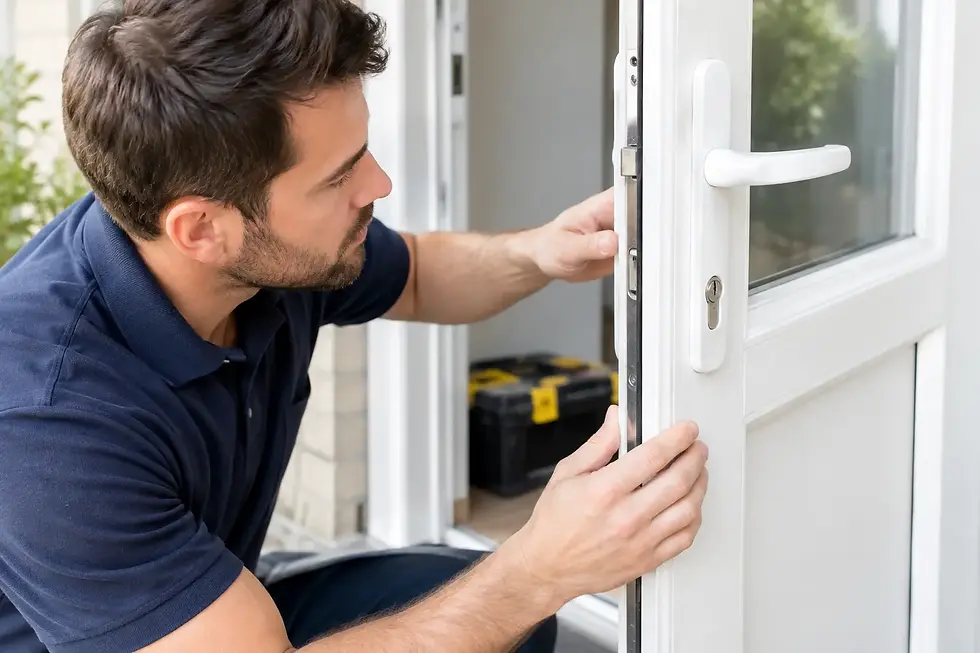
A snapped key is sometimes the symptom, not the cause. On a wooden front door, the door may have dropped slightly and be putting pressure on the lock. On a UPVC or composite door, the handles, keeps or multipoint mechanism may be out of alignment. Bifold doors can also put uneven pressure on their locking points.
If you had to lift the handle, pull the door hard, or wiggle the key to make it turn before it snapped, do not simply remove the broken piece and carry on as normal. The next key may break too. The lock or door alignment needs checking.
Where the door is open, do not shut it until you know the lock is working freely. This gives you far more options and avoids being locked out with a damaged mechanism. If the door is shut and will not lock, secure the property as best you can and arrange a repair promptly, particularly overnight or when leaving a business premises empty.
When a replacement key is enough
If the key snapped because it was bent, heavily worn or a poor-quality copy, and the lock turns smoothly once the piece is removed, a new key may be all that is required. Use an original key where possible for the copy. Copies cut from copies gradually lose accuracy, which can lead to sticking and excess wear inside the lock.
Look closely at your remaining keys. Deep grooves, rounded teeth, cracks near the shoulder or a loose plastic head are all warnings. Retire any suspect key rather than waiting for it to fail in the lock.
A key can also snap because it was used as a handle to pull a door shut or turn a stiff lock. Keys are made to operate a mechanism, not to take the weight of a heavy door. Use the handle to open and close the door, and investigate stiffness early.
When the lock needs attention
Call for help if the key was difficult to turn before it broke, if the lock is spinning, if the door will not open or lock, or if a fragment is stuck out of reach. You should also get the lock checked after an attempted extraction with glue, wire or a damaged tool.
For homes and businesses in Clapham, a locksmith can normally extract the key, test the cylinder and check the door alignment in the same visit. If the cylinder is worn or the multipoint mechanism is faulty, you can then make an informed decision about repair or replacement instead of guessing.
There are situations where replacement is the safer option. A lock that has been drilled, glued, badly picked at or forced during a break-in may no longer provide reliable security. Equally, if you have lost the other half of the key or do not know who may have access to it, changing the cylinder can offer better peace of mind than simply cutting another key.
Avoid a repeat snapped key
Once the immediate problem is sorted, make a habit of acting on small changes. A key should enter fully and turn with modest pressure. It should not need a shoulder shove, a lifted handle held in an awkward position, or repeated jiggling.
Keep keys separate from heavy bundles where possible. Weight pulling on a key in the lock can wear both the key and cylinder. Do not leave keys in the inside of a door overnight if your lock type makes this difficult to manage from outside, and keep a spare with somebody you trust rather than hidden near the property.
For landlords and business owners, ask occupants to report stiff locks before they become lockouts. A quick adjustment to a UPVC door or a replacement cylinder is usually less disruptive than an emergency callout when a tenant cannot get in or a shop cannot secure at closing time.
A snapped key is frustrating, but it does not have to become a damaged lock or an unsecured door. If the piece will not come out easily, leave it in place, avoid glue and force, and get it removed properly. That is often the quickest route back to a working door and a reliable set of keys.
Comments