
Tenant Lockout Resolution When You’re Locked Out
Keys left on the kitchen table, a snapped key in the cylinder, or a UPVC door that will not open can leave you stuck outside with very little warning. Tenant lockout resolution starts with staying calm, checking the safest options, and getting the right person involved quickly. The aim is simple: regain access without damaging the door, compromising security, or creating an avoidable dispute over the bill.
Tenant lockout resolution: what to do first
First, check the obvious without putting yourself at risk. Try any other keys you legitimately hold, check whether a housemate is nearby, and look for a safe, agreed spare-key arrangement. If your key turns but the door will not open, do not keep forcing it. A stiff mechanism, failed multipoint lock, or misaligned UPVC door can get worse quickly when the handle or key is pushed too hard.
Do not climb through windows, force a communal entrance, or try to prise a door open. Apart from the injury risk, forced entry can damage the frame, lock case, glazing, or door furniture. It can also make a straightforward locksmith job more expensive than it needed to be.
If there is immediate danger, such as a child alone inside, a vulnerable person needing help, a fire risk, or a medical emergency, call the emergency services first. A lockout is frustrating, but safety comes before access.
For a normal lockout, contact your landlord or managing agent as soon as you can. Tell them what has happened, whether you have your keys, and whether the lock appears faulty. Leave a clear written message as well as calling, particularly outside office hours. This gives everyone a record of the issue and can help establish whether the problem is a lost key, accidental lockout, or a repair fault.
If you need a locksmith before the landlord replies, choose a local locksmith who can confirm what they charge, explain the likely options, and attend with the tools and parts to deal with the problem properly. A good locksmith will ask sensible questions about the property and may request identification or proof that you live there before opening the door.
When the landlord needs to act
A landlord or agent should take a failed lock seriously, especially where it leaves a tenant unable to secure or enter their home. A broken euro cylinder, jammed mortice lock, failed night latch, or faulty UPVC multipoint mechanism is not the same as simply losing a set of keys. The right response depends on the cause, the tenancy agreement, and the urgency of the situation.
Where a lock has failed through normal wear, an existing fault, or damage following an attempted break-in, the landlord will usually need to arrange a repair. If the tenant has lost keys or locked themselves out with a fully working lock, the tenant may be responsible for the callout and replacement keys. There are grey areas, though. A key snapping because a worn cylinder is sticking, for example, needs a proper look before anyone decides who should pay.
Landlords should avoid telling a tenant to wait indefinitely outside if there is a genuine lock failure. Equally, tenants should avoid authorising a full lock replacement without trying to contact the landlord or agent first, unless there is a clear emergency or there is no realistic alternative. Keep a note of calls, messages, invoices, and photographs of any visible fault. It protects both sides and makes later conversations much easier.
A locksmith cannot decide who has legal possession of a property. They can, however, verify occupancy, assess the lock, and explain the least destructive route back in. For rented homes, proof might include photo ID with the address, a tenancy agreement, a recent utility bill, or confirmation from the landlord or managing agent. If your documents are inside, explain that before the locksmith attends so they can advise what else may help.
What a proper locksmith visit should involve
The best outcome is non-destructive entry. In many cases, a trained locksmith can open a standard lock without replacing it, then check whether the lock still works safely. That is not always possible. Some locks are damaged internally, some keys have broken inside, and some mechanisms have failed in a way that leaves no clean opening method.
Before work begins, ask what the locksmith believes has failed and what the likely cost will be. If drilling or replacing a lock is necessary, you should understand why. A replacement should be suitable for the door and provide the right level of security, rather than being the first and only option offered.
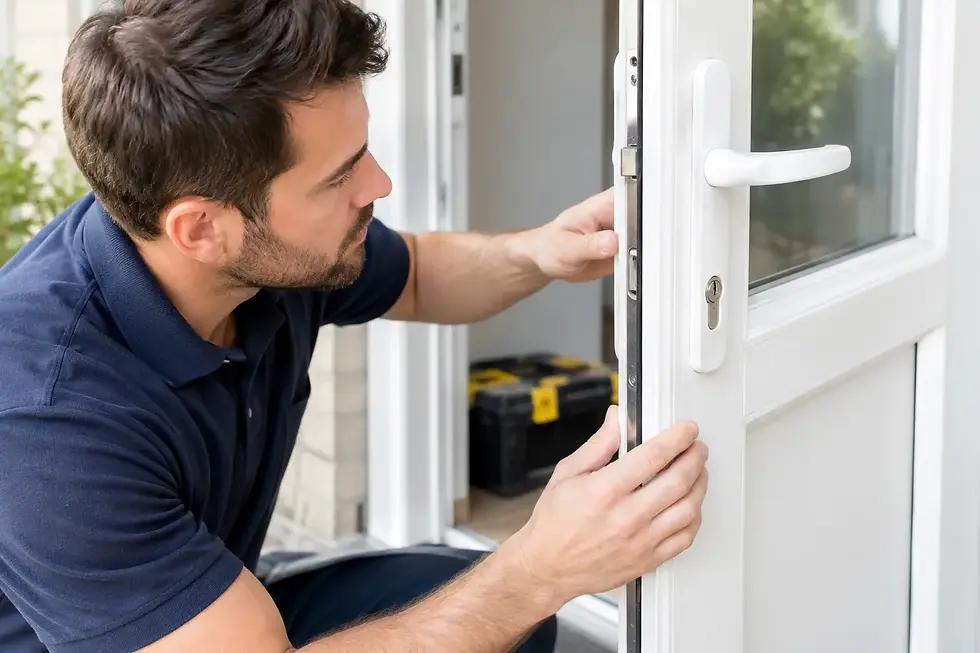
This matters particularly with UPVC and composite doors. Often the issue is not the cylinder itself but a failed gearbox, a worn multipoint lock, a dropped door, or a handle mechanism that has stopped lifting properly. Replacing only the cylinder may get the key turning, but it will not cure a faulty locking strip or door alignment problem. The same applies to bifold doors, where a damaged locking point or poorly aligned panel can stop the whole system operating as it should.
At Clapham Locksmiths, the approach is to diagnose the actual fault on site and carry out the work needed to leave the door secure, not just get it open and walk away. That can mean opening a locked door, replacing a damaged cylinder, adjusting the door, or repairing the locking mechanism in the same visit where possible.
Tenant lockout resolution for shared and managed buildings
Blocks of flats need a little extra care. Your own front door may be one problem, while the communal entrance, fob system, gate, or shared hallway is another. Do not tailgate strangers through a secure entrance or wedge a communal door open. It creates a security risk for every resident and can cause problems with the managing agent.
If you have lost a fob or communal key, report it promptly. Depending on the building, it may need to be cancelled and replaced. If the communal door lock is faulty, let the managing agent know as well as arranging help for your own flat door. A failed main entrance can leave the building insecure, which is a different priority from an individual lost-key lockout.
For house shares, agree who is authorised to instruct a locksmith before there is a problem. One tenant may be happy to pay a callout, while another assumes the landlord must approve everything. A quick message to the group and landlord can prevent confusion, particularly if replacement keys need cutting afterwards.
Avoiding the next lockout
Once you are back inside, take five minutes to prevent a repeat. Arrange one secure spare key with someone you genuinely trust, or use a properly fitted key safe only where it is appropriate for the property. Do not hide a key under a mat, in a plant pot, or above a door frame. Those are the first places an opportunist will check.
If the lock felt stiff before the lockout, report it rather than waiting for it to fail completely. Signs worth acting on include a key that sticks, a handle that needs lifting with unusual force, a door that catches on the frame, or a cylinder that turns loosely. Small adjustments and repairs are usually easier to arrange before you are standing outside in the rain.
A clear agreement between tenant and landlord helps too. Know who holds spares, how to report an emergency outside office hours, and whether the property has specialist locks or a communal access system. When a lockout happens, good information gets the right repair arranged faster.
If you are locked out now, focus on safe access, proof of residency, and a locksmith who will explain the job before starting. Getting back in matters, but getting back in with the door secure matters more.
Comments