
Why Locks Jam and What Usually Causes It
A lock that worked perfectly yesterday can suddenly refuse to turn when you are leaving for work, getting the children in after school, or trying to secure a shop at closing time. Understanding why locks jam can help you avoid making a small fault worse - and recognise when the door needs proper repair rather than more force.
Most jams are not caused by the lock simply ‘giving up’. They usually come down to wear, dirt, a damaged key, movement in the door, or a fault in the locking mechanism behind the handle. The right answer depends on what type of door and lock you have.
Why locks jam: the common causes
A key-operated lock needs several small moving parts to line up precisely. In a cylinder lock, the cuts on the key lift tiny pins into position. In a mortice lock, the key moves levers inside the case. On a UPVC or composite door, the key and handle may also operate a multipoint mechanism running up the edge of the door.
When any part is worn, dirty, bent or out of line, the lock can start to feel stiff before it jams completely.
Worn, bent or damaged keys
Keys take more abuse than people realise. They get dropped, used to open parcels, carried loose with heavier keyrings and forced when a lock is already stiff. Over time, the edges can wear down enough that the key no longer moves the pins or levers cleanly.
A bent key is especially risky. It may enter the keyway but bind as you turn it, or it may snap under pressure. If a key feels rough in more than one lock, the key itself is likely to blame. Try a spare key if you have one. If the spare works smoothly, stop using the worn key and get a replacement cut before it causes a lockout.
Dirt, dust and the wrong lubricant
Outdoor locks collect dust, moisture and grime. A front door cylinder can also pick up fibres from pockets, bags and keys. This debris makes the internal parts sluggish, particularly in older locks.
Many people reach for household oil or a general-purpose spray. That can seem to solve the problem for a day, but wet oils often attract more dirt and can leave a sticky residue inside the cylinder. A lock-specific dry lubricant is normally the safer option for a standard key cylinder. Do not flood the lock, and do not keep spraying products into a lock that has already stopped turning altogether. The issue may be mechanical, not lubrication-related.
Cold, damp and corrosion
British weather can be hard on external doors. Moisture can corrode components in an older cylinder, rim lock or mortice lock. In very cold conditions, water around the keyway or mechanism may freeze. Damp can also swell a timber door, making it rub on the frame and putting pressure on the latch or bolt.
If the key turns only when you pull or push the door, the lock may be sound but the door may be misaligned. This is common after a change in temperature, following heavy rain, or where a door has settled over time.
A door that has dropped or moved
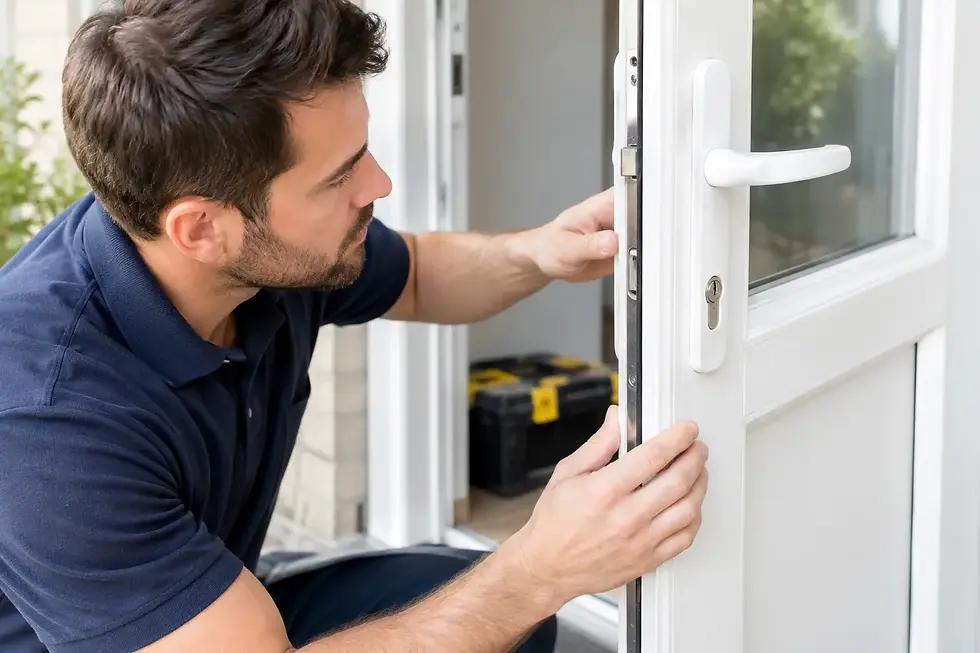
Doors move. Hinges loosen, timber expands and contracts, frames shift, and UPVC doors can gradually drop out of adjustment. Even a few millimetres of movement can stop a latch, deadbolt or multipoint hook from lining up with its keeps in the frame.
A useful clue is whether the lock works when the door is open. If the key turns and the handle lifts normally with the door open, but becomes stiff or jams when the door is shut, there is probably pressure between the door and frame. Forcing the key in this situation can damage the cylinder or snap the key. The door alignment needs attention.
A failing cylinder or mortice lock
Internal lock parts wear out, especially on doors used several times a day. You may notice the key needing a little wiggle, the cylinder turning loosely, a key that only comes out in one position, or a lock that works intermittently. Those are warning signs, not quirks to live with.
On a euro cylinder, the cam at the centre can wear or fail. On a mortice lock, levers, springs or the bolt mechanism can break inside the case. Neither fault is reliably fixed from the outside with lubricant. A locksmith can identify whether the cylinder, lock case or door furniture is at fault and replace the right part rather than changing items unnecessarily.
UPVC and bifold door mechanism faults
UPVC, composite and bifold doors often have a multipoint locking system. When you lift the handle, rollers, hooks, bolts or mushroom cams engage around the edge of the door. The cylinder then locks the mechanism in place.
If the handle will not lift, feels floppy, or lifts but the key will not turn, the problem may be the gearbox or strip mechanism rather than the cylinder. A dropped door can also prevent the hooks and bolts from entering their keeps properly. Replacing the cylinder alone may not solve it, and forcing the handle can cause wider damage to the locking strip.
What to do when a lock starts sticking
Start gently. Check that you are using the correct key and inspect it for bends, cracks or obvious wear. If you have a spare key, test that instead. Never use pliers to turn a key and do not lean your body weight into the handle.
Next, take pressure off the lock. Try pushing the door towards the frame, pulling it towards you, or lifting it slightly by the handle while turning the key gently. If it only works in one of these positions, that points to an alignment issue. It is a useful detail to pass on when arranging a repair.
Where the key enters and turns but the door will not open, avoid repeated attempts. You may have a jammed latch, faulty sashlock or failed multipoint mechanism. Continued force can turn a repairable issue into a broken key, damaged cylinder or split door handle.
If the key will not come out, do not pull it hard or twist it backwards. Keep it in its normal upright position, reduce pressure on the door, and try a small, controlled movement. If it remains stuck, it is better to get help before the blade breaks inside the lock.
When a jammed lock is urgent
A jammed lock needs prompt attention if it prevents you from securing the property, leaves someone locked inside, or affects an external fire exit. It is also urgent after a burglary or attempted break-in, when damaged doors and frames may no longer provide proper security.
For landlords and business owners, a stiff communal entrance, shop shutter lock or office door should not be left until it fails completely. A lockout can disrupt tenants, staff and customers, while a door that does not lock properly creates an obvious security risk.
If you are locked out in Clapham or nearby, the safest route is usually non-destructive entry where possible, followed by repair of the actual fault. A properly equipped locksmith should be able to assess the lock, door alignment and hardware on site, rather than treating every jam as a straightforward cylinder replacement.
Preventing the next lock jam
You cannot prevent every mechanical failure, but early action makes a difference. Replace worn keys rather than waiting for one to snap. Keep external cylinders clean and use an appropriate lock lubricant sparingly. If a door starts catching, arrange an adjustment before the lock is put under constant strain.
For UPVC, composite and bifold doors, pay attention to changes in the handle action. A handle that needs lifting harder each week is telling you something. Having hinges, keeps or the multipoint mechanism checked early is usually simpler and less disruptive than dealing with a fully failed door later.
A lock should turn smoothly and a door should close without a fight. If yours does neither, leave the forcing alone. Clapham Locksmiths can diagnose whether the problem is the key, cylinder, lock case, door alignment or a specialist UPVC mechanism fault, then get the door working and secure again.
Comments