
Why Won’t My Key Turn? Common Causes and Fixes
A key that suddenly will not turn can stop your whole day at the front door. If you are asking, why won’t my key turn, the cause may be as simple as pressure on the door - or it may be an early warning that the lock, cylinder or multipoint mechanism is failing. The main thing is not to force it. A snapped key or damaged lock can turn a straightforward repair into an emergency lockout.
Start by taking pressure off the door
A door can put pressure on the lock when it has dropped slightly, swollen in damp weather, shifted in its frame, or been pulled shut firmly. This is particularly common with timber doors, older uPVC doors and doors with multipoint locking strips.
With the key fully inserted, gently push the door towards the frame while trying the key. If that does not work, pull the door towards you, then lift or lower the handle slightly as you try again. Use light pressure only. You are trying to line up the latch, bolts or hooks with their keeps in the frame, not force the key around.
If the key turns when you lift the handle or push the door, the lock may not be the real problem. The door could need adjustment before the mechanism wears further. Leaving it will often make the fault worse, especially on uPVC and bifold doors.
Check the key before blaming the lock
Keys wear down gradually, so it is easy not to notice that the edges have become rounded. A worn key may still open the door some of the time, then fail when the pins inside the cylinder need a more precise lift. A bent key can cause the same trouble.
Try a spare key if you have one. If the spare works smoothly, stop using the worn key and have a new one cut from the better original. Do not keep trying a key that feels stiff or has been bent back into shape. Metal fatigue can make it snap inside the lock.
Also make sure it is the right key. This sounds obvious, but similar-looking keys are easily mixed up, particularly where a flat, shared office or storage area has several locks. If the key enters only part way, do not push it hard. There could be another key on the inside of the door, a broken piece of key in the cylinder, or debris in the keyway.
Why won’t my key turn in the lock?
When the key goes in fully but will not rotate, the issue is usually inside the cylinder or in the door hardware connected to it. The symptoms matter.
The key is stiff but moves a little
Dirt, dried lubricant or wear in the lock cylinder can make the internal pins stick. This is common on external doors exposed to rain, dust and winter temperature changes. A small amount of proper lock lubricant may help, but avoid household oil, cooking oil or thick spray lubricants. They can collect dirt and leave the lock worse over time.
Use a lubricant intended for lock cylinders, apply it sparingly, and work the key gently. If it remains stiff, do not keep turning harder. The cylinder may be nearing failure.
The key turns but the door will not open
This points more towards a failed latch, gearbox or multipoint mechanism than a simple key problem. On a uPVC door, you may find the handle has become loose, floppy, hard to lift, or stuck in one position. On a composite or timber door with a multipoint lock, the key may turn without properly withdrawing the hooks, rollers or bolts.
Trying to operate a failing mechanism repeatedly can cause more internal damage. If you are locked outside, a locksmith can normally assess the lock and gain entry without causing unnecessary damage. If the door is open, avoid shutting it again until it has been repaired.
The key will not turn from one side only
Some euro cylinders are designed so that a key left in the inside can block operation from outside. Others allow both keys to work, depending on the type fitted. If a key has been left in the other side of the door, ask someone inside to remove it if possible.
If there is no key inside, but the cylinder only jams from one side, it may have worn unevenly or been damaged. That needs attention before it fails completely.
Cold weather, damp and a swollen door
A key problem may appear after a cold night or a spell of wet weather. Frost can affect exposed locks, while timber doors can absorb moisture and expand. In those cases, warming the key in your hand and gently relieving pressure on the door may be enough to get inside.
Do not pour boiling water over the lock. Sudden heat can damage finishes, encourage moisture into the cylinder and refreeze later. Do not use a naked flame either. If the lock is frozen, a suitable lock de-icer is the safer option. Once you are in, arrange for a persistent sticking door or lock to be checked rather than waiting for the next cold morning.
Problems on uPVC and bifold doors
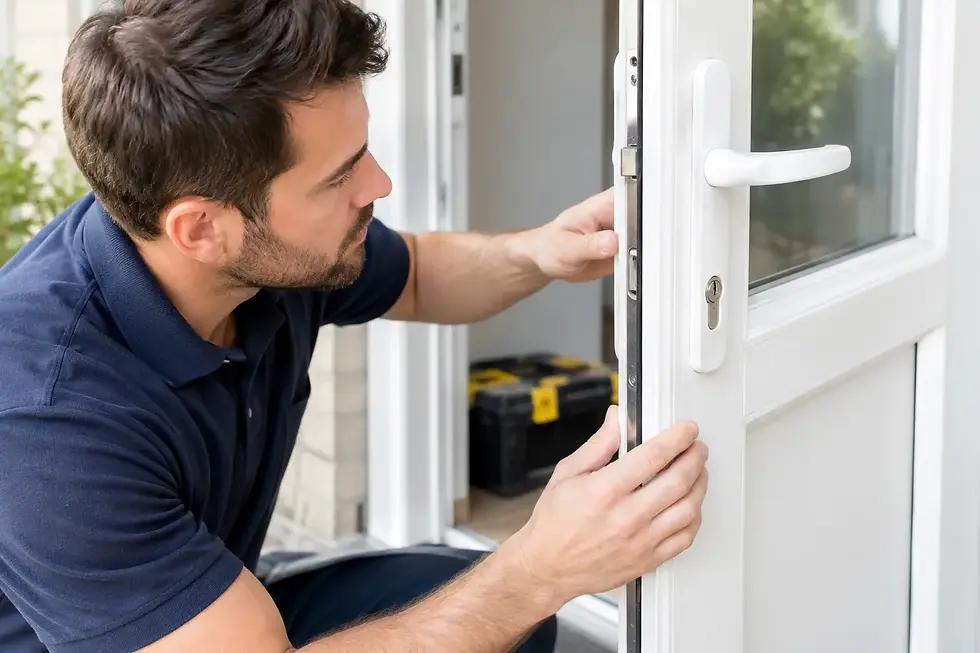
uPVC doors often develop a different sort of fault. The key may not turn because the door is not properly aligned with the frame, preventing the multipoint hooks and rollers from moving. A dropped sash, worn hinges or poorly aligned keeps can all create that pressure.
If the handle will not lift fully when the door is open, the gearbox or locking strip may be failing. If it lifts fine open but jams when closed, alignment is more likely. Both issues need a proper inspection, as forcing the handle or key can break the gearbox and leave the door locked shut.
Bifold doors have several moving panels and locking points, so a small alignment issue can affect the whole system. If one panel has sagged, the key cylinder may be working perfectly but the locking gear cannot release. Specialist adjustment and repair is usually better value than replacing the entire door system.
What not to do when a key will not turn
It is tempting to reach for pliers, a screwdriver or a stronger person. That is how keys snap and cylinders get damaged. Do not twist the key with pliers, hit the lock, force the handle, or spray the mechanism with general-purpose oil. Avoid taking visible screws out of the lock while you are locked outside too - you may make the door less secure without gaining entry.
If the key starts to bend, stop straight away. If it has already snapped but part of it is still sticking out, do not try to pull it with improvised tools. Pushing it further into the cylinder can make extraction more difficult.
When to call a locksmith
Call for help if the key will not turn after gentle checks, if you feel the lock catching or grinding, or if the handle and key are not working together. It is also sensible to call if the door is your only secure entrance, you have a child or vulnerable person inside, or you are unable to lock up safely.
A local locksmith can identify whether the fault is the key, cylinder, latch, door alignment or multipoint mechanism. That distinction matters. Replacing a cylinder will not solve a dropped uPVC door, and adjusting a door will not fix a worn cylinder. A properly stocked locksmith can often complete the repair in one visit rather than leaving you with a temporary fix.
For homes and businesses in Clapham and nearby areas, Clapham Locksmiths deals with jammed locks, failed cylinders, uPVC door mechanisms and emergency lockouts with a practical repair-first approach. Where a lock can be repaired safely, that is worth considering. Where it is worn, damaged or no longer secure, replacement is often the better long-term choice.
A key should turn with steady, ordinary hand pressure. The moment it needs force, treat it as a fault rather than an inconvenience. Getting it looked at while the door is still open can save you the cost and stress of being locked out later.
Comments