
7 Best Locks for Rental Property Security
A tenant moves out on Friday, the new one collects keys on Monday, and somewhere in between you realise three sets of keys are unaccounted for. That is usually the moment landlords start asking about the best locks for rental property security. The right answer is not always the most expensive lock on the shelf. It is the lock that suits the door, the building, the turnover of tenants, and the level of control you need.
For rental property, you are balancing security, convenience, durability and cost. If you manage one flat, your priorities may be different from someone with a small portfolio. A short-let needs different access control from a long-term tenancy. And if the door itself is tired, misaligned or poorly fitted, even a decent lock can let you down.
What makes the best locks for rental property?
A good rental lock should do three things well. It should resist forced entry, it should be practical to manage when tenants change, and it should stand up to regular use without becoming a maintenance problem.
That means there is rarely one universal winner. A front timber door on a Victorian conversion may suit a British Standard mortice deadlock. A newer flat with a multipoint locking door may need a quality euro cylinder upgrade instead. If the property is let room by room, you may also need different locks on internal doors, but you still need to think carefully about fire safety and legal requirements before fitting anything that restricts escape.
1. Anti-snap euro cylinder locks
If your rental property has a uPVC, composite or some modern timber doors, there is a fair chance the weak point is the euro cylinder. Standard cylinders are commonly targeted because they can be vulnerable to snapping if they protrude or are low grade.
An anti-snap euro cylinder is often one of the most worthwhile upgrades a landlord can make. It improves resistance to snapping, drilling and bumping, and in many cases it can be fitted without replacing the full locking mechanism. That keeps cost sensible while still improving security where it matters.
The trade-off is simple. Not all cylinders are equal, and a cheap anti-snap cylinder can still disappoint. Sizing also matters. If the cylinder sticks out too far from the handle, you lose some of the benefit. This is one of those jobs where proper fitting makes a real difference.
2. British Standard 5-lever mortice deadlocks
For solid timber front doors, a 5-lever mortice deadlock remains a strong choice. These locks are familiar, dependable and often required by insurers when fitted to the right standard. For long-term lets, they are still among the best locks for rental property entrance doors where a traditional setup suits the door.
They give good physical security and tend to be tougher than lightweight alternatives. If the frame is sound and the keep is properly installed, they can hold up very well.
The downside is key control. If a tenant has copies made and does not return every key, the lock should really be changed or rekeyed between occupiers. They are also less convenient than digital options where access changes frequently. Still, for many landlords, simple and strong is exactly the point.
3. Keyed-alike lock systems
If you own or manage more than one entrance point at the same property, keyed-alike locks can save hassle. This means one key can operate several locks, such as the main entrance, back door and side gate, depending on the setup.
For landlords, this reduces keyring clutter and makes access for maintenance easier. It can also simplify handover if you need one master arrangement for authorised users.
The obvious caution is that convenience cuts both ways. If one key is lost, several access points may be compromised. This is often best suited to smaller properties where controlled access is easier to manage, rather than larger HMOs with constant traffic and multiple contractors coming and going.
4. Restricted key systems
A restricted key system is worth considering if unauthorised key copying is a concern. These systems use protected key profiles, so duplicate keys cannot usually be cut casually at a high street shop. For landlords who have had issues with tenants, former occupiers or tradesmen retaining copies, this gives better control.
This type of setup works well in higher-value rentals or buildings where access history matters. It is also useful when the landlord wants tighter oversight without moving fully into electronic access.
The trade-off is cost and administration. Replacement keys are less casual and more controlled, which is the benefit, but it can also be less convenient when someone loses a key on a Sunday morning. You need to be organised.
5. Smart locks for managed access
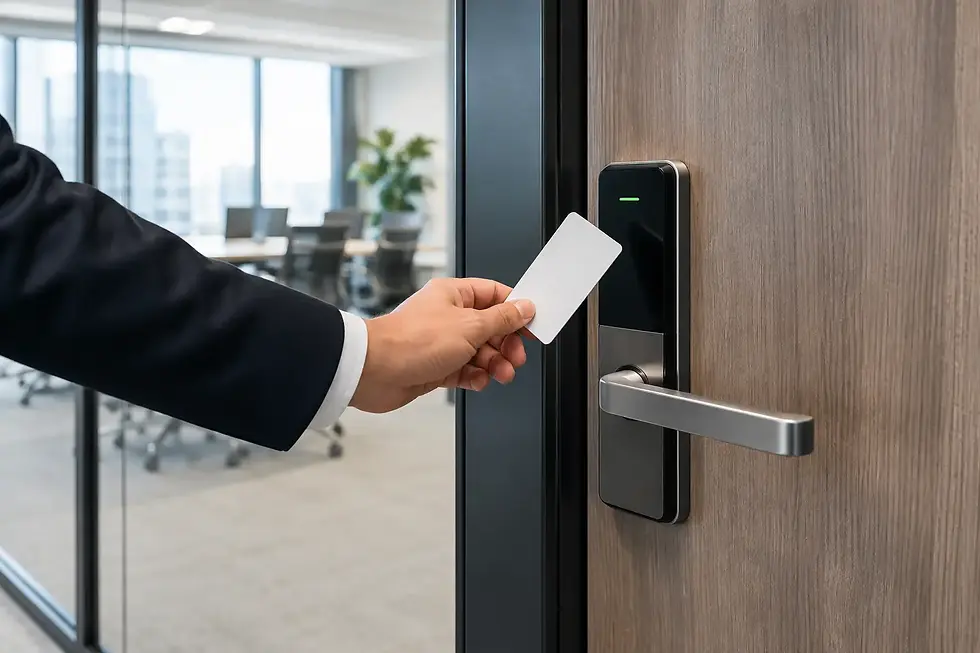
Smart locks get a lot of attention, and sometimes for good reason. If you run a short-let, serviced accommodation, or a rental with frequent contractor visits, the ability to issue and revoke codes without changing hardware can be very useful.
Used properly, smart locks can cut out the usual problems around key handovers. There is no waiting around to meet someone with a spare key, and access can be time-limited. For some landlords, that is a genuine improvement, not a gimmick.
But smart locks are not automatically the best option. Battery maintenance matters. Wi-Fi dependent models can be unreliable if chosen badly. Some are better for internal access control than for primary external security. And on older or draughty doors that do not align well, a fancy lock will not compensate for poor carpentry. The smarter route is often a quality smart lock on the right door, not simply the most expensive device advertised online.
6. Night latches with deadlocking function
A good night latch still has its place, especially on flat entrance doors. The key is choosing a proper deadlocking model rather than a basic latch that offers limited resistance.
A night latch is convenient for tenants because the door locks automatically on closing, which reduces the chance of someone forgetting to secure it. That makes it practical in busy households and lower-maintenance from the landlord's point of view.
On its own, though, it may not be enough. In many cases a night latch works best paired with a mortice deadlock, giving convenience for daily use and stronger security when needed. This combination has been standard for years because it works.
7. Multipoint locking systems with upgraded hardware
Many rental properties in newer buildings already have multipoint locking systems on uPVC and composite doors. The mistake is assuming the full system is secure just because there are several locking points.
In reality, the cylinder, handles, door alignment and condition of the mechanism all matter. A worn multipoint lock can become stiff, unreliable or fail completely, sometimes leaving tenants locked in or out. For landlords, that quickly becomes an urgent repair rather than a planned upgrade.
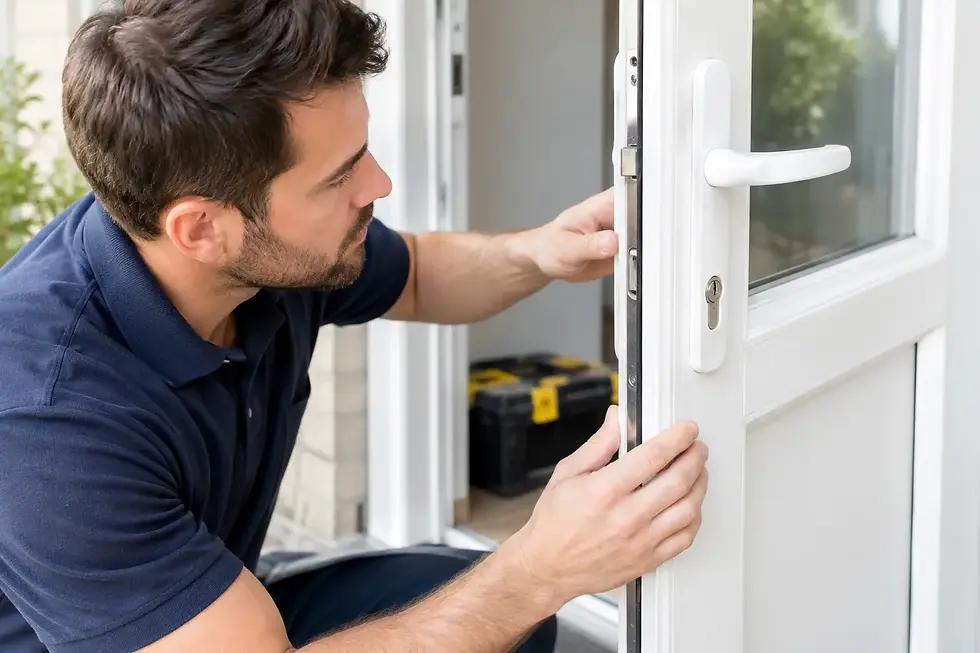
If the property already has a multipoint door, the best move is often not replacing the entire setup but improving the vulnerable parts. A high-quality anti-snap cylinder, strong handles and proper adjustment can make a big difference. In our experience, that practical approach often gives better value than changing everything unnecessarily.
How to choose the right lock for your rental
Start with the door, not the catalogue. A lock must suit the material, thickness, condition and use of the door. Timber, uPVC, aluminium and composite doors all have different strengths and limitations.
Then look at the tenancy type. A long-term rental usually benefits from solid, low-fuss physical security and a clear plan for key changes between tenants. A short-let may justify digital access. A family tenancy with children may need convenience and reliability above all else. An HMO adds another layer, because communal access, room access and fire escape rules all need to work together.
It is also worth thinking about what happens on the worst day, not just the best one. If a lock fails at night, can it be repaired quickly? Are replacement parts common? Will the tenant know how to use it properly? The best locks for rental property are not just secure when new. They stay practical over time.
Don’t ignore the frame, handles and fitting
Landlords sometimes focus entirely on the lock body and miss the rest of the picture. A strong lock fitted to a weak frame, loose handle set or misaligned door will never perform as it should. Forced entry often exposes the weak surrounding parts, not just the lock itself.
This is especially common with older timber doors, warped communal entrances and uPVC doors that have dropped slightly over time. If the door needs adjustment, reinforcement or repair, deal with that first or at the same time. In places like Clapham, where you see everything from period conversions to newer blocks, there is no one-size-fits-all answer.
When changing tenants, change your thinking too
Every change of tenant is a chance to review whether the lock setup still makes sense. If keys have gone missing, the mechanism is stiff, or the existing lock was only ever the builder's basic option, it is usually false economy to leave it alone.
That does not mean overspending. It means fitting the right grade of lock for the property, the door and the tenancy. A sensible upgrade now is often cheaper than an emergency callout later, especially when access problems happen at the worst possible time.
If you are unsure, the safest approach is a straightforward one: get the door and lock looked at properly, choose security that matches real use, and avoid gadgets or bargain hardware that create more trouble than they solve. A rental property runs better when the basics are done properly.
Comments