
Bifold Repairs: Fixing Stiff, Dropping Doors
A bifold door that suddenly will not lock can turn a bright, open living space into a real security concern. Bifold repairs are not just about stopping an annoying scrape or getting a stiff handle moving again. The door panels, rollers, hinges, track and multipoint lock all have to work in the right order. When one part shifts or fails, the whole door can become difficult to close, impossible to secure, or unsafe to use.
The good news is that many faults can be repaired without replacing the entire door. The right fix depends on what has moved, worn out or been damaged. Forcing the handle or pushing a door back into place usually makes a small repair more expensive.
Common signs you need bifold repairs
Most problems start quietly. The door may catch at one point, need a firm push to shut, or leave a small uneven gap between the panels. These are worth dealing with early, particularly on an external door where correct alignment affects both security and weather protection.
A dropped door is one of the most common calls. You may see it dragging along the sill, rubbing on the frame, or sitting low on the handle side. Bifold doors are heavy, especially double-glazed aluminium or UPVC systems. Over time, rollers can wear, fixings can loosen and the running gear can fall out of adjustment.
A stiff or loose handle is another warning sign. If the handle does not lift smoothly, the locking points may no longer line up with the keeps in the frame. Do not keep trying to force it upwards. A handle under strain can snap, and forcing the mechanism can damage the gearbox inside the door.
Other signs to act on include a door that will not fold neatly, panels that separate or catch, rollers that jump in the track, a key that turns but does not lock the door, or noticeable draughts around a door that used to seal properly. Following a break-in attempt, bent handles, damaged cylinders, loose keeps and frame damage all need checking before the door is relied on again.
Why bifold doors go out of line
Bifold doors have more moving parts than a standard hinged door. That is part of their appeal, but it also means there are more places for wear or incorrect adjustment to show up.
Everyday use is often enough to cause gradual movement. Repeated opening and closing puts weight through the bottom rollers and top guide. Dirt, grit and leaves in the track add resistance, while a roller that has become worn can stop carrying the panel properly. The door then starts to drag and the lock side drops out of line.
Seasonal movement can play a part too. Timber frames and doors can expand or contract as temperatures and moisture levels change. UPVC and aluminium doors can also move slightly in heat. A minor adjustment may be all that is needed, but it is worth checking the cause rather than repeatedly adjusting the door without fixing worn hardware.
Installation matters as well. If the frame is not properly supported, or the opening has moved over time, the issue may be more than a simple roller adjustment. A good repair starts with checking the panels, hinges, track, lock, frame and glass rather than treating the visible symptom alone.
The lock can be the fault, not the door
It is easy to assume a bifold door will not lock because it has dropped. Often that is true. However, bifold locking systems can fail independently, even where the door looks correctly aligned.
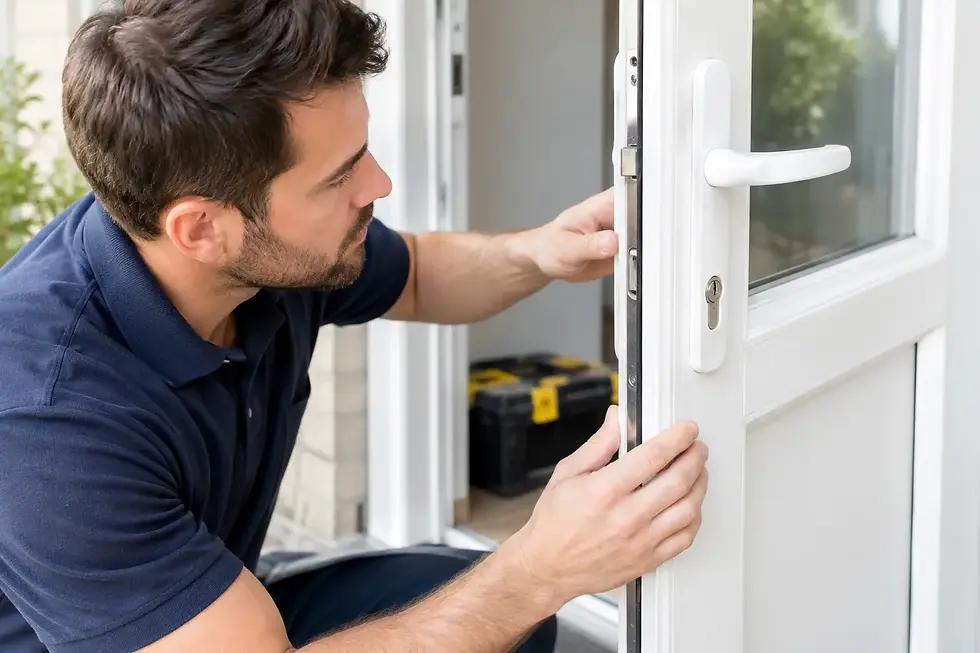
Many external bifolds use a multipoint lock. Lifting the handle throws bolts, hooks or rollers into matching keeps around the frame. The cylinder then locks the mechanism in place. If the internal gearbox is worn or broken, the handle may spin, feel floppy, jam halfway or refuse to move. If the cylinder has failed, the key may not turn properly or may turn without operating the lock.
These are different faults with different repairs. A door adjustment will not cure a damaged gearbox, and changing a cylinder will not resolve misaligned locking keeps. This is why a proper on-site inspection is preferable to guessing which part needs replacing.
If the door is shut but unlocked, avoid leaving the property unattended while waiting for a repair. If it is locked shut and the key will not operate it, do not drill or force anything yourself. Specialist opening methods can often get the door open with less damage than a rushed attempt.
What you can safely check before calling someone
There are a few sensible checks a property owner can make, provided the door is open and stable. Start by clearing leaves, stones and built-up dirt from the bottom track with a soft brush or vacuum. Look for anything physically blocking the wheels or guide.
Check whether the problem changes when you gently lift the outer edge of the lead door. If it locks only while being lifted, poor alignment or a dropped panel is likely. That is useful information to pass on, but it is not a reason to keep lifting and forcing the handle.
You can also inspect visible screws on handles and hinges for obvious looseness. Do not dismantle the lock, remove heavy panels, or alter multiple adjustment screws at random. Bifold systems vary by manufacturer, and an incorrect adjustment can make the door sit worse, damage a roller or put stress on the glass.
Avoid using thick oil or general-purpose sprays in the lock. They attract dirt and can leave a sticky mechanism. A locksmith or door repair specialist can use the correct lubricant once the source of the fault has been identified.
When repair is better than replacement
A complete bifold replacement is sometimes necessary, particularly if there is severe frame damage, failed structural components or obsolete parts that cannot be sourced. It is not the automatic answer to every difficult door.
In many cases, the repair is more straightforward: adjusting the rollers and keeps, replacing worn running gear, fitting a new handle, changing a failed cylinder, repairing or replacing a multipoint lock, or correcting damaged hinges and fixings. If a break-in has affected the door or frame, repairs may also include reinforcing weak points so the door closes and locks securely again.
The trade-off is age and availability. A newer, good-quality door with a failed roller or gearbox is usually well worth repairing. An older system with several worn components, a distorted frame and discontinued parts may need a more considered conversation about cost and long-term reliability. A clear explanation of the options matters more than being pushed straight towards the most expensive job.
Getting the door secure after a fault or break-in
If a bifold door cannot be locked, treat it as a security issue rather than a job for next month. Close and secure any internal doors or accessible windows, move valuables away from view, and avoid leaving the property empty until the door is properly secured.
For landlords and small business owners, a door fault can also affect insurance requirements and the security of stock, tools or tenant belongings. A temporary securing measure may be possible, but it should not become a long-term substitute for a proper repair.
Clapham Locksmiths handles bifold locking and door faults across Clapham and nearby postcodes, with practical repairs carried out on site where possible. A stocked vehicle and the right replacement parts can make a real difference when a door is stuck open, will not lock, or has been damaged.
Keeping bifold doors working properly
A little maintenance helps prevent a late-night locking problem. Keep the tracks clear, clean visible dirt from the rollers and guides, and operate the door gently rather than pulling on one panel when the system is binding. If the door starts catching, get it checked before the handle has to take the strain.
It is also worth testing the lock periodically with the door open, then closed. With the door open, the handle should operate freely. With it closed, it should lift and lock without needing pressure on the panel. Any change in that feel is a useful early warning.
A bifold door should glide, fold and lock without a fight. If yours needs lifting, shoulder pressure or repeated turns of the key, stop forcing it and get the fault looked at while it is still likely to be a repair rather than a replacement.
Comments