Door Boarding After Burglary: What Happens Next
A burglary leaves more than a broken lock behind. A damaged front door, smashed panel or split frame can leave your home, flat or business exposed long after the police have left. Door boarding after burglary is often the quickest way to make the property secure again, but it should be the start of a proper repair, not the final fix.
The immediate job is simple: stop anyone getting back in. The next job takes a little more care. You need to know whether the lock, door, frame, hinges and nearby windows can still do their job, and what needs replacing rather than patching up.
First, make the property safe and preserve evidence
If the burglary has just happened, avoid touching damaged locks, handles, glass or the point of entry until the police have had the chance to inspect it. Take clear photographs once you are able to do so, including close-ups of the damage and wider shots showing the door or window in place. This can help with an insurance claim and gives a locksmith a useful picture if you need advice before they attend.
When the police are finished, the priority is securing the opening. If a door will not shut, a lock has been forced, or the frame has split away from the wall, do not rely on a chair, chain or a temporary padlock overnight. These measures may make the door look closed, but they do not properly secure the property.
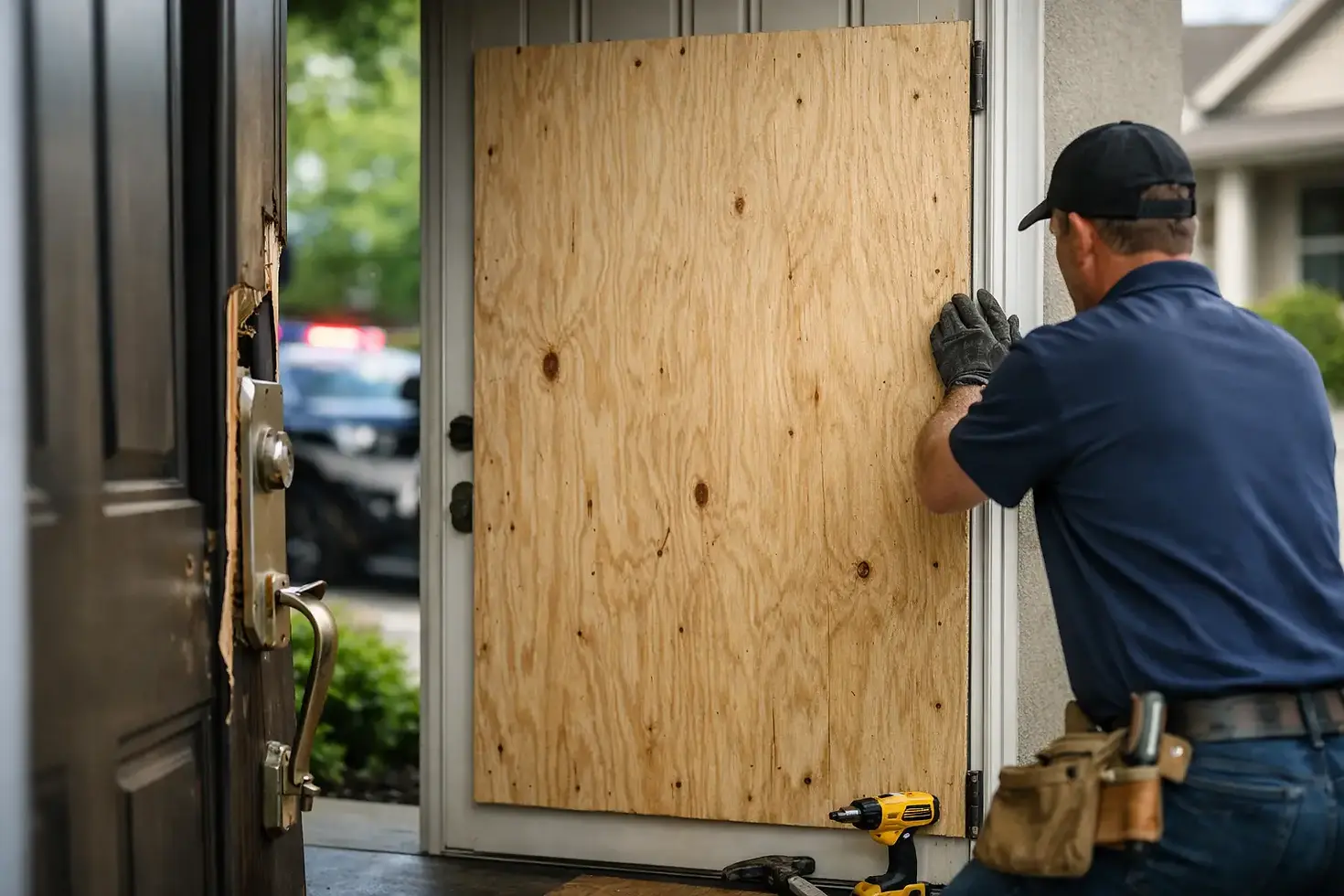
A professionally fitted board keeps the opening covered, reduces the risk of further entry and protects the property from weather while a permanent repair is arranged. It should be fixed securely and fitted in a way that avoids causing unnecessary extra damage to the door or frame.
Door boarding after burglary: what a proper job involves
Boarding is not simply screwing a sheet of timber across a doorway. The right approach depends on where the damage is and whether the door can still be used safely.
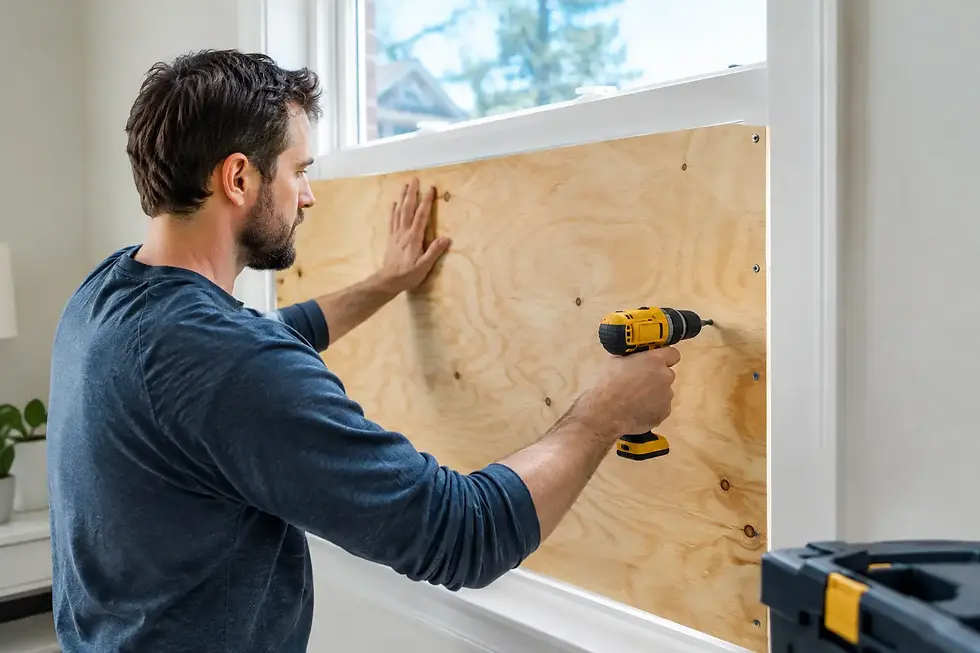
For a front or back door, the board needs to cover the vulnerable area without creating a new weakness around the edges. If the whole door has been kicked or forced in, the opening may need securing from the inside as well as the outside. A ground-floor window needs a different approach, particularly where broken glass, a damaged uPVC sash or bent locking hardware is involved.
A good emergency repair also considers access. If it is the only entrance to a home, the work may need to leave a safe way for you to get in and out until a replacement door can be fitted. For shops, offices and communal properties, fire escape routes must not be blocked. That is one reason this work is best handled on site by someone who can assess the situation rather than offering a one-size-fits-all answer over the phone.
Boarding is normally temporary. It buys you security and breathing space, especially outside normal hours, but it does not restore the strength, insulation or appearance of a properly repaired door.
Check more than the visible damage
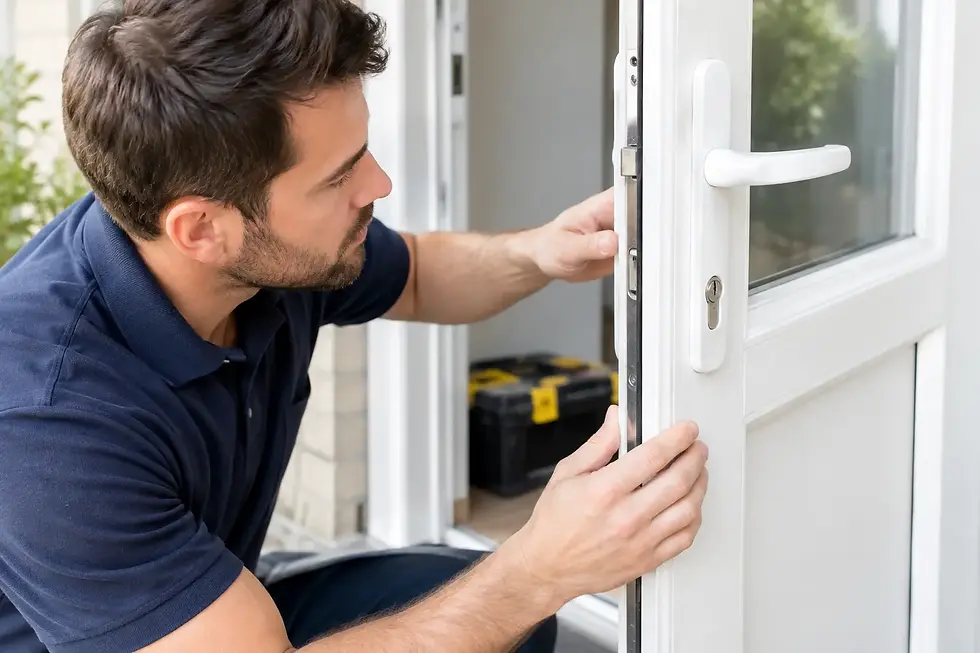
Burglars often attack the lock area, but the damage may travel further than it first appears. A timber door can crack around the keep or mortice. A uPVC door may look intact while the multipoint locking strip, gearbox or keeps have been pulled out of alignment. On aluminium, composite and bifold doors, the issue may be distorted hardware, damaged rollers or a frame that no longer closes squarely.
The frame matters just as much as the lock. If a wooden frame has split, fitting a new lock into the same damaged area can leave the door vulnerable. If the strike plate screws have pulled free, they may need longer fixings into sound timber or a proper frame repair. On a uPVC door, adjustment alone will not solve a broken mechanism or a damaged locking point.
Hinges should be checked too. A door forced from the lock side can twist on its hinges, leaving gaps that affect both security and weatherproofing. The door may still close, but it should not be assumed secure simply because the key turns.
Repair, replace or upgrade?
There is no single answer after a break-in. A lock can sometimes be replaced and the frame strengthened in the same visit. In other cases, a badly split timber door or damaged composite slab may be beyond an economical repair and replacement is the sensible option.
Repair can be a good choice where the main structure is sound. This might mean replacing a snapped cylinder, repairing a keep area, fitting a new lock case or correcting a faulty multipoint mechanism. It is often quicker and less disruptive than changing the full door.
Replacement is worth considering when the door is warped, hollow, badly fractured or repeatedly repaired. It can also make sense where the existing locking arrangement is outdated or the door offers very little resistance to force. The cheapest immediate option is not always the best value if it leaves you needing another callout a few months later.
Ask for a clear explanation of what has failed, what can be repaired safely and what is optional. A straightforward locksmith should be able to separate the urgent security work from improvements you can consider later.
Use the repair to close the weak point
After a burglary, people often want every possible security product fitted at once. That feeling is understandable, but the best improvements are the ones that address how entry was gained.
If the lock cylinder was snapped or drilled, a higher-security replacement cylinder may be appropriate. If the door gave way at the frame, reinforcement around the keeps and hinge side may offer more benefit than changing a perfectly serviceable lock. If a rear window was forced, look at its handles, locks and the condition of the sash rather than focusing only on the front door.
Practical upgrades can include better door viewers, reinforced keeps, hinge bolts on suitable timber doors, sash jammers for appropriate windows and correctly adjusted multipoint locks. Lighting and visible security measures may also help, but they do not compensate for a loose frame or a door that does not lock properly.
For older uPVC doors and windows, specialist repair is often the sensible first step. Many problems come from worn mechanisms, failed gearboxes or doors that have dropped out of alignment. Replacing the whole unit is sometimes necessary, but not every faulty uPVC lock requires it.
Landlords, tenants and business premises
If you rent, notify your landlord or managing agent as soon as possible, but do not wait for an administrative decision if the property cannot be secured. Keep a record of calls, photographs and any emergency work carried out. Tenants should avoid arranging non-urgent alterations without agreement where possible, while landlords should treat a compromised external door or window as an urgent safety issue.
For small businesses, the concern is often getting premises secure before stock, tools or customer data are put at further risk. Boarding may be needed quickly, followed by a repair that allows staff to open and lock up reliably. Check shutters, rear doors, fire exits and accessible windows too. An attempted entry at one point can reveal weak hardware elsewhere.
Clapham Locksmiths can assess burglary damage across doors, frames, locks and windows, so the emergency board is not treated as a separate job from the repair that follows.
The day after matters too
Once the property is secured, arrange the permanent work promptly. Temporary boards can affect light, ventilation and access, and a damaged door left too long may deteriorate further in wet weather. Keep receipts and photographs for your insurer, and check whether they need an estimate before non-emergency replacement work begins.
Most of all, do not feel pressured into buying upgrades you do not understand. Get the opening made safe first, then choose repairs that suit the door, the budget and the actual point of weakness. A secure door is one you can close, lock and trust every time you leave the house.
Comments