
Master Key Systems Guide for Homes and Businesses
A lost set of keys should not mean replacing every lock in a building. Nor should a landlord, shop owner or householder have to carry a bulky ring of keys just to access a few doors. This master key systems guide explains how a properly planned system can make access simpler while keeping individual rooms, flats and storage areas properly protected.
A master key system is not simply one key that opens everything. It is a planned arrangement of compatible locks, with each person given access only to the doors they genuinely need. Done well, it saves time, reduces confusion and makes it far easier to control keys. Done badly, it can give too many people access or make future lock changes unnecessarily expensive.
What is a master key system?
A master key system, often called a suited system, uses specially prepared cylinders so that different keys operate different levels of access. A tenant might have a key for their own flat only. A cleaner may have a key for shared entrances and agreed service cupboards. The property owner or manager holds a master key that works on all relevant doors.
The locks still have their own individual keys. The difference is that the cylinders are built to accept an additional master key as well. This is achieved inside the lock cylinder, not by fitting one basic lock to every door.
For a small house, that may mean one key for the front door, back door, shed and side gate. For a converted house or business premises, it may mean separate keys for individual rooms, with higher-level keys for the people responsible for the whole site.
How master key access levels work
The right layout depends on the building and the people using it. Most systems have at least two levels: individual keys and a master key. Larger properties can have more.
Differing keys
A differing key operates one lock, or a small group of locks that are intended to work alike. For example, each office may have its own differing key, or each flat may have a key that opens its private entrance and no other flat.
This is the level that gives occupants day-to-day privacy. It should be the most widely issued key in the system, but only to people who need it.
Master keys
A master key opens all locks within a defined group. A landlord may use one for a small block, while a business owner may use one for the office, stock room and staff areas.
Holding a master key carries responsibility. If it is lost, access to every lock it operates could be at risk. It should not be passed around casually or left in a key safe with a code known by several people.
Grand master keys
On larger sites, a grand master key can operate several separate master-key groups. Picture a business with multiple units: each unit manager has a master key for their own area, while the owner or facilities manager has a grand master key for the whole building.
This extra level is useful where there is a real management need. It is not always sensible for a smaller property. More levels mean more planning, more controlled keys and more care when a lock needs changing.
Where a suited lock system makes sense
Master key systems are useful when several people need different levels of access, not merely when a property has many doors. Landlords with houses in multiple occupation, converted properties and managed blocks often benefit because they can access shared areas or deal with maintenance without carrying every tenant's key.
They also suit small businesses, cafés, clinics, workshops and offices. Staff can have access to the doors needed for their role, while keys for stock rooms, cash areas, plant cupboards or confidential records remain restricted. A shop manager may need access to everything, but a weekend member of staff probably does not.
Homeowners can benefit too, especially where there are several external doors, a garage, a garden office and a gate. Having one well-controlled household key can be more practical than carrying five near-identical keys. However, if only one or two locks are involved, matching cylinders on the same key may be all that is needed. A full hierarchy can be unnecessary.
Plan the doors before any locks are ordered
The biggest mistake is choosing locks first and deciding access afterwards. Start by listing every door, gate, cupboard or shutter that you want included. Then consider who enters it, why they need entry and whether that need is permanent.
For each opening, ask practical questions. Does it lead to a private flat? Is it a shared entrance? Does it contain tools, stock or personal data? Is it an emergency exit that must always allow escape from inside? Can the door and frame support the lock type you have in mind?
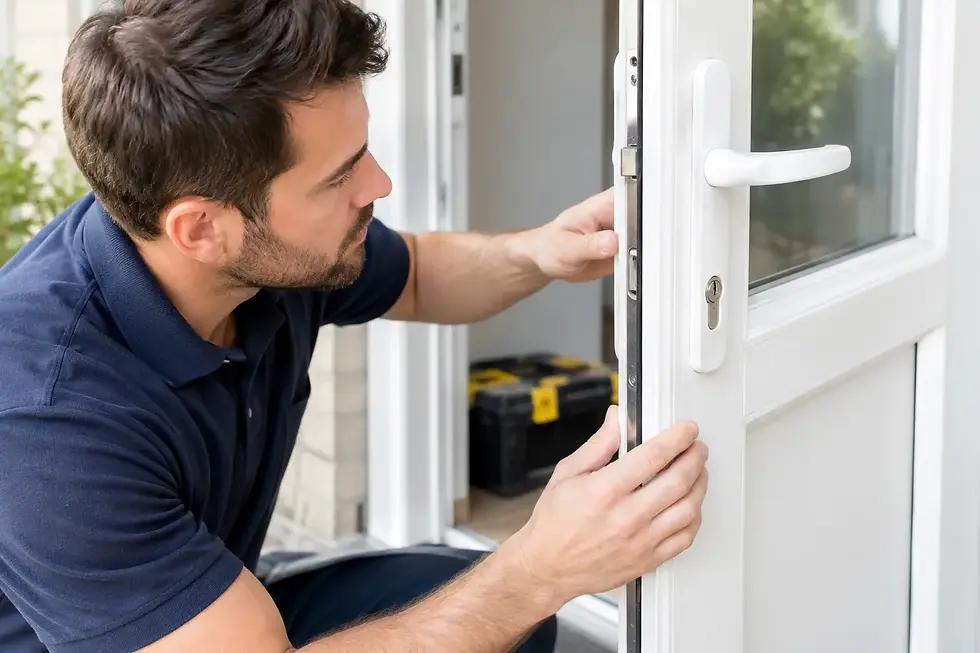
It is also worth looking beyond the cylinder. A good master key system cannot compensate for a weak wooden frame, a loose letterplate, a poorly aligned multipoint lock or a UPVC door that is not closing correctly. Security is only as good as the door, frame and fitting around it.
For properties in Clapham with older timber doors, newer composite doors or UPVC entrances, the lock arrangement should be checked on site. The correct cylinder length, security rating and operation from both sides can vary considerably.
Choose secure locks, not just convenient ones
Convenience must not lower the standard of the lock. External doors should normally use quality, security-rated cylinders and suitable handles or escutcheons. The exact lock depends on the door type, existing mechanism and insurance requirements.
For euro cylinder doors, anti-snap protection is often a key consideration. The cylinder should sit correctly in the handle and not project far beyond it, as an exposed cylinder can be easier to attack. On timber doors, the rim cylinder, mortice lock, strike plate and screws all need checking together.
Restricted key sections can be a sensible choice where key control matters. These keys cannot normally be copied at a high-street cutting counter without the correct authority. That is particularly useful for landlords and businesses, but it comes with a trade-off: replacement keys may take longer and cost more than standard copies.
Avoid mixing poor-quality cylinders into an otherwise well-planned system just to save money on one door. The weak point is usually the one an intruder will find first.
Decide who can order copies and replacements
Keys tend to multiply unless somebody is responsible for them. Keep a straightforward key record showing the key reference, the holder, the doors it operates and the date it was issued. Do not label keys with the address or a clear description such as “rear office” or “flat 3”. If a key is lost, that information makes it more useful to the wrong person.
For a managed property, nominate one person who can approve extra copies. If staff leave, tenants move out or a contractor finishes work, collect keys promptly and record their return. With a restricted system, make sure the authorised ordering process is understood before an urgent replacement is needed.
When a key goes missing, the response depends on what was lost. A single key with no identifying information may call for monitoring and a risk assessment. A lost master key, especially one linked to the building, usually requires quicker action. In some cases, affected cylinders can be re-pinned or replaced without changing every lock, but this needs checking against the original system design.
Think ahead about changes to the property
Buildings change. A spare room becomes an office, a new tenant moves in, a storeroom holds more valuable stock or a business takes the neighbouring unit. A system designed with a little spare capacity is easier to adapt than one built to the absolute limit.
That does not mean paying for a complicated grand master system “just in case”. It means telling the locksmith about likely changes before the system is set up. A clear key schedule and accurate records make additions much less troublesome later.
If one lock is damaged after a break-in, do not assume any replacement cylinder will fit into the existing arrangement. It may need to be matched, re-pinned or sourced to the right specification so the rest of the keys continue to work as intended.
When to call a locksmith
A master key system should be surveyed, specified and fitted by someone who understands locks, doors and the way the property is actually used. Measurements matter, but so do issues such as a sticking multipoint mechanism, a dropped UPVC door or a frame that needs strengthening. Fitting a new cylinder into a faulty door can leave you with a key that works but a door that still does not secure properly.
Before work begins, ask for the proposed access plan in plain language: which key opens which doors, how copies are controlled, what happens if a key is lost and whether the locks meet the right security standard for the door. A good system should be easy for the people using it to understand.
For homes, flats and local businesses, Clapham Locksmiths can assess the doors as well as the locks, helping prevent a convenient key system from becoming the weak point in your security. The best place to start is with the people, doors and access you have now, then build only the level of control you will genuinely use.
Comments