
Door Lock Repair SW11 Done Properly
A front door never seems to play up at a convenient time. It sticks when you are late for work, the key turns but nothing catches when you are carrying shopping, or the lock goes sloppy just as you are closing up for the night. If you need door lock repair SW11, speed matters, but so does getting the fault fixed properly rather than patched up for a week.
A lot of lock problems start small. The handle feels loose. The key begins to drag. The latch does not line up cleanly with the keep. Many people leave it, hoping it will sort itself out. It rarely does. By the time a door will not lock at all, or will not open from one side, the job is usually more urgent and sometimes more expensive because the strain has affected more than one part.
When door lock repair in SW11 is the right job
Not every faulty lock needs replacing. Quite often, the issue is wear in a specific part, poor alignment, a failed gearbox in a multipoint mechanism, a tired euro cylinder, or movement in the door or frame. A proper repair starts with finding the actual cause, not swapping parts at random.
On timber doors, we often see problems caused by seasonal movement, worn sashlocks, loose keeps, damaged strike plates, or old night latches that no longer catch cleanly. On UPVC and composite doors, the usual suspects are failed multipoint strips, broken gearboxes, dropped hinges, and handles that feel as if they are turning without engaging the lock. Bifold doors bring their own set of headaches, especially where alignment is slightly off and the locking points stop meeting the frame as they should.
Repair makes sense when the lock body is still sound, suitable parts are available, and the rest of the door set is in decent order. Replacement is the better option when the lock is badly worn, the mechanism is obsolete, the damage has spread, or security is no longer up to standard. The honest answer is that it depends on the condition of the whole door, not just the keyhole.
The signs your lock should not be ignored
Most doors give a bit of warning before they fail. If the key only works after a wiggle, the handle has become floppy, or you have to lift the door hard to lock it, something is wearing out or drifting out of line. That does not always mean a major fault, but it does mean the mechanism is under strain.
A lock that jams once can jam again. A door that only shuts with a shove is putting pressure on the latch and internal parts every single time it is used. On shared rental properties and small business premises, these faults tend to get worse faster because the door sees more traffic. One rough turn of the key from someone in a hurry can be enough to finish off a mechanism that was already close to giving up.
If the door has been forced, kicked, or hit during an attempted break-in, the problem may go beyond the lock itself. The frame, keeps, handles, hinges, and even the edge of the door can all be affected. In those cases, a proper repair needs a tradesman’s eye, not just a quick look at the cylinder.
Common lock faults on homes and businesses
The type of repair depends heavily on the door and how it is used. A flat entrance door, a shopfront, and a back garden door all wear differently.
On house and flat doors, failed night latches and sashlocks are common, especially on older timber doors where years of use have worn the latch or pulled the keep slightly out of line. Landlords also see plenty of euro cylinder issues on newer doors, including snapped cylinders, keys stuck in the lock, or barrels that spin but fail to operate the mechanism.
Commercial doors often develop problems around high traffic use. Handles loosen, closers pull doors out of alignment, and locks start sticking because the whole door set has shifted. In shops and small offices, the last thing anyone wants is a shutter going down while the main door will not secure properly.
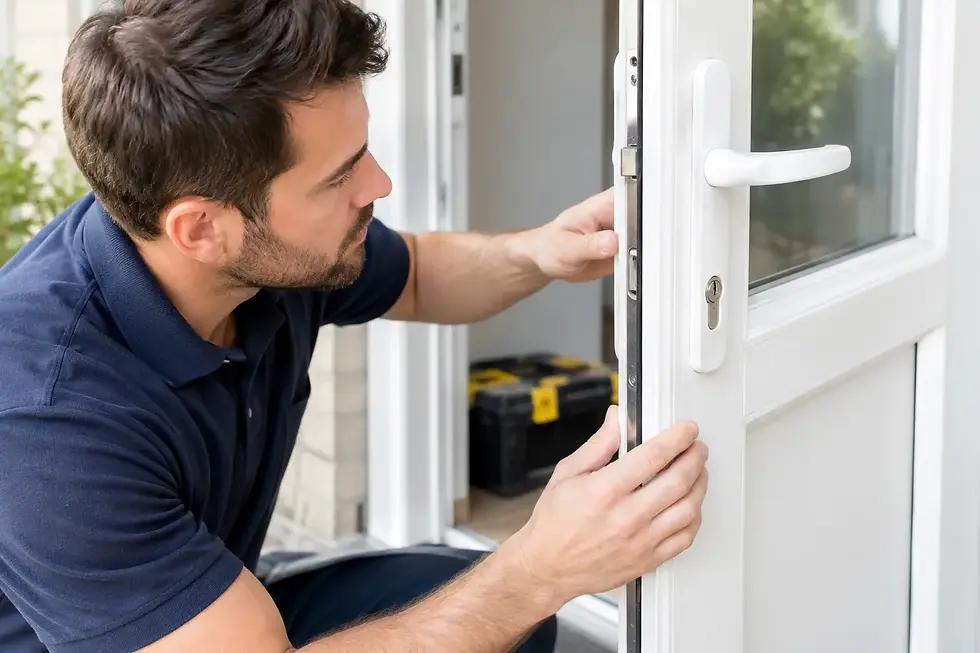
UPVC doors are a category of their own. A customer may think the cylinder has failed, but the real fault is often in the central gearbox or the full multipoint strip. That matters because replacing the wrong part wastes time and money. The same goes for bifold doors, where the lock may be fine but the leaves are no longer aligned and the shoot bolts are missing their points.
Why a proper diagnosis saves time and money
A lot of locksmith work is really fault-finding. Two doors can show the same symptom and need completely different repairs. A key that will not turn might point to a seized cylinder, a failed gearbox, pressure from a dropped door, debris in the mechanism, or damage after an attempted forced entry.
This is why stocked vans matter. If the person attending can diagnose the issue and carry a broad range of cylinders, lock cases, gearboxes, handles, keeps, and fixings, there is a much better chance of sorting it in one visit. That is what most people want when they are standing on a step in the rain or trying to close up a business at the end of the day.
There is also a security angle. A badly fitted temporary lock, or a repair that ignores frame damage, can leave a door looking fixed while still being easy to force. Good repair work is not just about getting the key to turn again. It is about the door shutting square, locking smoothly, and resisting attack as it should.
Door lock repair SW11 for emergency and non-emergency jobs
Some calls are obvious emergencies. You cannot get in. You cannot secure the property. A key has snapped in the lock. The handle has failed and someone is trapped inside or outside. Those need fast attendance and a practical fix on site.
Other jobs are urgent, but not quite blue-light urgent. Maybe the lock still works, but only if you lift the handle a certain way. Maybe your tenant has reported that the front door is stiff and hard to lock. Maybe you have moved into a new place and found the mechanism already half worn out. These are the jobs worth dealing with before they become a callout at the worst possible time.
For local properties around SW11, a fast-response locksmith who can also handle door adjustment, frame issues and specialist UPVC repairs is often more useful than someone who only changes cylinders. Real-world door problems are rarely as simple as the internet makes them sound.
Repair or replace? The honest answer
People often ask which is cheaper, repair or replacement. Sometimes repair wins easily. A hinge adjustment and a small realignment job can bring a difficult door back to normal without major parts. Replacing a worn cylinder is straightforward if the rest of the lock is healthy. Swapping a failed gearbox can save a full mechanism where the strip is still sound.
But there are times when replacement is the sensible route. If parts are obsolete, if the lock has failed repeatedly, or if the level of security is poor by modern standards, putting money into repair can be false economy. The same applies after a burglary or forced entry. Once the lock, handle, frame and keeps have all taken damage, the best result may come from replacing the affected parts together.
A decent locksmith should tell you plainly which route makes sense and why. That straightforward approach is one reason local family firms such as Clapham Locksmiths tend to earn repeat customers. People remember when a tradesman fixes the problem without trying to turn every visit into a sales pitch.
What to do while you wait for a locksmith
If the door still opens, avoid forcing it. Repeatedly wrenching the handle or over-turning the key can turn a repairable fault into a lockout. If the key is stiff, do not lean on it until it bends or snaps. If the door is misaligned, note whether lifting or pulling changes anything, as that can help identify whether the issue is with the lock or the door set.
If there has been an attempted break-in, check the frame and the edge of the door as well as the lock itself. Splits in timber, bent keeps, loose handles and disturbed hinges all matter. And if the property cannot be secured, treat it as urgent. A lock that sort of works is not the same as a secure door.
Photos can help if you are speaking to a locksmith before attendance, especially on UPVC and bifold doors where handle style, strip type and visible damage give useful clues. But no photo replaces seeing the door operate in person.
Choosing the right help for lock repairs
For this kind of job, local knowledge counts. Older mansion flats, modern developments, shop doors and converted houses all have different hardware and their own typical faults. You want someone who is used to working on the kinds of doors found in and around Clapham, not someone reading from a script.
It also helps to ask whether they repair as well as replace. That sounds obvious, but not every locksmith does much beyond basic lock changes. If your issue involves a dropped UPVC door, a damaged frame, a stiff bifold mechanism or a faulty multipoint system, broader hands-on trade experience makes a real difference.
The best outcome is simple. The locksmith turns up when they say they will, explains the fault in plain English, fixes what can be fixed, replaces what genuinely needs replacing, and leaves you with a door that closes properly and feels secure again.
If your lock has started playing up, do not wait for the day it gives up completely. Most door problems are easier to sort when they are caught early, and a fast, proper repair is always less stressful than being stuck on the wrong side of your own front door.
Comments