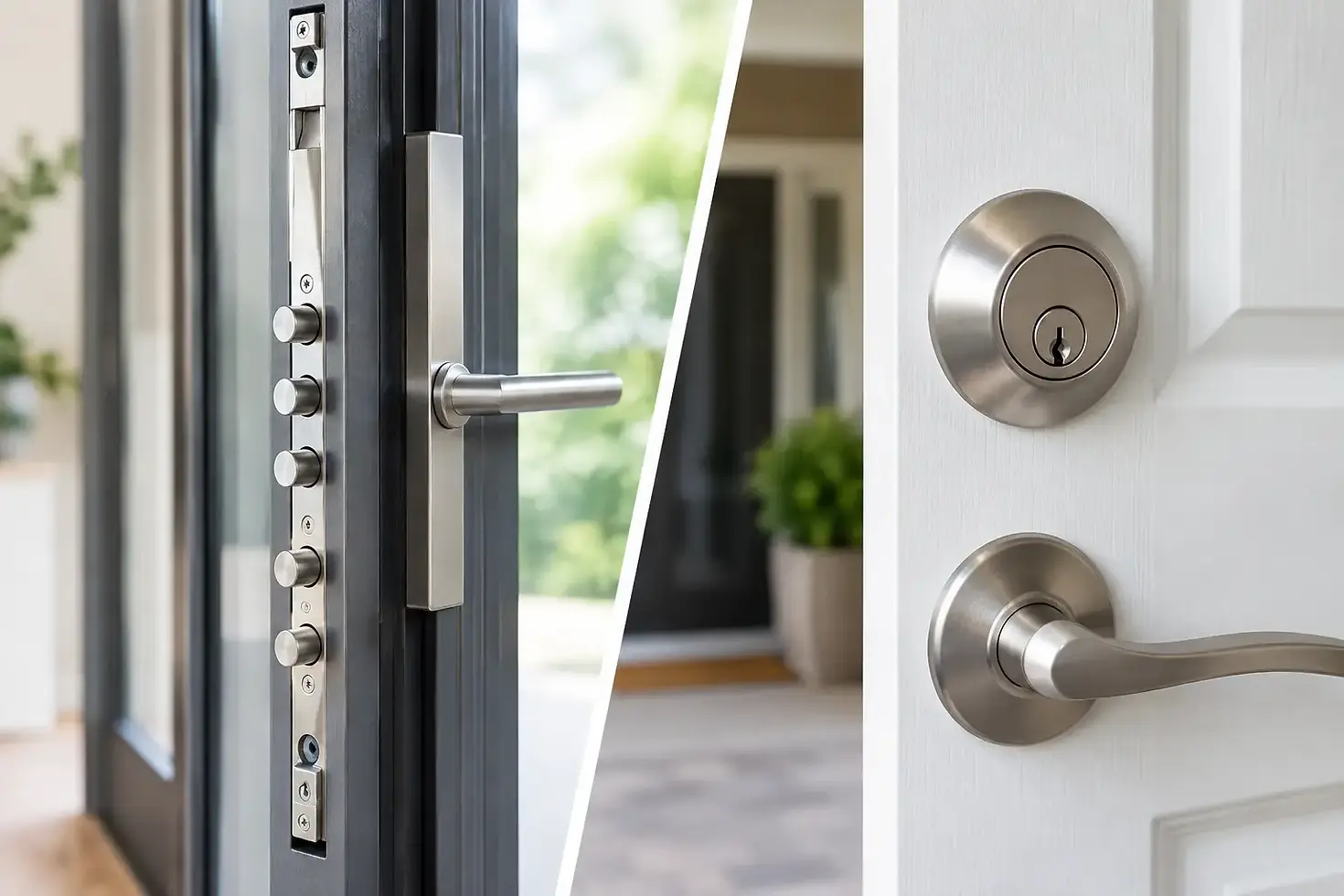
Multipoint Locks Versus Deadbolts Compared
A front door can look secure while the locking hardware tells a different story. The choice between multipoint locks versus deadbolts is not simply about picking the lock with the biggest key or the most bolts. It comes down to the door you have, how it is fitted, the condition of its frame, and the level of security the whole setup can realistically provide.
For many homes in Clapham, the answer is already partly decided by the door itself. UPVC and composite doors commonly use a multipoint locking strip, while timber doors often suit a mortice deadlock, sometimes alongside a nightlatch. Understanding the difference helps you spot a problem early and avoid paying for the wrong repair or upgrade.
Multipoint locks versus deadbolts: the main difference
A deadbolt locks at one point on the door edge. Turn the key and a solid metal bolt moves into the keep in the frame. A mortice deadlock is fitted into the door itself, while a rim deadlock or nightlatch is mounted on the inside face of the door. Both can be effective when correctly fitted to a sound door and frame.
A multipoint lock secures the door at several points along its edge. Depending on the mechanism, it may use hooks, rollers, bolts, mushroom cams or a combination of these. Lifting the handle engages the locking points, then turning the key locks them in place through the cylinder.
That difference matters because a multipoint system spreads the hold of the door across more of the frame. It is particularly useful on UPVC, composite and some aluminium doors, which can flex if they are held at one point only. A deadbolt is simpler, but it concentrates the locking force in one area.
Neither system is automatically right for every property. A well-fitted British Standard mortice deadlock on a solid timber door can be a very good security arrangement. Equally, a multipoint lock with a worn gearbox, poor alignment or an exposed weak cylinder may not give the protection its row of bolts suggests.
Where multipoint locks work best
Multipoint locks are normally built as part of the door system, not added as a simple standalone upgrade. They are the usual choice for UPVC and composite front doors because the keeps, hinges, lock strip and frame are designed to work together.
When the door closes and locks properly, the multiple engagement points help pull it tightly into the frame. This can improve resistance to levering and can also help with draughts, rattling and movement in the door. On a tall or wide door, that support along the edge is especially useful.
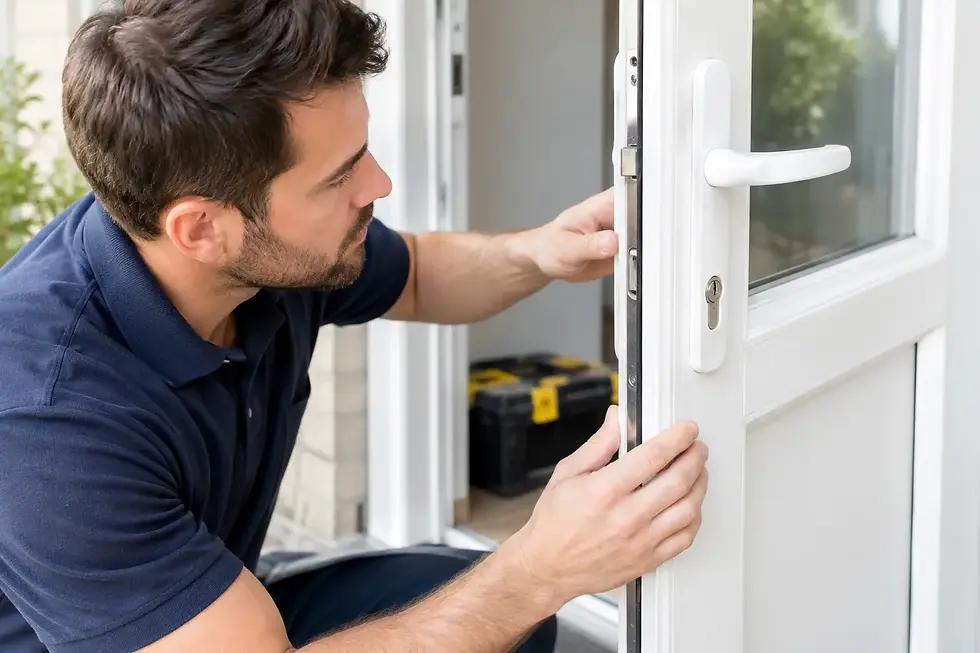
They do have more moving parts. The central gearbox, handles, connecting strips and locking points all need to be aligned. If a door has dropped on its hinges or expanded in warm weather, forcing the handle can damage the gearbox. A common warning sign is a handle that needs lifting harder than usual, a key that only turns when the door is pushed or pulled, or hooks that fail to engage cleanly.
Those are repair issues, not things to ignore until the door will not lock at all. In many cases, the door can be adjusted and the faulty part repaired or replaced before a complete lockout happens. The same applies to bifold doors, where small alignment issues can quickly affect the locking system.
The cylinder still matters
On most multipoint doors, the euro cylinder is the part operated by the key. It is often the first component to assess during a security upgrade. A lock strip with several hooks will not compensate for a poor-quality, damaged or badly protruding cylinder.
A suitable anti-snap cylinder, fitted flush or close to flush with the handle furniture, can make a meaningful difference. The exact choice should match the door and current security requirement. It is also worth checking whether your insurer asks for a particular standard, rather than assuming any replacement cylinder will do.
Where deadbolts make sense
Deadbolts remain a practical option for timber doors, especially traditional front doors and flat entrance doors. A five-lever mortice deadlock can sit neatly inside the door, leaving the exterior appearance largely unchanged. When paired with strong security escutcheons and a properly reinforced frame, it provides straightforward, proven protection.
The key point is installation. A deadbolt needs enough sound timber around it, and the strike plate or keep must be firmly fixed into solid frame material. A strong lock fitted to a split frame, loose keep or thin decorative panel is only as secure as the weakest part around it.
Many timber front doors use two locks: a nightlatch for everyday use and a mortice deadlock for extra security when the property is empty or overnight. This can be a sensible arrangement, provided everyone in the household knows how to use it and has access to a key. On a door that is frequently used by children, elderly relatives or tenants, easy and safe exit from inside should be considered before changing the locking arrangement.
Deadbolts are generally less complicated than multipoint mechanisms, so there are fewer components to wear out. However, they can still stick, seize or become difficult to turn due to paint buildup, door movement, a poorly aligned keep or an old cylinder. The fact that a bolt goes into the frame does not mean it should be forced.
Security is about the whole door, not just the lock
It is tempting to compare the number of locking points and declare a winner. Real-world security is more practical than that. A multipoint lock may be the stronger choice on a correctly fitted composite door. A British Standard deadlock may be the better choice for a solid timber door. But both can be undermined by problems elsewhere.
Check the hinges, frame, glazing, letterbox position and handles as part of the assessment. On outward-opening doors, hinge security may need attention. On doors with glass close to the lock, the internal locking method matters. If the frame has been damaged following an attempted break-in, fitting a new lock without repairing and reinforcing the timber or UPVC around it may leave the same weakness behind.
For landlords and small business owners, consistency is also worth considering. A property with several entrances may be easier to manage when cylinders can be keyed alike or when a controlled key system is used. That is a separate decision from whether the door needs a multipoint mechanism or a deadbolt, but it affects day-to-day security and key control.
Repair, replace or upgrade?
If your door has suddenly become difficult to lock, start by avoiding force. With a multipoint lock, try operating the handle while the door is open. If it works open but not closed, the issue may be alignment rather than the mechanism itself. If the handle is floppy, will not lift, or the key will not turn even with the door open, a gearbox, spindle or cylinder fault may be involved.
With a deadbolt, look for rubbing marks around the bolt and keep. A door that has swollen, dropped or shifted can stop the bolt entering cleanly. Do not keep turning a stiff key until it snaps in the lock. A repair may be as simple as adjustment, or it may be time to replace a worn lock body or cylinder.
Replacement is sensible after lost keys, a break-in, visible damage, repeated sticking, or when the existing lock does not meet the standard required by your insurer. An upgrade is also worth discussing if a euro cylinder is old, projects noticeably from the door, or lacks modern attack resistance.
Clapham Locksmiths sees both types of problem regularly: multipoint mechanisms on UPVC and composite doors that have fallen out of alignment, and timber doors where the lock, keep and frame all need attention together. The right fix is the one that restores reliable locking without replacing sound parts unnecessarily.
Choosing for your property
If you are fitting or replacing a door, follow the locking system the door manufacturer specifies. A multipoint lock is normally the natural fit for a modern UPVC or composite door. For a traditional timber door, a quality mortice deadlock, often used with a suitable nightlatch, is usually the more practical route.
If you are improving an existing door, assess what is already there before changing it. The condition of the frame, the cylinder, the handles and the alignment may matter more than changing from one lock type to another. A door should close freely, lock without a struggle and leave no doubt that the bolts or latch have engaged.
If the key is sticking, the handle is taking more effort than it used to, or the frame has been damaged, get it checked while the door still opens and closes. Small lock faults are usually far easier to sort out before they become an urgent callout at the end of the day.
Comments