
What Locks Meet Insurance Standards? UK Guide
A lock can look solid, turn smoothly and still fall short of your insurer’s requirements. When people ask what locks meet insurance standards, the honest answer is that the policy wording matters first. There is no single lock that every insurer accepts for every property. But there are British Standards and security ratings that insurers commonly ask for, particularly on external doors.
For most homes, the question comes down to the door type, how the door locks, and whether the property is a house, flat, rental or business premises. A proper check avoids the common problem of fitting a good-quality lock that does not match what the policy actually requires.
The standards insurers commonly recognise
For a timber front or back door, the standard most often requested is BS 3621. This applies to a thief-resistant mortice lock, usually a five-lever deadlock or sashlock. A BS 3621 lock is designed to resist common methods of attack and is normally identified by the British Standard Kitemark on the faceplate or lock body.
A five-lever mortice deadlock meeting BS 3621 is often the right answer where an insurer specifies a "five-lever mortice deadlock to BS 3621". It is normally fitted to a solid timber door and operated by a key from both inside and outside. That key operation can be a security benefit, but it is not suitable for every exit door because occupants need a key to get out.
For doors that must allow an easy escape in an emergency, BS 8621 may be more appropriate. It provides similar attack resistance but has a thumbturn on the inside, so the door can be opened without a key. Some insurers accept it, but do not assume they will. Check the wording or ask them directly before changing a lock.
Older policies may mention BS 3621:2004. Current products may carry later standard references, but the key point is to match the requirement in your policy and fit the lock correctly. The standard on the box alone is not enough if the lock is poorly fitted to a weak door or loose frame.
What locks meet insurance standards on uPVC and composite doors?
uPVC, composite and many aluminium doors usually use a multi-point locking mechanism with a euro cylinder. On these doors, the cylinder is often the part an insurer or security survey will focus on. Standard cylinders can be vulnerable to snapping, drilling or picking if they are old or poorly protected.
A common upgrade is a TS 007 [three-star euro cylinder](https://www.claphamlocksmiths.com/post/anti-snap-lock-review-for-homes-and-shops). This is a high-security cylinder tested for resistance to several forms of attack, including cylinder snapping. You may also see cylinders rated to SS312 Diamond. Both are recognised high-security ratings, although they are not identical standards.
The handle matters too. A three-star cylinder gives the clearest single rating, but a combination of a security handle and a suitable cylinder can also improve protection. The best arrangement depends on the door, the depth of the cylinder, the existing handle and the condition of the multi-point mechanism.
Do not buy a cylinder based on price or finish alone. If it sticks out too far from the handle, it can be easier to grip and attack. If it is the wrong length, the door may not lock properly. A correctly sized, properly fitted anti-snap cylinder is far more useful than an expensive one fitted badly.
Nightlatches, rim locks and secondary locks
A standard Yale-type nightlatch on its own is not always enough for insurance purposes, especially on a timber front door. Basic rim nightlatches are convenient, but many policies expect an additional mortice deadlock or a high-security rim lock.
A BS 3621 rim lock can meet a typical insurer requirement where a rim-mounted lock is needed. These are often fitted to front doors where a nightlatch style of operation is preferred. They are not the same as an ordinary nightlatch, so check the actual product rating rather than relying on the familiar appearance.
Some doors have both a nightlatch and a mortice deadlock. That can be a sensible arrangement, but it must be used properly. If the policy says the mortice deadlock must be engaged whenever the property is empty, leaving it unlocked could cause trouble if a claim is made after a break-in.
Insurance approval is about the whole door
Insurers do not only look at the lock. A BS 3621 deadlock in a cracked frame, thin door, loose keep or damaged hinge side will not give the protection it should. The same applies to a high-security cylinder fitted to a uPVC door with a failing gearbox or misaligned locking points.
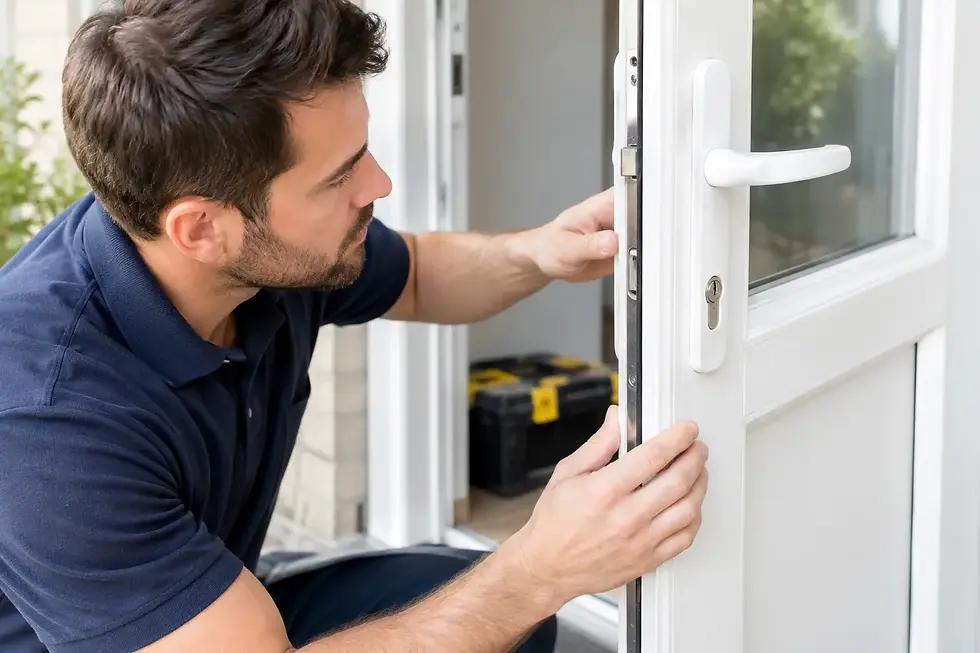
For a lock to do its job, the door needs to close squarely, the bolts need to throw fully into the frame and the keeps need to be firmly fixed. On timber doors, long screws and reinforcement may be needed where the frame has weakened. On uPVC and composite doors, the hinges, keeps and multi-point mechanism should be adjusted before a new cylinder is fitted if the door is dropping or catching.
This is particularly relevant after a burglary or attempted break-in. Replacing only the visibly damaged lock can leave hidden damage behind, such as split timber around the keep, bent locking points or a distorted frame. The repair should deal with the weak point, not just make the door shut again.
Flats, shared entrances and fire safety
Flats need a little more thought. Your own flat entrance door may have different requirements from the communal entrance, and fire safety can affect the type of lock that is suitable. A lock that requires a key to escape may not be right for every internal escape route.
If your front door opens into a shared hallway, do not fit a lock that compromises the building’s fire strategy or communal security arrangements. Lease terms and managing agents may also set rules about door changes. In these cases, confirm what is permitted before replacing the lock.
For landlords, it is worth keeping a record of the lock type, keys issued and any security work carried out. It makes changeovers easier and provides useful evidence that sensible steps were taken to secure the property.
Business premises may need more than a rated lock
For a shop, office, café or small unit, the insurer may specify a particular lock standard, but may also require shutters, grilles, an alarm or security lighting. The level of cover often depends on the stock kept inside, opening hours, location and whether the premises are left empty overnight.
A good-quality mortice lock or high-security cylinder is still part of the picture, but it may not be enough on a glazed shopfront or rear service door. Read the endorsements on the commercial policy carefully. Terms such as "minimum security requirements" and "warranties" are worth paying attention to, as they can set conditions for cover.
How to check your current locks
Start with your insurance schedule or policy booklet. Look for the sections headed security, conditions, endorsements or minimum security. The wording may name a British Standard, describe the number of levers required, or state that all external doors must have certain locks in use when the property is unattended.
Then inspect the door itself. A mortice lock may show its standard on the faceplate when the door is open. On a euro cylinder, the rating may be stamped on the cylinder or supplied on its card or packaging, but markings vary. If the lock is old, painted over or difficult to identify, guessing is not worthwhile.
Photographs of the door edge, lock faceplate, cylinder and handles can help a locksmith assess what is fitted. A site visit is better where the door is damaged, misaligned or has a specialist mechanism. uPVC doors, bifold doors and older aluminium systems can have faults that are not obvious until the door is tested under load.
When it is worth upgrading
An upgrade is sensible if your insurer has changed its conditions, you have moved into a property with unknown locks, keys have been lost, a tenant has left, or the cylinder projects beyond the handle. It is also sensible after an attempted break-in, even if the door still locks.
Clapham Locksmiths regularly sees doors where a lock replacement alone would be a short-term fix. A properly stocked locksmith can check the cylinder, mechanism, keeps, door alignment and frame at the same visit, then explain what needs doing and what does not. That is usually quicker and better value than replacing parts one at a time.
Before you spend money, get the exact requirement from your insurer and make sure the lock suits the door and the way the property is used. The right lock is the one that meets the policy, protects the weak points around it and still lets everyone get out safely when they need to.
Comments