How to Open a Jammed Door Without Making It Worse
A door that will not open is rarely just an inconvenience. You may have a child’s school bag, the keys or a pet on the other side, or you may be unable to secure your home properly. Knowing how to open a jammed door starts with resisting the urge to force it. A hard shove, kick or twist of the key can turn a minor alignment issue into a damaged lock, cracked frame or door that needs replacing.
First, make sure everyone is safe. If somebody is trapped, there is a fire risk, or the door is the only safe exit, call the emergency services. Otherwise, take a minute to work out what has actually jammed. The fix for a swollen timber door is very different from the fix for a failed UPVC multipoint lock.
Work out what is stopping the door
Try to identify whether the problem is with the door itself, the latch, the key or the locking mechanism. Do not keep repeating the same movement with more force. That is how keys snap and lock cases break.
If the handle moves normally but the door will not open, the latch may be caught against the keep in the frame. If the key will not turn, or turns only part way, the cylinder or internal lock may be at fault. If the key turns and the handle feels loose, a component inside the mechanism may have failed.
Look closely at the gaps around the door. A gap that is tight at the top or bottom can point to dropped hinges, a warped door or seasonal swelling. On a UPVC or composite door, difficulty lifting the handle before locking is often a sign that the door has moved out of alignment. Bifold doors can also jam when the locking strip, rollers or handles are not sitting in the right position.
How to open a jammed door caused by pressure or alignment
Start with the gentlest option. While turning the handle or key, apply light pressure to different parts of the door. Push near the latch, then pull gently, then try lifting the door slightly by its handle. The aim is to take pressure off the latch or bolts, not to wrench the door open.
For an inward-opening door, try pulling the door towards you while operating the handle. For an outward-opening door, try a controlled push. Sometimes a door has shifted just enough for the latch to bind in the keep, and changing the pressure releases it.
If the door appears to have dropped, lift it slightly while someone else turns the handle. Do not hang your full weight from the handle. Lever handles, particularly on UPVC doors, can bend or pull away from the backplate if they are used as a lifting point.
A timber door that jams only in damp weather may be swelling against the frame. If it is not locked, gentle pressure around the sticking area can occasionally free it. Do not plane, sand or cut the door while it is closed. It is easy to remove too much material, damage weather seals or leave a gap that compromises security when the weather changes.
If the key will not turn in the lock
Check that you are using the correct key and that it is fully inserted. A bent or worn key may enter the cylinder but fail to move the pins properly. If you have a spare key, try that once. Avoid repeatedly jiggling a key that is catching, as it can break inside the lock.
A small amount of proper lock lubricant may help a dry or dirty cylinder. Use a product made for locks and apply it sparingly. Household oil, cooking oil and thick sprays can attract dirt and gum up the mechanism over time. If the key starts to turn but feels unusually stiff, stop before it snaps.
On many front doors, the key will not turn freely if the door is pushing hard against the frame. Try lifting, pushing or pulling the door very gently as you turn the key. This is common where a door has dropped slightly or where cold and damp conditions have affected the fit.
If you can turn the key but cannot remove it, return it carefully to the normal key-removal position. Do not use pliers to twist it. Pliers increase the chance of snapping the blade and leaving part of it inside the cylinder.
Do not force a UPVC or composite door handle
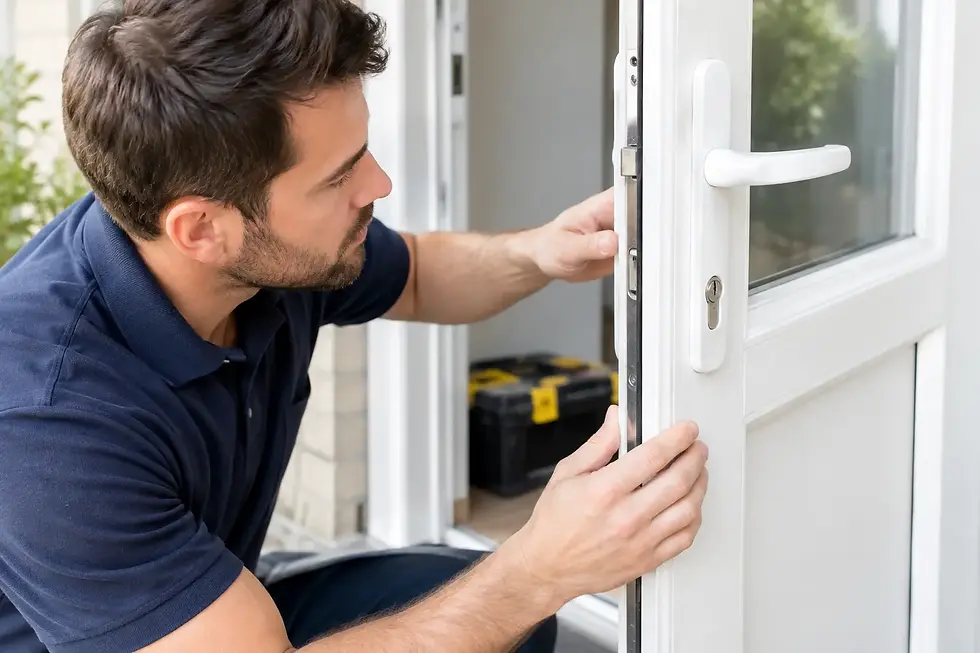
UPVC and composite doors often use a multipoint locking system. When you lift the handle, hooks, rollers and bolts engage at several points along the edge of the door. This gives good security, but it also means a fault can stop the whole door opening.
If the handle will not lift or has gone floppy, do not force it upwards or downwards. The problem may be simple alignment, but it could also be a failed gearbox, worn spindle, broken spring cassette or a jammed locking strip. Excess force can bend the mechanism, split the handle or make a repair more involved.
Try holding the handle in its usual open position while gently pushing and pulling around the locking edge of the door. If it releases, leave the door open and arrange for the alignment or mechanism to be checked. A door that has jammed once often jams again, usually at the worst possible time.
The same principle applies to bifold doors. Make sure all panels are properly folded or closed in their correct sequence, and do not pull hard on a handle if the lock will not engage or release. The issue may be with the track, hinge, locking system or door adjustment rather than the cylinder itself.
Avoid the quick fixes that cause expensive damage
There is plenty of advice suggesting cards, screwdrivers, drills and brute force. These methods are unreliable, can damage modern locks and frames, and may leave your property insecure. They can also invalidate a warranty or create a bigger repair job than the original fault.
Do not remove hinges from an exterior door. Most external doors have hinge security features, and removing hardware while the door is under pressure can make it unstable. Do not drill a lock unless you are certain it is your property and there is no non-destructive repair option. A good locksmith will normally assess the lock first and aim to preserve the door, frame and existing hardware where possible.
If the door is stuck after an attempted burglary, do not keep testing the lock. Damage may be hidden inside the mechanism or behind the handle. Secure the property and get the door checked properly, especially if the lock still appears to work.
When it is time to call a locksmith
Call a locksmith when the key is trapped, the key has broken, the handle is loose, the cylinder spins without opening the door, or a multipoint mechanism will not release. It is also sensible to call if the door is your only entrance, you cannot secure it afterwards, or you have already tried gentle pressure without success.
A properly equipped locksmith can diagnose whether the fault is the lock, cylinder, handle, hinges, keeps, door frame or door alignment. That matters because replacing a cylinder will not fix a dropped UPVC door, and adjusting hinges will not repair a failed gearbox. The right repair should deal with the cause, not merely get the door open for the day.
For homes and businesses in Clapham and nearby areas, Clapham Locksmiths can attend with stocked vehicles for emergency openings, lock repairs, UPVC door faults, bifold locking problems and door or frame repairs. A clear description over the phone helps: say whether the key turns, whether the handle moves, what type of door you have and whether anyone is locked in or out.
Once the door is open, do not ignore the warning signs that caused the jam. A small adjustment or targeted repair now is usually far cheaper and less stressful than being locked out late at night with a door that will not secure.
Comments