
How to Secure a Front Door Properly
A front door usually tells you how secure a property really is. We see plenty of doors with a decent lock fitted into a weak frame, loose keeps, tired hinges or glass panels that make the whole setup easier to defeat than most people realise. If you want to know how to secure a front door properly, the answer is not one product or one quick fix. It is the whole door set working together.
That matters whether you live in a house, a converted flat or manage a rental. A strong lock helps, but the frame, the strike points, the door material and the way the door closes all make a difference. If one part is weak, that is usually the part that gets targeted.
How to secure a front door without wasting money
The most common mistake is buying visible add-ons before checking the basics. People often fit a camera doorbell, a cheap alarm sticker or a secondary bolt, while the main latch barely lines up with the keep and the screws holding the lock area are too short. That gives a sense of security rather than the real thing.
Start with the condition of the door itself. Close it slowly and see how it sits in the frame. If it drops, binds, rattles or needs a shove to engage the lock, there is already a weakness. A door that does not close cleanly can leave the latch or deadbolt only partly engaged. That is a problem even with a good quality lock.
Timber doors, composite doors, UPVC doors and older glazed doors all have different weak points. Timber doors often suffer around the frame and keeps. UPVC doors can develop alignment issues or worn multi-point mechanisms. Older doors with decorative glass can be vulnerable if the glazing is not secure. The right fix depends on what is actually there.
Start with the lock, but do not stop there
A proper front door needs a lock suited to the door type and the level of risk. On a timber front door, that may mean a good quality mortice sashlock combined with a nightlatch, depending on the setup. On a composite or UPVC door, the focus is often on the cylinder and the multi-point locking system.
Not all cylinders are equal. A basic euro cylinder can be the weak spot on an otherwise solid door. Upgrading to an anti-snap, anti-pick and anti-drill cylinder is often one of the most worthwhile changes, especially on doors where the cylinder is exposed. It is usually a smarter spend than adding gadgets.
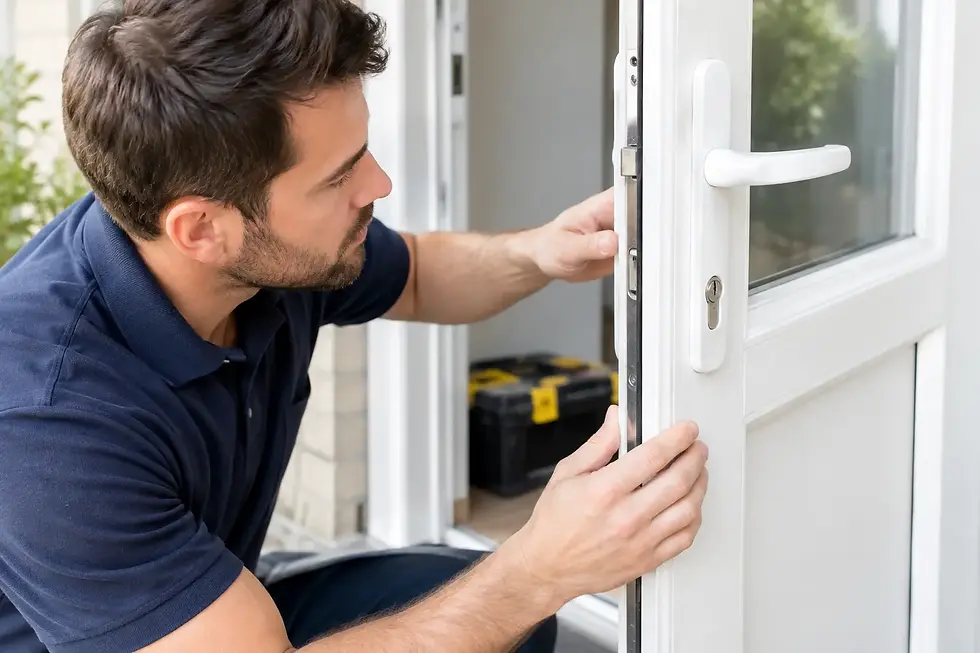
That said, more locking points do not always mean more security if the door is badly fitted or the mechanism is worn. We regularly see multi-point locks that look impressive on paper but no longer throw correctly because the door has shifted. In that case, the mechanism may need adjustment, repair or replacement before it can do its job.
The frame matters as much as the lock
A lock is only as strong as what it throws into. If the keep area is weak, split or fixed with short screws into soft timber, a forced entry attempt may succeed without the lock itself failing.
This is where proper reinforcement makes a real difference. Longer screws into solid structure, stronger strike plates and localised frame reinforcement can improve resistance far more than people expect. On some doors, carpentry work is the right answer rather than another lock. It depends on whether the weakness is in the ironmongery or the timber around it.
Older frames often show small signs before they become a bigger issue - hairline splits near the keep, movement when the door closes, or filler from an old repair. These are worth sorting early. Once the frame starts giving way, the lock area becomes the obvious attack point.
Check the hinges and the hanging of the door
People naturally focus on the key side, but the hinge side should not be ignored. If hinges are loose, undersized or badly fixed, the door can shift enough to affect locking and create pry points. Outward-opening doors need particular attention because the hinges may be more exposed.
A secure front door should hang square, close firmly and lock without force. If you have to lift the handle hard, pull the door towards you or slam it to engage the lock, that is not normal wear you should live with. It is a sign the door and lock are not working together properly.
On some properties, especially where UPVC doors are concerned, the issue is less about adding security and more about restoring it. A tired mechanism, misaligned keeps or worn hinges can leave a door much easier to force than it looks.
Glass near the lock can change the job
If your front door has glass panels, side panels or nearby glazing, think about access as well as strength. A solid lock is less useful if someone can break a pane and reach through to thumbturn hardware or the internal handle.
That does not mean every glazed door is unsafe. Plenty are perfectly serviceable when the glazing is secure and the hardware is chosen sensibly. But it is worth looking at the layout. If the lock can be operated through broken glass, extra protection may be needed. In some cases, laminated glass, security film or a change in internal hardware can improve things.
Again, this is where there is no one-size-fits-all answer. A Victorian timber door with small panes needs a different approach from a modern composite door with a glazed side light.
Letterboxes and other overlooked weak spots
A front door can be weakened by smaller details that get missed. A poorly positioned letterbox can allow access to internal handles, keys left in locks or nearby devices. Slim tools can sometimes reach further than people expect.
If the internal layout makes that possible, guarding the inside of the letterbox or changing habits can reduce the risk. The simplest improvement is often behavioural - do not leave keys in reach of the letterplate. It sounds obvious, but it is still a common issue.
Door viewers, chains and internal bolts have their place, though they are not substitutes for proper external security. A chain can help with controlled opening. A viewer can help identify callers. Neither will make up for a weak lock or a failing frame.
Lighting, visibility and routine still count
Physical door security works best alongside simple deterrents. A well-lit entrance is better than a dark recessed doorway. A door that is clearly visible from the street or neighbours can be less attractive than one hidden behind overgrown planting or high screening.
Routine matters too. We often find front doors left on latch only because the full lock is awkward to engage. If that is happening in your property, the answer is not just to be more careful. The answer is to fix the reason the lock is awkward, so the secure position becomes the normal one.
For landlords, this is especially worth checking between tenancies. A door that technically locks but is stiff, misaligned or fitted with old hardware can quickly become a complaint or a security problem.
When to repair and when to upgrade
If the door is structurally sound and the issue is a poor cylinder, weak keep area or worn hardware, a targeted upgrade usually makes sense. It is faster and more cost-effective than replacing the whole door. This is often the best route when the basic door set is worth keeping.
If the slab is split, the frame is badly degraded, the multi-point system is beyond sensible repair or previous forced entry damage has compromised several areas, replacement may be the better long-term option. Spending money on a premium lock fitted into a failing door is rarely good value.
For many homes and small business premises, the sweet spot is a practical combination - quality lock upgrade, proper frame reinforcement, adjustment of the hanging and any necessary repairs to get the door closing and locking exactly as it should.
A practical way to judge your own front door
Stand outside and look at the door as if you were trying to spot the easiest point of attack. Is the cylinder sticking out too far? Does the frame look tired near the lock? Is there glass close to the handle? Can you see movement when the door shuts? Then test the operation from both sides. A secure setup should feel firm, aligned and consistent, not stiff one day and loose the next.
If you are not sure what you are looking at, a proper on-site assessment usually saves time. The right tradesman will tell you plainly whether the problem is the lock, the frame, the alignment or a combination of the lot. That is far more useful than being sold hardware that does not address the real weakness.
In Clapham and nearby areas, we often find the best security improvements are not the flashiest ones. They are the practical fixes that stop a door being the easy option in the first place. Get the basics right, and your front door starts doing the job it should have been doing all along.
Comments