
How to Secure Bifold Doors Properly at Home
Bifold doors bring light, garden views and easy access to the outside, but their large glazed panels can make people worry about security. Knowing how to secure bifold doors starts with understanding that the lock is only one part of the job. The handles, hinges, tracks, glass, frame and the way the doors meet all need to be in good condition.
A properly fitted modern bifold door can be very secure. Problems usually begin when a lock is worn, a door has dropped out of line, the handle is loose, or a convenient but unsuitable extra lock has been fitted. A few sensible checks can reveal whether your doors are doing their job.
Start with the lock and handle
Most quality bifold doors use a multi-point locking mechanism. When you lift the handle and turn the key, several locking points should engage along the edge of the main door. These may include hooks, bolts or mushroom cams that lock into keeps in the frame.
Test the door with it fully closed. Lift the handle firmly, turn the key, then try the handle from both sides. It should feel solid, with no excessive movement or grinding. If you can lift the handle only with force, the key is difficult to turn, or the door must be pushed or pulled to lock, do not ignore it. That often points to an alignment problem rather than a failed cylinder, and continued forcing can damage the gearbox inside the door.
A loose or poor-quality handle is another weak point. The external handle should not wobble, and its fixing screws should not be exposed on the outside. On doors with a euro cylinder, consider a security-rated anti-snap cylinder. These are designed to resist a common forced-entry method where a protruding cylinder is snapped. The cylinder should sit flush with the handle or only slightly proud of it. If it sticks out noticeably, it is worth having it checked.
Never leave a key in the outside of the door, even for a short time. Inside, whether to leave a key in the lock depends on the household and the lock type. A thumbturn cylinder can offer a quick exit in an emergency, but it must be chosen and fitted properly so it does not create an avoidable security weakness.
How to secure bifold doors by keeping them aligned
Bifold doors work as a set. If one panel drops slightly, the locking points may no longer enter their keeps fully. The door may still appear to lock, but it may not be engaging as deeply as intended.
Look for tell-tale signs: gaps that are uneven around the frame, panels rubbing on the sill, stiff folding action, draughts, or a handle that only works when somebody lifts the door. Check that the top and bottom tracks are clear of grit, small stones and leaves. Dirt in a track can affect the movement of the panels and hold moisture against the frame.
Do not start adjusting hinges or rollers at random. Aluminium, timber and uPVC bifold systems have different fittings, and incorrect adjustment can make the problem worse or affect the doors' weather seal. A locksmith or door repair specialist can assess the lock, keeps, hinges and running gear together, then make the correct adjustment.
Check the frame, tracks and locking keeps
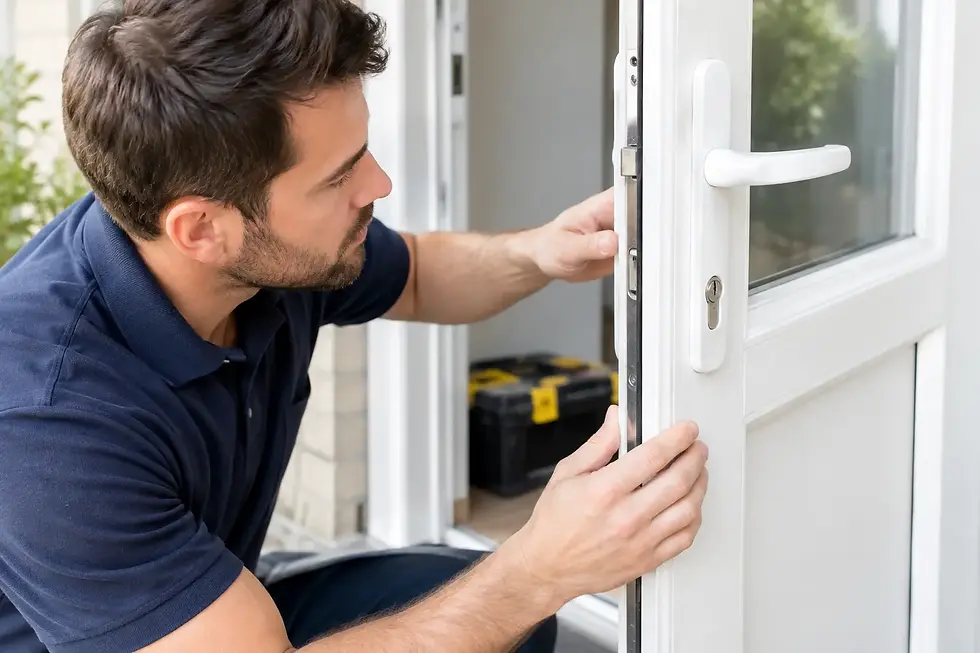
A strong lock needs a strong frame to lock into. Open the doors and inspect the metal keeps or strike plates fitted to the frame. They should be firmly fixed, not bent, cracked or pulling away. Loose screws, damaged timber and movement around the frame all reduce the protection offered by the multi-point mechanism.
Pay particular attention to the bottom track and the leading door, which is the panel that opens first and carries the main handle. These areas see the most daily use. Water, dirt and repeated knocks can cause problems over time, particularly where a patio or garden path sits close to the threshold.
Keep drainage channels clear as well. Standing water will not make a door insecure overnight, but it can lead to corrosion, swelling in timber, damaged seals and alignment issues that eventually affect the lock.
Make the glazing part of the security plan
The glass in bifold doors should normally be toughened or laminated safety glass, often within a double-glazed unit. If a pane is cracked, misted between the layers or visibly loose, arrange a repair rather than treating it as cosmetic. Damaged glazing can compromise both security and weather resistance.
Avoid adding ordinary stick-on film as a substitute for proper security glazing. Some films may hold small shards together, but they do not turn standard glass into a high-security barrier. If you are replacing glass or installing new doors, ask about laminated glass and the security rating of the complete door set, not just the glass itself.
Blinds, curtains or shutters can also help by reducing what can be seen from outside. They are not a replacement for a secure lock, but they make it less obvious when a property is empty and keep valuables away from view.
Use extra security carefully
Extra devices can help in the right situation, especially for a ground-floor flat, a rear extension or business premises containing valuable stock. However, bifold doors are designed to fold and lock in a particular way. Drilling into the wrong section of the frame, panel or track can affect the mechanism, invalidate a warranty or stop the doors closing correctly.
An additional internal security device may be suitable where the doors have a vulnerable opening leaf or where a landlord wants more control over a vacant property. The best option depends on the door material, the configuration of the panels and whether the door must provide a quick escape route.
Do not fit a padlock, chain or surface bolt that prevents people getting out quickly in a fire. Any added security must be easy for occupants to release from inside without searching for a key. This matters particularly in kitchens, open-plan extensions and commercial units.
Everyday habits that make a real difference
Most break-ins are opportunistic. Good habits will not correct a faulty lock, but they reduce the chance of making an intruder's job easier.
Fully close, lift and lock the doors whenever you leave the room for a long period, go upstairs at night or leave the property.
Remove the key from sight and keep it out of reach of glass panels, letterboxes and nearby windows.
Keep ladders, tools, garden furniture and wheelie bins secured or stored away from the doors.
Use external lighting that covers the patio or side access without shining directly into neighbours' homes.
Make sure gates and side passages are locked, as these often give burglars cover while they work.
If you rent, report a stiff or unreliable bifold door to the landlord or managing agent in writing. Tenants should not be expected to live with a door that cannot be locked properly. Landlords should deal with the issue promptly, as a small adjustment is usually simpler and less expensive than repairing damage after a forced entry.
When to call a locksmith or door repair specialist
Call for help if the key turns but the door will not open, the handle spins, the mechanism has jammed, the door has been forced, or you cannot lock it securely. Do not keep trying the handle repeatedly. A failed multi-point lock can become more damaged if it is forced, turning a repairable problem into a full mechanism replacement.
After an attempted burglary, avoid touching damaged locks or handles more than necessary until photographs have been taken for insurance. Then arrange for the door to be made secure quickly. A proper repair may involve replacing the cylinder, gearbox, handles, keeps, damaged glazing or sections of the frame - not simply fitting a new key cylinder and hoping for the best.
For properties in Clapham and nearby areas, Clapham Locksmiths can assess bifold locking faults, door alignment and damage on site, with the aim of getting the door secure in one visit where possible.
A bifold door should close smoothly, lock positively and leave you with no doubt that it is secure. If yours needs force to lock or does not feel right, get it checked before a small fault becomes the point someone tries to exploit.
Comments