
Night Latch Replacement Advice for Safer Doors
A night latch that sticks, spins, refuses to catch or leaves you pulling the door shut several times is more than an annoyance. It can leave a home, flat or business unit less secure than it looks. This night latch replacement advice explains what can be repaired, when replacement makes better sense, and what to check before fitting a new lock.
Start by working out what is actually wrong
A night latch is the lock mounted on the inside face of the door, usually with a cylinder on the outside. When the door closes, its spring-loaded latch slips into the keep on the frame. Many people call it a Yale lock, although Yale is a brand name and there are several types of night latch.
The first question is whether the fault is in the lock, the outside cylinder, the keep, or the door itself. A lock may seem broken when the door has dropped slightly on its hinges or swollen in damp weather. If the latch is hitting the edge of the keep rather than entering it cleanly, forcing the handle or repeatedly slamming the door can make the problem worse.
Try closing the door slowly and watch where the latch meets the frame. If it works with the door open but not when it is shut, alignment is likely to be part of the problem. If the key turns roughly, the cylinder may be worn or damaged. If the internal handle has become loose, floppy or difficult to use, the mechanism inside the case could be failing.
A simple adjustment may be enough where the keep has moved or the door needs attention. But a worn lock body, damaged cylinder or cracked case is not something to ignore, particularly on a main entrance door.
When repair is sensible and when replacement is safer
Repair is often worthwhile when a good-quality night latch is relatively new and the issue is clearly with alignment, fixing screws or the keep. A locksmith can also clean up the fitting, tighten loose furniture and make sure the latch engages properly. This is usually quicker and cheaper than replacing a lock that is still sound.
Replacement is normally the better call if the lock has been forced, the key operation is unreliable, the casing is cracked, or spare keys have gone missing. It is also sensible after moving into a property, following a tenancy change, or after a burglary attempt. You cannot know how many keys may be in circulation, and an old rim cylinder may offer little resistance to common forms of attack.
Age matters too. An older basic night latch may still lock the door, but that does not mean it gives the level of protection expected from a front door today. A proper upgrade can improve security without changing the whole door - provided the door and frame are in decent condition.
For landlords, replacing a compromised night latch promptly protects both the property and the tenant. For businesses, do not overlook staff access. If keys have been handed around over time, a replacement cylinder or lock may be more practical than trying to recover every copy.
Choose the right type of night latch
Not all night latches do the same job. Buying the first one that appears to fit can leave you with a weak lock, unnecessary drilling, or a door that no longer closes correctly.
A standard night latch automatically latches when the door closes. It is convenient for homes where people come and go, but some basic models are designed mainly for convenience rather than higher security. If the door only has this one lock, its specification matters a great deal.
A deadlocking night latch is often a better choice for a main entrance. When the door closes, the latch can deadlock, making it harder to slip back from outside. Many also have a snib on the inside, which can hold the latch in either the open or locked position. Used carefully, this is useful day to day. Used carelessly, it can cause a lockout if someone shuts the door while the snib is set.
For a timber front door, a British Standard night latch may be appropriate, particularly where insurance requirements apply. Check the wording of your policy rather than assuming every lock marked as secure will meet its conditions. Some insurers expect a particular standard, and many properties benefit from a separate deadlock as well as a night latch.
The right answer depends on the door, who uses it and how the property is insured. A ground-floor flat with a street-facing entrance has different risks from an internal communal-door flat. A shop may need reliable controlled access during opening hours, then stronger locking at night.
Do not overlook the cylinder
The outside cylinder is often the part that receives the most wear. If it is loose, projects too far, has been attacked, or the key catches, replacing the cylinder may be possible without replacing the entire night latch. That can be a sensible option where the internal lock body is still in good condition.
However, cylinders and lock cases need to be compatible. The backset - the distance from the door edge to the centre of the cylinder - has to match the latch. The cylinder length and door thickness also matter. A poorly matched cylinder can sit proud of the door, look untidy and be more vulnerable to damage.
Check the door and frame before spending money on a lock
A stronger lock cannot compensate for a weak frame, split timber or a poorly fixed keep. If screws are only gripping into soft, damaged wood, a new night latch will still be relying on the same weak point.
Look for movement around the strike plate, cracking near the keep and gaps between the door and frame. On older timber doors, the screw holes may be enlarged from years of use. On a door that has been forced, the frame and surrounding architrave may need carpentry repair before any replacement lock can work properly.
This is where a practical on-site assessment helps. The lock, door, hinges and frame work as one system. Fitting an expensive latch to a door that is dropping or a frame that is split may not solve the security issue at all.
Can you replace a night latch yourself?
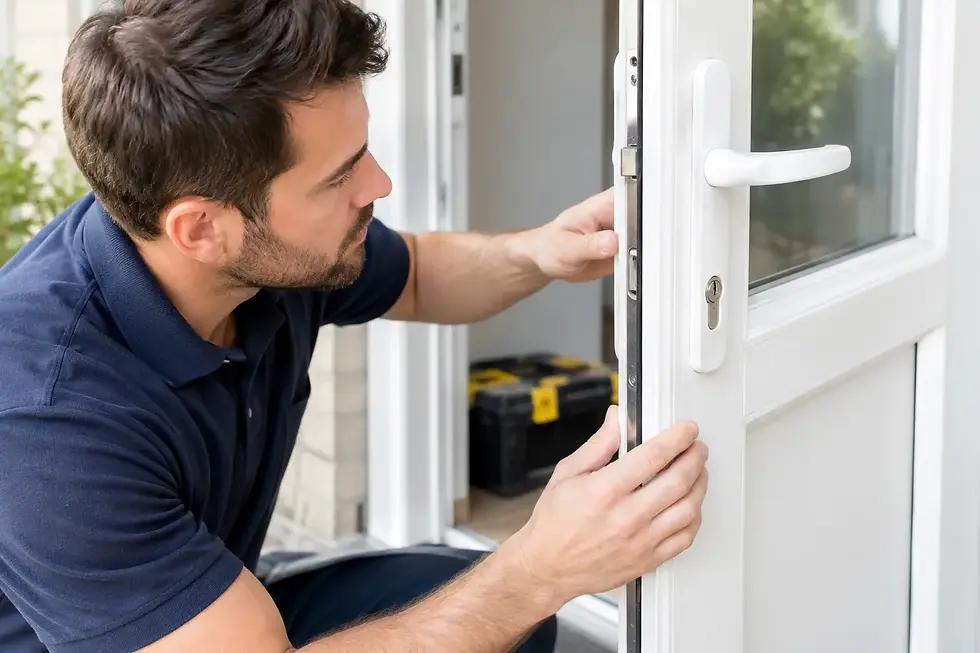
If you are replacing like for like on a sound timber door, are confident with measuring and can accurately line up the keep, it can be a manageable job. Keep the old lock until the new one is fully fitted and tested. Measure the backset, check the handing and make sure the new case covers any old fixing holes.
The difficult part is not usually removing the old lock. It is fitting the new one so the cylinder sits correctly, the latch enters the keep without force and the door locks every time. A keep fitted a few millimetres out can cause a recurring problem that looks like a faulty lock.
Avoid drilling first and checking later. Do not force screws into damaged timber, and never leave the door unsecured overnight because a replacement has not gone to plan. If the existing lock has been forced, if the door is UPVC or composite, or if you need to meet a specific insurance standard, it is generally better to have the work checked and completed properly.
Common mistakes that make a replacement less secure
The most common mistake is fitting a basic latch as the only security on a front door because it is cheap and available. Another is reusing an old, loose cylinder with a new lock body. Both save money initially but can create a weak point.
People also sometimes fit a stronger latch but leave a damaged keep or frame untouched. Others set the snib in a way that stops the door latching, then assume they are secure because the door is closed. Before relying on any new lock, test it several times from inside and outside, with the door open and shut.
Keep keys controlled as well. Marking a full address on a key tag is an avoidable risk. If a key is lost with identifying details, or you are unsure who has copies, changing the cylinder or lock is usually the sensible precaution.
Night latch replacement advice after a break-in
After an attempted break-in, do not just replace the visibly damaged part and move on. Check whether the frame has split, whether the keep has pulled away, and whether the cylinder or surrounding door surface has been distorted. A forced latch may need a more secure replacement, reinforced fixing points and repairs to the timber around it.
If you cannot lock the door safely, treat it as urgent. A local locksmith can secure the property first, then advise on the right permanent repair rather than fitting a rushed, unsuitable lock. For homes and businesses in Clapham, a fully stocked vehicle also means many lock, door and frame issues can be dealt with in one visit.
A night latch should let you leave the house without a second thought, not make you wonder whether the door has really locked. If it feels unreliable, acts differently in damp weather, or has been damaged, deal with it before it turns into a lockout or a security problem.
Comments