
What Causes a Door to Drop? Common Causes
A door that scrapes the floor, catches on the frame or needs lifting to lock is more than an everyday annoyance. It puts strain on hinges, keeps the latch from lining up properly and, on a UPVC or composite door, can stop the multipoint lock from working as it should. So, what causes a door to drop? Usually, it is movement in the hinges, frame, door panel or locking mechanism - but the right repair depends on the door type and what has changed.
A dropped door is often repairable without replacing the whole door. The key is dealing with it before forcing the handle or lock causes a bigger and more expensive fault.
What causes a door to drop?
Most doors drop because their weight is no longer being held in the correct position. A solid timber front door, glazed composite door or heavy UPVC panel places constant load on its hinges. Over time, small amounts of wear or movement can turn into a noticeable gap at the top of the door and rubbing at the bottom.
The signs are normally clear. The door may catch on the threshold, scrape the carpet, strike the frame on the handle side or only lock when you lift it. You might also find that the latch hits below its keep, or that a multipoint locking handle feels stiff. Do not keep forcing it. If the hooks, rollers or bolts are trying to engage out of line, the gearbox inside the door can fail.
Loose or worn hinges
Loose hinge screws are one of the most common causes on timber doors. The screws can gradually work loose, especially on a frequently used front or back door. Once the hinge moves, the door settles lower on the latch side and starts catching.
Sometimes the screws themselves are sound but the timber around them has become worn, split or softened by damp. Tightening the same screw into damaged wood may give a short-term improvement, but it will not hold for long. The hinge position and the condition of the frame both need checking.
On UPVC, composite and aluminium doors, adjustable hinges are common. These can move slightly over years of use, or may simply need proper adjustment after the door has settled. Different hinge designs adjust in different directions, so turning the wrong screw can make alignment worse. A quick assessment is preferable to guesswork, particularly where the lock is already catching.
A heavy door panel settling over time
Modern doors can be surprisingly heavy, particularly if they have double glazing, decorative glass or solid insulating cores. The top hinge carries a lot of that weight. Gradual sagging may not be obvious until the weather changes or the lock begins to resist.
With a UPVC door, the issue is not always at the hinge. The glazed unit inside the panel may have moved, allowing the sash to lose its correct shape. This is often called toe and heeling. It involves packing and positioning the glass correctly so the weight supports the hinge side of the door. Hinge adjustment alone will not cure a poorly supported sash for long.
Composite doors can have similar problems. Their panels are rigid and heavy, meaning even a small alignment issue can make the locking points miss their keeps. The door may appear to close, but the handle needs a hard lift or the key will not turn easily. That is a warning sign worth acting on.
Frame movement, swelling and seasonal changes
A door does not sit on its own. If the frame moves, the gap around the door changes with it. Timber frames can shift as a property settles, after a knock, or where fixings have loosened. Older houses in Clapham and the surrounding areas often have doors and frames that have seen decades of seasonal movement, redecorating and previous repairs.
Moisture is another factor for timber. A wooden door can swell during wet weather and appear to drop when it is actually expanding into a tighter opening. If it only sticks after rain, look for flaking paint, exposed timber, dark staining or a soft area around the lower edge. Planing the door down without addressing damp can leave an oversized gap when it dries out.
UPVC does not absorb water like wood, but it expands and contracts with temperature. A door that is only difficult on very hot or cold days may need adjustment rather than major repair. Even so, the lock should engage smoothly in every season. A door that needs force is not properly aligned.
Failed or damaged door hardware
A damaged hinge, worn pivot or bent bracket can let a door drop suddenly. This can happen after a door has been blown open in strong wind, repeatedly slammed, or forced during an attempted break-in. The visible damage may be slight, but the hinges and locking points can be under significant strain.
On bifold doors, the problem may sit in the top or bottom rollers, track, pivots or carrier system rather than conventional hinges. A bifold that drags, will not fold neatly or has a panel hanging low should not be forced shut. These systems need the weight taken correctly before adjustment, otherwise the track, locking gear or glass can be damaged.
A faulty closer can also affect commercial and communal doors. If the closer is pulling a misaligned door hard against the frame, it can worsen hinge wear and make access difficult. The repair may involve the closer, hinges, frame or lock keeps rather than one simple adjustment.
Why a dropped door can damage the lock
The locking system relies on alignment. On a standard timber door, the latch and deadbolt need to meet the strike plate cleanly. On a UPVC, composite or bifold door, several locking points may need to enter keeps along the frame at the same time.
When the door drops, people naturally lift the handle harder or push their shoulder into the door to get it locked. That force travels into the cylinder, handle and internal gearbox. Eventually, the handle may become floppy, the key may refuse to turn, or the door may jam locked or unlocked.
There is also a security point. A door that does not close into the frame properly can leave locking points only partly engaged. It may be possible to shut it for the night, but that is not the same as having a secure, correctly operating door. If a front, patio or business entrance door is failing to lock, it needs prompt attention.
Checks you can make before calling someone out
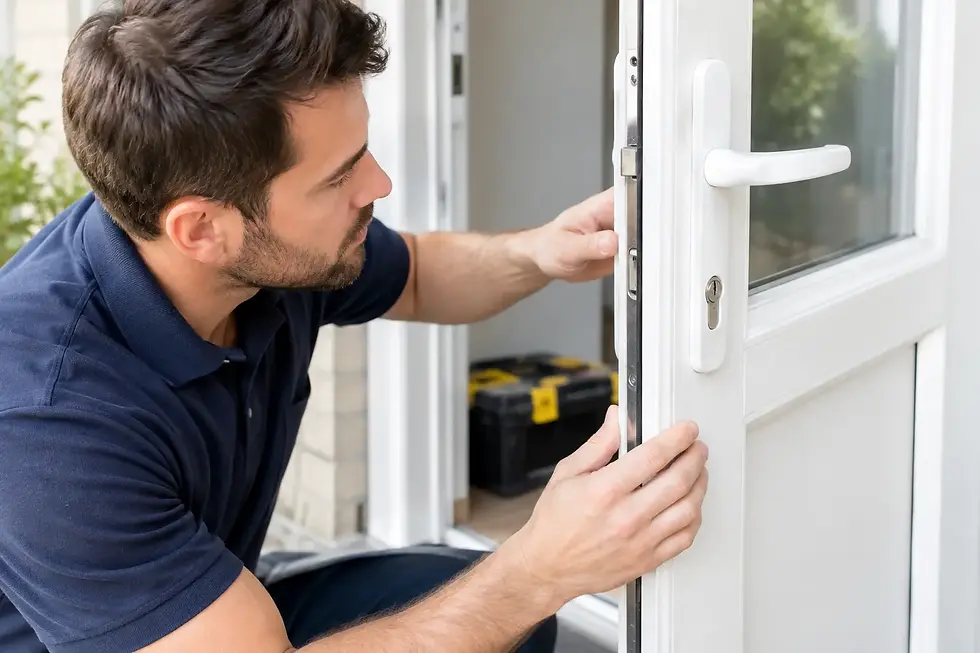
Start by opening the door and looking at the gaps around all four sides. A larger gap at the top on the handle side, paired with rubbing at the bottom, usually points to a dropped sash. Check whether hinge screws are visibly loose and whether the frame has any cracks, movement or signs of damp.
Then close the door gently. Watch where the latch meets the keep and whether the locking points line up without lifting, pushing or pulling. If it is a UPVC or composite door, test the handle only with the door open as well as closed. A handle that feels smooth with the door open but stiff when shut strongly suggests alignment trouble.
Avoid removing random hinge caps and adjusting screws without knowing their purpose. Some settings alter height, compression or side-to-side position, and a small change can affect weather seals and lock engagement. Never oil a multipoint lock with thick household lubricant in the hope it will cure a dropped door. Lubrication cannot correct a door that is sitting in the wrong place.
When a repair is the sensible option
A simple hinge adjustment can be enough where the door and frame are sound. Loose screws may need securing properly, damaged timber may need repair, and a misaligned UPVC or composite sash may need toe and heeling as well as hinge adjustment. If the locking strip or gearbox has already been stressed, that can be checked at the same visit.
Replacement becomes more likely where hinges are badly corroded, the frame is rotten or warped, the panel is damaged, or the lock mechanism has failed after prolonged misalignment. It depends on the condition of the complete door, not just the symptom at the bottom corner.
For homeowners, landlords and local businesses, the practical aim is straightforward: the door should close freely, lock without force and sit securely in its frame. Clapham Locksmiths can assess the door, hinges, frame and locking system together, rather than treating a stiff lock as a separate problem. Getting the alignment right now can save a failed lock, a damaged threshold and an avoidable lockout later.
Comments